Some roles challenge your technique, and then some roles challenge your heart. For actor and Lee Strasberg Theatre & Film Institute alum Hannah Abdoh, portraying Amina in the limited international series Kabul did both.
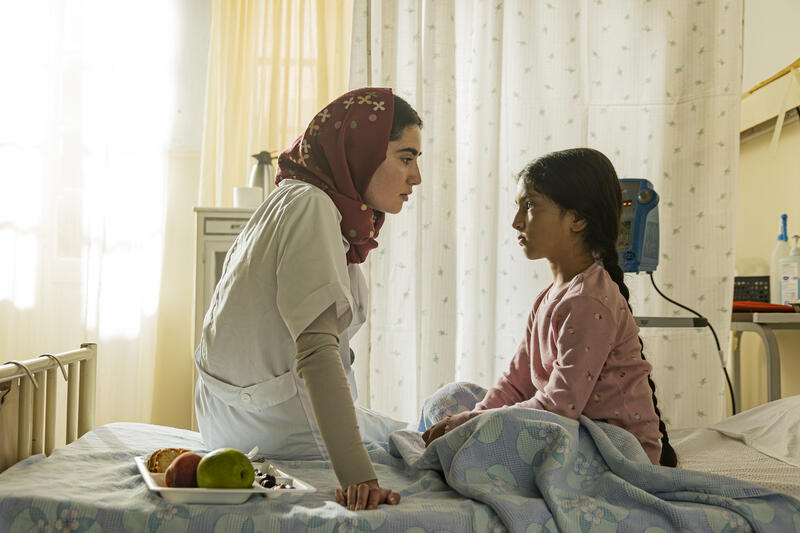
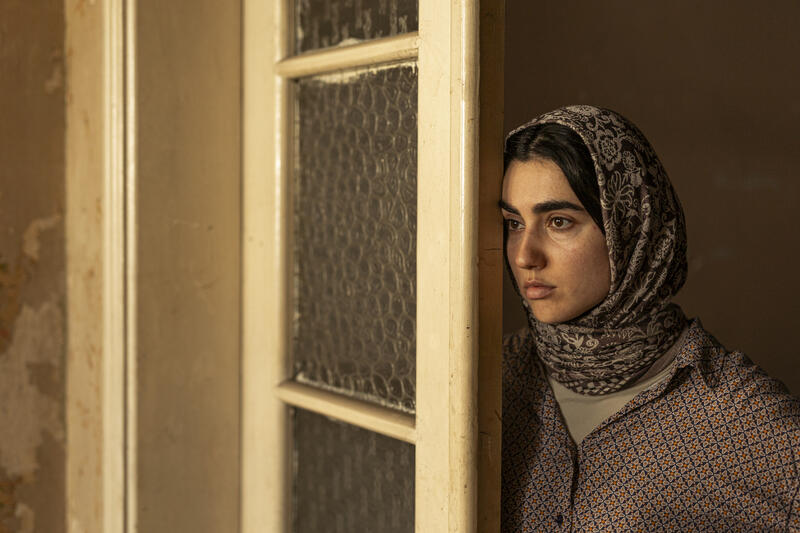
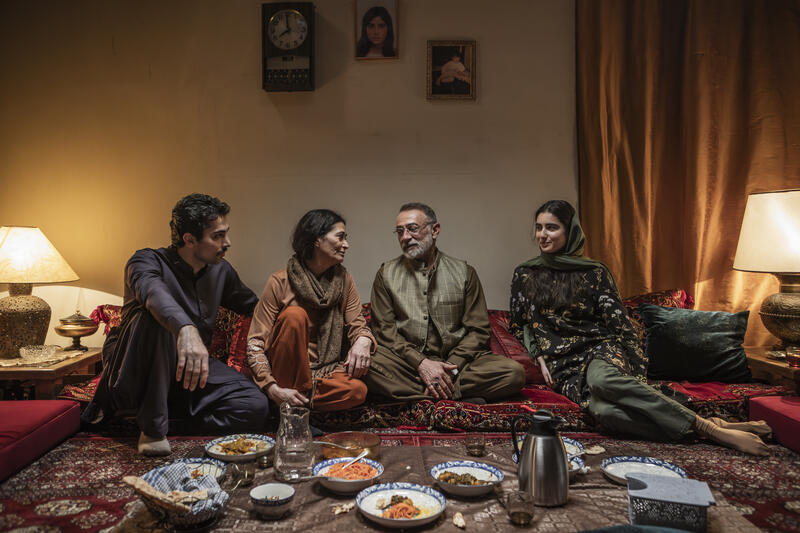
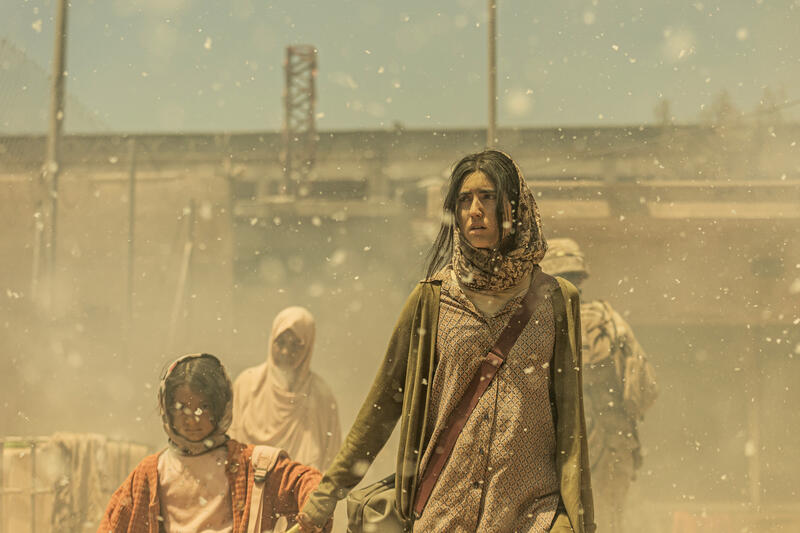
The six-episode series premiered in France at Series Mania as part of the official international competition in March 2025. Kabul tells the story of the Nazany family and their attempt to flee Afghanistan during the Taliban’s takeover and NATO/US withdrawal in August 2021. The limited series explores not only the chaos of the evacuation but also the extraordinary resilience of those caught in its path. Hannah plays Amina, the eldest daughter, whose internal strength and quiet urgency anchor the emotional core of the series.
“This is not just a story of humanitarian disaster and devastating consequences,” Hannah says. “It’s a story about the spirit and courage of the Afghan men, women, and children who saw their entire lives change overnight, and all those who fought tirelessly to help them. It’s dedicated to Afghan women.”
A Journey Rooted in Training
Hannah, a London-born and raised actress of Iranian and Canadian heritage, graduated from LSTFI’s Two-Year Conservatory in 2022. She began her career telling stories through the lens of politics and photography, with a particular focus on the Middle East. But over time, she felt a pull toward a different kind of storytelling. That instinct led her to audition for conservatories in New York, ultimately bringing her to The Lee Strasberg Theatre & Film Institute, where she found a new way to give voice to the stories that mattered most to her. The program was foundational not just for the development of her craft, but for how she approaches herself as an artist.
“There’s a kind of courage that’s cultivated by the professors and students at the Institute, I had to remember and draw from that on this project.”
Putting Technique to the Test
With her role in Kabul, Hannah’s actor training was tested in profound and unexpected ways. When she auditioned for the part, it was in English. But the role would ultimately be performed entirely in Dari, a language she did not speak. With just a few weeks to prepare before filming began in Greece, she describes beginning her process from zero and training with a coach in Paris during her shooting breaks.
“When you don’t speak the language, you become completely stripped back, every strength you previously relied on becomes futile. There’s a complete lack of control that ushers in the desire to control whatever you can. So, instead of combating it all the time, I decided to use that feeling to create Amina from that place,” she says.
She points to her work with faculty like Lola Cohen, Bruce Baumer, Robert Ellerman, and Michael Ryan as pivotal: “I’ll never forget those Tuesday night scenes in Lola’s class. There are some scenes that my friends performed that are seared into my memory, where I’ve never laughed so hard watching a scene unravel. There are a few places I’ve been as inspired as a classroom with 20-somethings bearing their souls. It’s incredibly specific to witness someone in their light, there was something in the excitement you felt from a student or friend standing up, and everyone adjusting themselves in their seats because you just knew something was going to happen. There’s a slight shift in the room. I think you remember all of those moments.”
Making of Kabul
Kabul was an ambitious, multinational production co-produced by 11 European countries. The international cast included Eric Dane (Euphoria), Jonathan Zaccai (The Bureau), Shervin Alenabi (Tehran), and Darina Al-Joundi. Co-written by BAFTA-winning screenwriters Thomas Finkielkraut and Olivier Demangel (Tapie), the miniseries premiered as part of the international competition in Lille, France.
What stood out most to Hannah was the undeniable commitment on set. “Everyone from the writers to the crew to the cast knew how important this was, to be telling this story. There’s a line from one of the lead actors, Jonathan Zaccai, who plays Gilles, the Chief Security Officer of the French Embassy, extraordinarily at that, who says: ‘These are not superheroes, these are ordinary people who are really brave,’ and that line really stuck with me. We need to create distance with the extraordinary to protect ourselves from it, and I admire Kabul for starting from the heart of a humble family, where people fight trying to prove themselves, because that’s what happens in every home.”
Embodying Amina
Learning the language was just one hurdle. The emotional responsibility of telling a story about displacement and survival was another. “Playing the character of Amina felt like something I could never render justice to,” Hannah says. “But the experience was one of deep humility and gratitude to be able to take any part in her story and a respect for the strength of the women she is inspired by.”
Reflecting on the experience, Hannah comes back to a lesson she first absorbed at LSTFI: “The Method is about going into every crevice and trusting that you have something to offer. That was crucial in Kabul. I had to rely on instinct and lean into moments when I felt lost. Luckily, I was surrounded by the best in the field. From the writing to the directing to the cinematography and the crew, they bring storytelling to another level. It’s a privilege to be a part of.”
Looking Ahead
In addition to Kabul, Hannah stars in Close Enough to Burn, the debut feature from film director Benjamin Tefera, which premieres this month at Oklahoma’s dead Center Film Festival. She continues to explore work that scares her, in the best way.
“If it terrifies me and I find myself trying to find a way out of doing it then I’m probably in the right place, both as an actor and as myself.”
She pauses before adding, “I’m still learning to let go”.