Written by Anna Grace Griffin
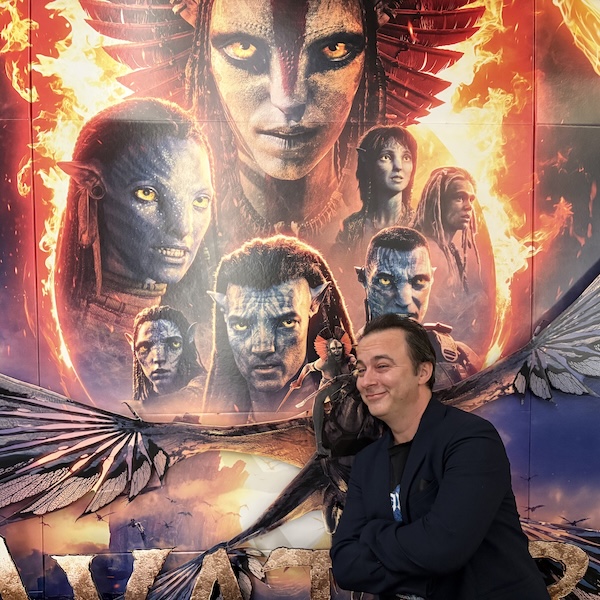
The Avatar franchise, created by James Cameron, has become a box office breaking hit and worldwide phenomenon. Released in dozens of languages, Alexander Notkin is responsible for the official Russian dub of the film’s beloved protagonist, Jake Scully. Notkin has built a strong reputation in the voiceover industry for his work across multiple projects, all using The Method as his approach. When he is not acting, directing, or doing voiceover, he teaches Method Acting at The Lee Strasberg Theatre & Film Institute.
Life Before Avatar
Originally from St. Petersburg, Notkin began his training at a small acting studio in Israel. He then returned to Russia where he continued to train and work as a professional actor until making the move to New York City in 2014. There, he knew there was only one place he wanted to train: The Lee Strasberg Theatre & Film Institute. His training at The Institute was a major stepping stone in his development as an actor in New York City.
“I started my research, and I discovered more in-depth what Lee Strasberg was about, and I became very interested, and I figured out that this is one of the most iconic and interesting schools for actors. So I decided, since I was already working as a trained actor, I decided to upgrade myself and go into that amazing school, you know, and I wasn’t disappointed.” Notkin says.
Getting the Call that Changed Everything
When Notkin was first approached about joining the original Avatar, he had no idea what it was. While a voiceover veteran at this point in his career, having done the Russian dub of major movies such as Terminator 4, this was an experience unlike any before.
“When I came to the studio, I suddenly realized it must be a big deal, because everybody was very excited about this project. It was super secret, and you were not allowed to talk. I think I’ve signed five NDAs, and then they gathered us in a very, very small movie theater. It was like a very secret, closed movie theater with only 10 seats, and they gathered all the cast. They showed us the movie before even anyone could see it. It was black and white and still some graphics were not finished, but they showed us the movie for us to understand our characters. And I said, ‘Wow, this is a big movie. This is amazing,'” Notkin recalls.
Preparing for a Massive Role Over the Years
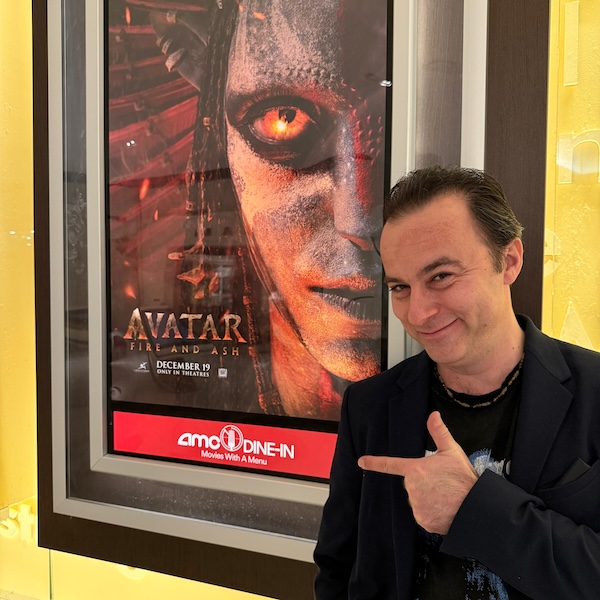
With the entertainment industry rapidly changing, voiceover is no exception. Notkin says his experience on Avatar: Fire and Ash was very different compared to his experience on the first film due to the security around the story.
“Back in the day, you had to listen to the CDs. They taught us the Navi language, because at some point we need to speak the Na’vi language in the film. So we had to, not really memorize, but get familiar with the language. And then we started doing the dubbing. It was very exciting. I saw this amazing character portrayed by Sam Worthington, who I find an amazing actor, and it was very interesting to blend into his acting work, into his emotion, and bring a little bit of myself to create this wonderful work of James Cameron’s vision of Avatar.”
The Key to a Perfect Dubbing
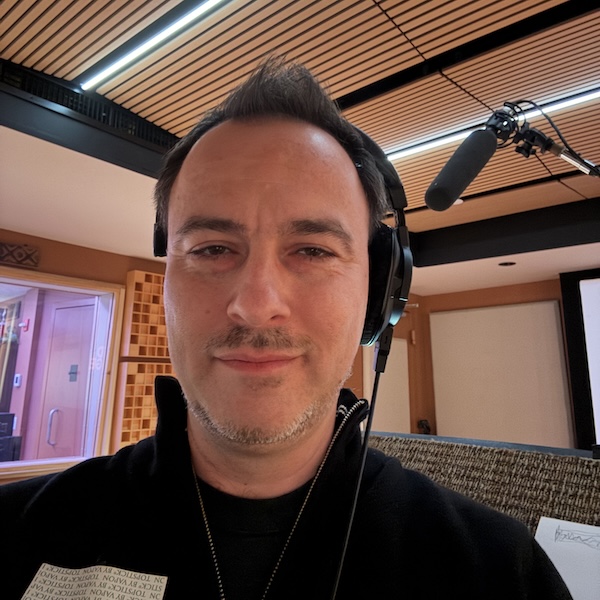
While the role of dubbing is to perfectly match your voice to the character and the original actor’s performance, Notkin says bringing himself to the character is extremely important to his performance success.
“It’s interesting, because on one hand, you have to keep the authenticity of the character and whatever the original performer brings to the table. However, you can also add your own stuff. So it’s a kind of a blend between the character and yourself, which has to be a balanced blend. If you give them a completely new life, it will not match the character. Because it’s not only the lip sync that has to match, it’s your whole physicality. And not only physicality, it’s the spiritual print of the character.”
The practicality of the job is also important.
“The trick is that it has to match 100% and, the audience who are watching, they should not understand that this is dubbing. They should think this is the real performance. And if that’s how they feel, you did your job well. So it’s a very tricky thing.”
Using The Method in Real Time
Notkin heavily relies on his Method Acting training when doing voice work. “The Method work helps a great, great deal in voiceover,” he explains. “First of all, there’s a lot of sensory work, a lot of physicality. A lot of, what is the characters experiencing physically right now? Is he experiencing hot weather? Is he experiencing pain? Is he experiencing the cold snow? You know, whatever the character is experiencing physically. In The Method, this is covered 100%.”
Notkin’s use of The Method also expands beyond his work in voiceover into his entire acting career:
“Sometimes, if you’re on a movie set, the director tells you, ‘Okay, today we’re shooting the last scene.’ You’re starting from the last scene, and you don’t have this whole emotional preparation. You didn’t go with your character, you didn’t follow what’s what brought you to this final moment, you didn’t live through it. That’s where The Method is extremely helpful,” he shares. “You have to search your own experience, in your own life and your own pain or your own happiness, to portray that when it’s out of sequence.”
Applying The Method works similarly across different mediums, according to Notkin. “Sometimes you’re doing a scene [for voiceover] and you’re like, it’s nine o’clock in the morning and you have to cry because of the loss of your loved one. And it’s nine o’clock in the morning, you’re not exactly prepared. You didn’t accumulate this emotion, these feelings. So that’s when The Method comes in. You start searching your own life, what’s happened to you when you lost someone, and you’re bringing this. You’re bringing the right emotion. That’s extremely helpful in voiceover. I do it all the time.”
Advice for the Future of Voiceover Work
Notkin has been a long time teacher of The Method at LSTFI, but that doesn’t stop him from being a student. He says he is constantly learning from those around him, and hopes to help others who are interested in voiceover succeed.
“I definitely recommend you try. Voice training is extremely important for voiceover to be able to change your voice. Be able to do different accents, different dialects. It’s extremely helpful for voiceover acting.”
Avatar: Fire and Ash is still playing in select theaters, with an anticipated 2026 streaming release.