bloglovinBloglovin iconemailfacebookFacebook iconinstagramInstagram iconlinkedinLinkedIn iconpinterestPinterest iconrssRSS iconsoundcloudSoundCloud icontwitterTwitter iconyoutube

Written by Giulia Abbondanza

“You are now embarking on a journey of self-discovery. This work is about getting to know yourself completely and being open and in touch with yourself.” This is what we were told by our Method Acting instructor in week one of The Lee Strasberg Theatre & Film Institute’s Associate Degree Program—and goodness, how right he was.

Why is it easier to see growth in others than it is in than yourself?

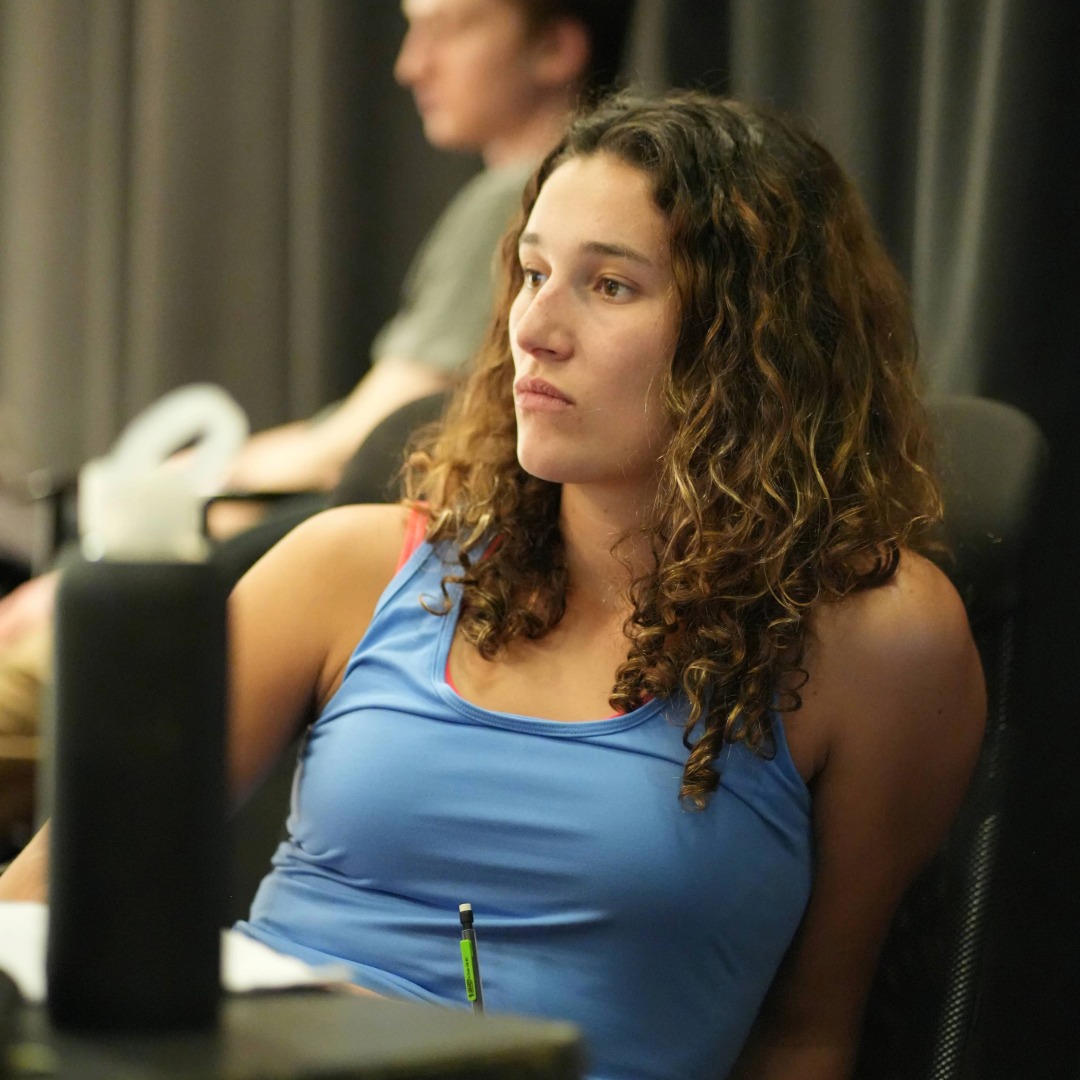
As graduation approaches, I feel immense pride watching my classmates and reflecting on how far each of them has come. What I never expected, however, was being able to feel that same pride about myself. Looking back over these past two years, I can see the progress I have made in all aspects of my life, from my acting technique to a greater confidence and understanding of who I am.

At the end of the day, we are here to train as actors. David Lee Strasberg says, as his father did in the legacy tapes we are fortunate enough to have access to: “The basic thing in acting is sensitivity and response. The Method is how we train for that.” Method Acting is about understanding and experiencing life, not imitating it. Ultimately, we are training for the ability as actors to live through the reality of an imaginary circumstance on stage or in front of a camera.

That training begins in Year One.

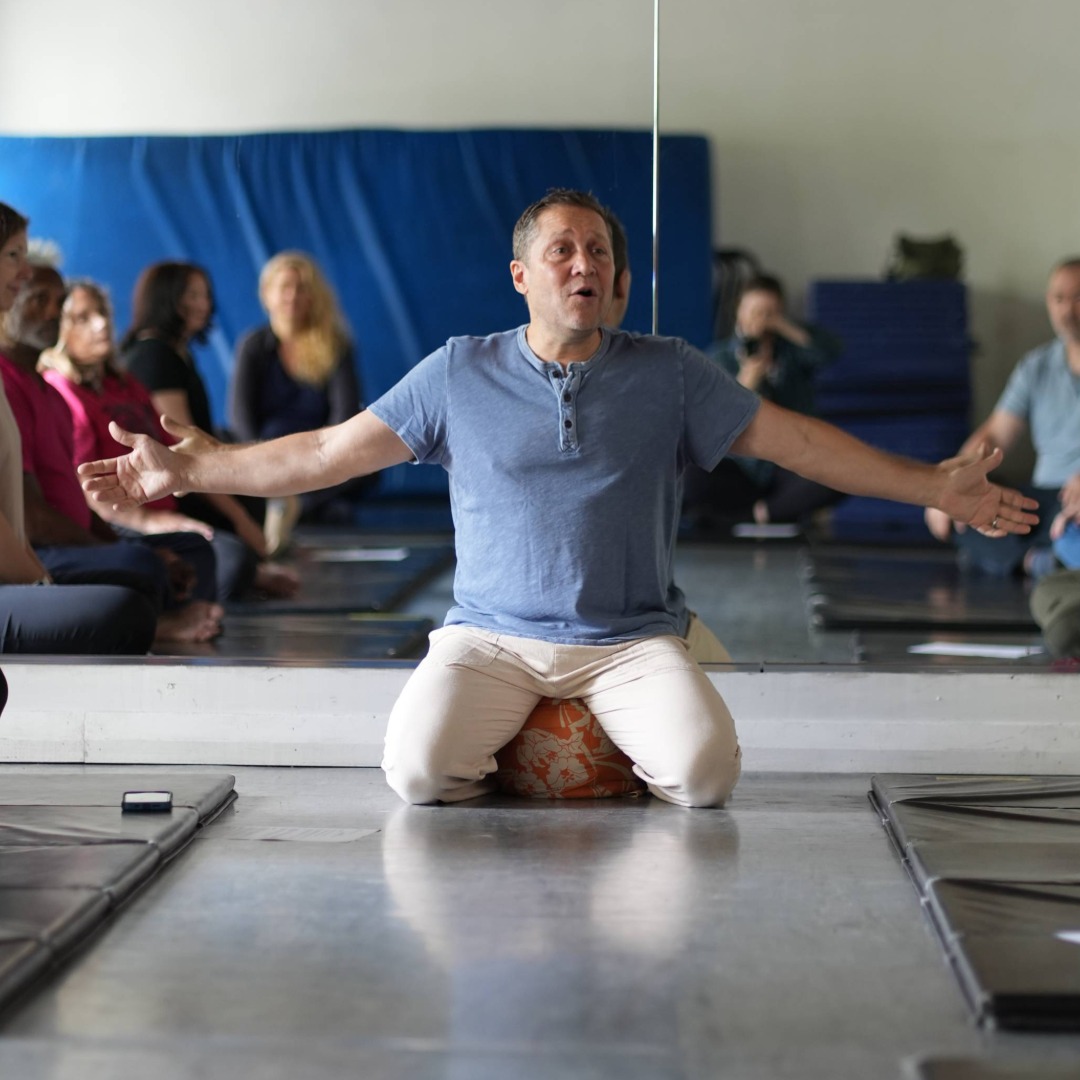
Our Method Acting classes, led by Actors Studio members Dig Wayne and Jennifer Lassalette, introduced us to the tools Lee Strasberg developed to train sensitivity and concentration. Through relaxation exercises, we learned how to get in touch with our instrument—our body—and allow curiosity and creativity to guide our work.

At the same time, classes such as Improvisation and Scene Study with LSTFI alumna Jennifer Elia gave us opportunities to apply these tools in performance. We were encouraged to explore freely, take risks, and discover new aspects of ourselves as artists.

Voice training with the passionate and highly acclaimed Michael Yurchak introduced us to Fitzmaurice Voicework, where we combined vocal technique with sensory exercises and Method principles. Movement classes with Leah Zhang, utilizing the Alexander Technique, taught us how to use our bodies more efficiently and identify subconscious habits we had carried throughout our lives.

Script Analysis provided a deep dive into professional-level text work. Under the guidance of our dynamic instructor Alani Ilongwe, we learned how to break down scripts, bring characters to life, and integrate Method training into every step of the process. Alani challenged us constantly, pushing us toward his famous “Level 10s” and helping many of us achieve breakthroughs that still impact our work today.

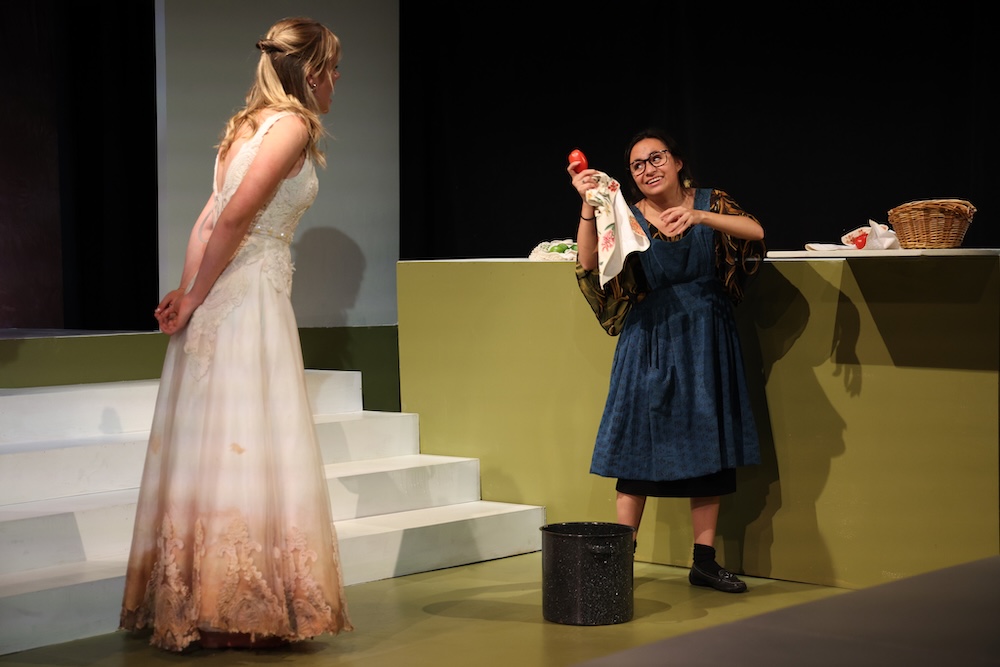
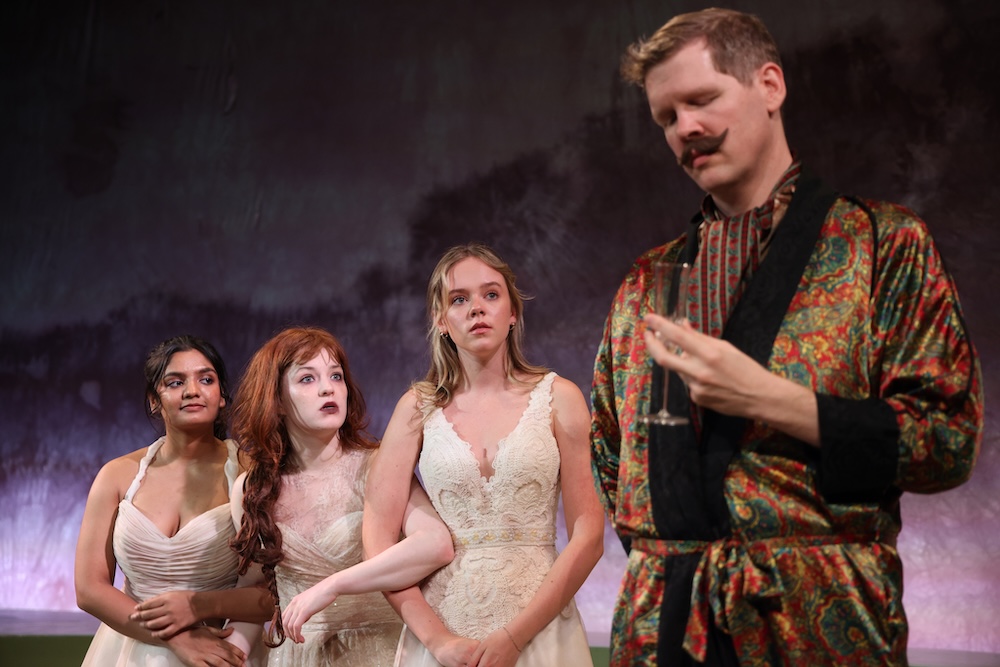
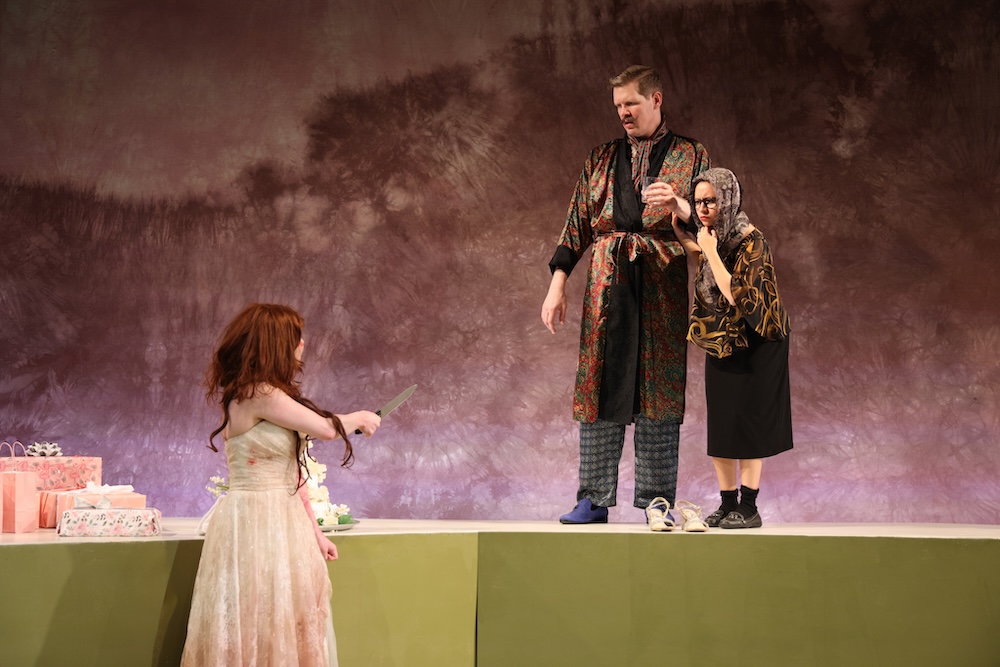
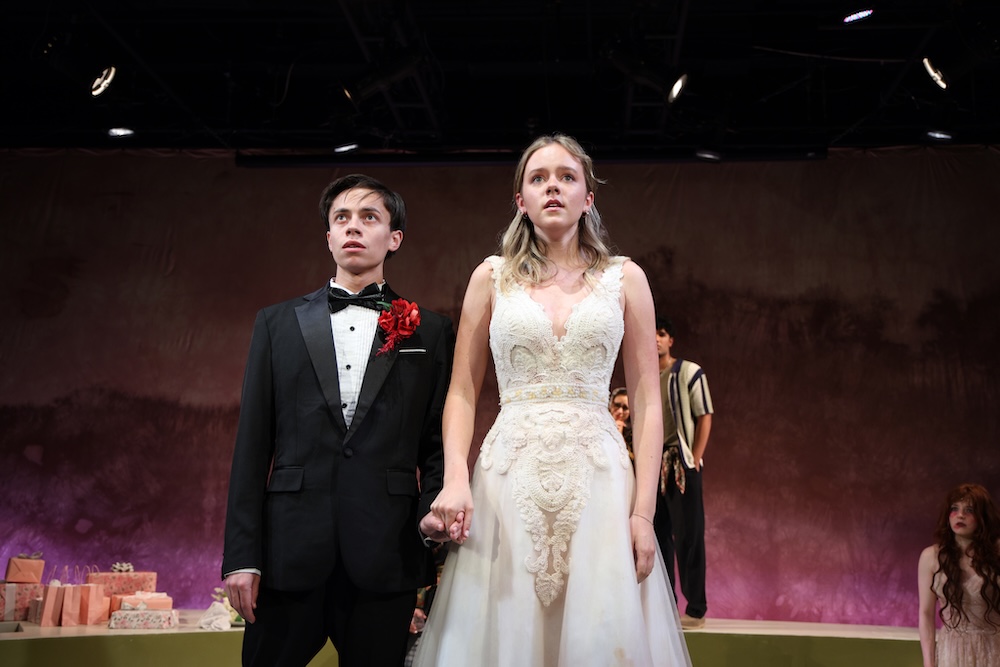
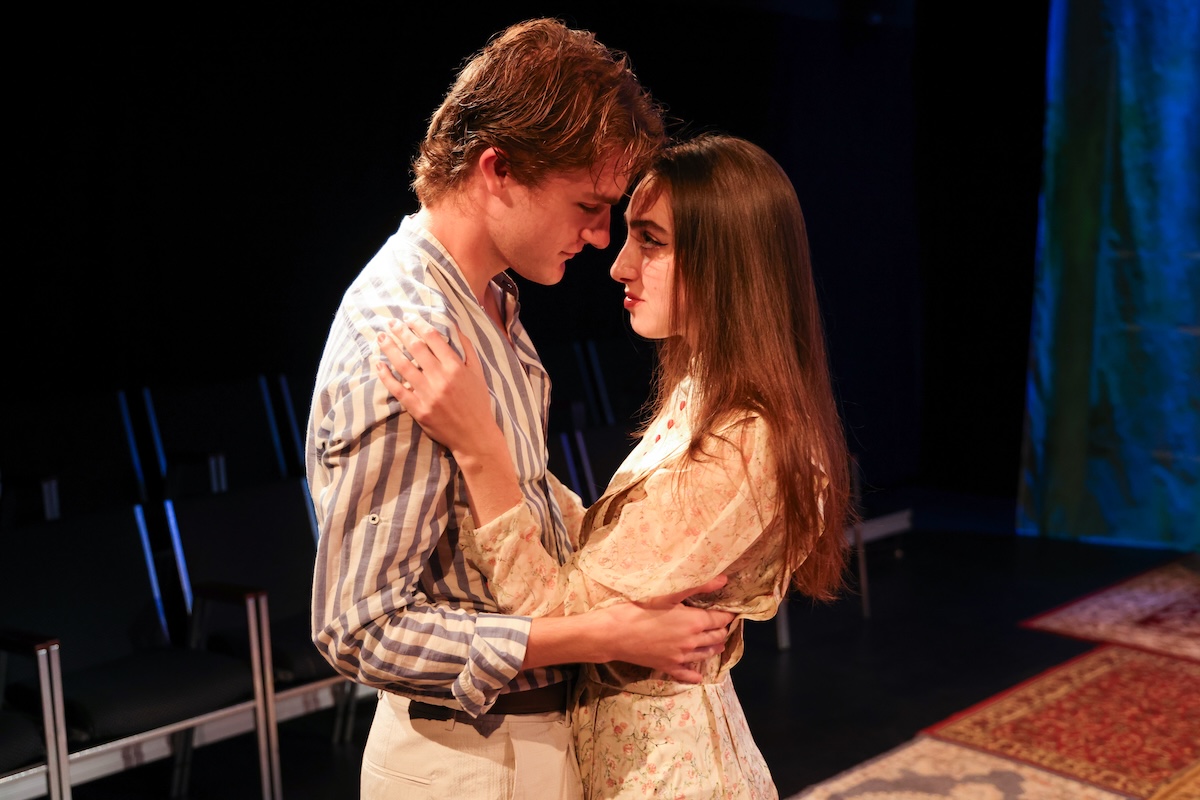
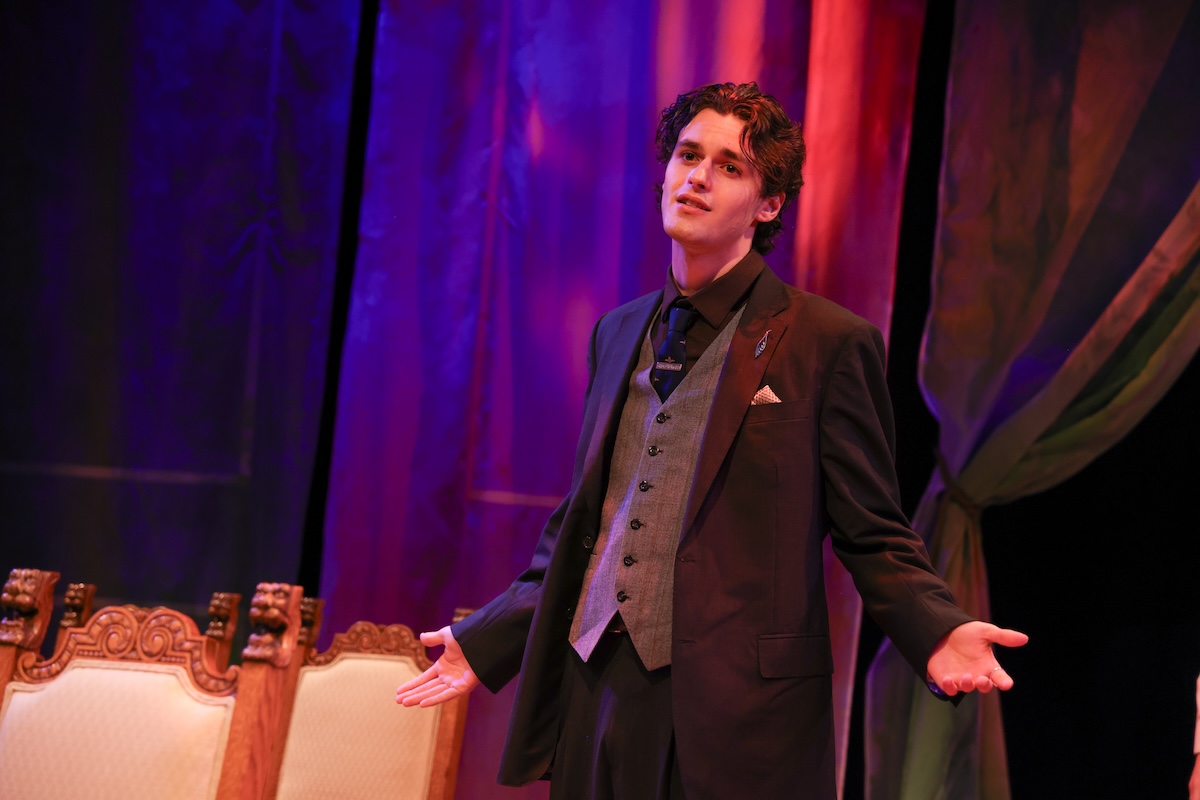
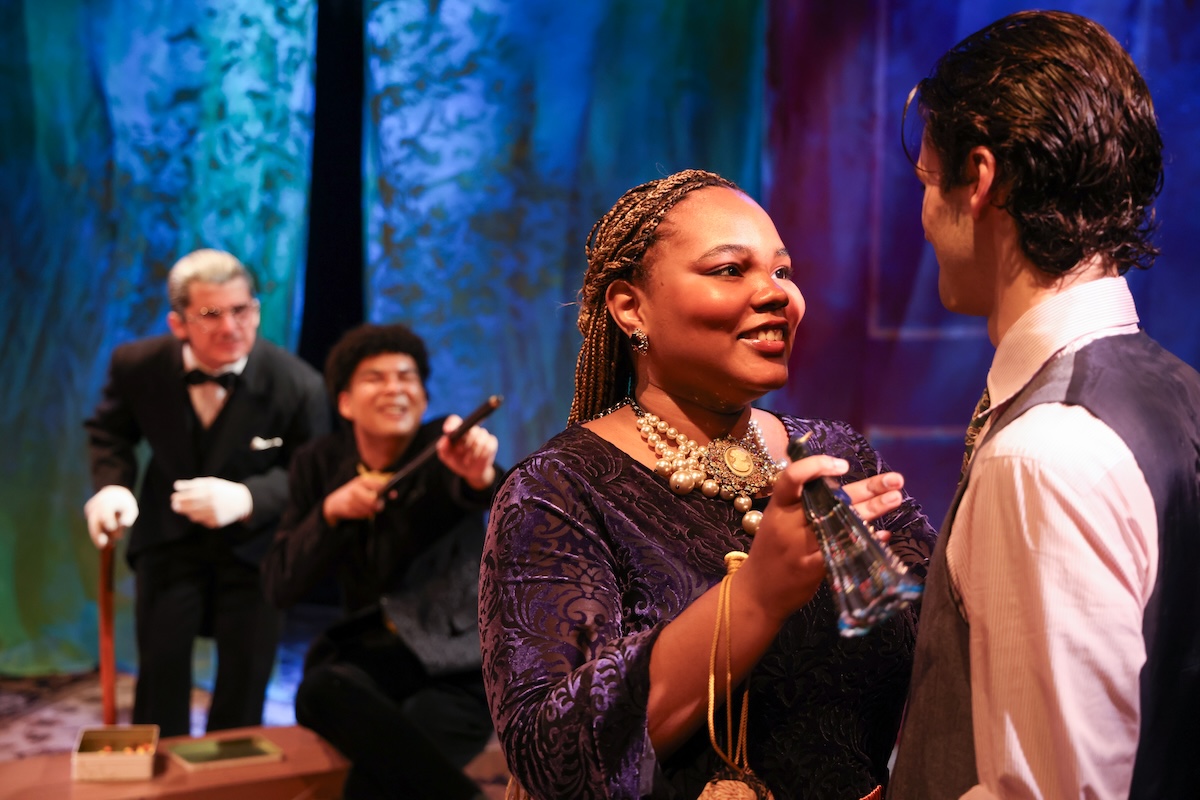
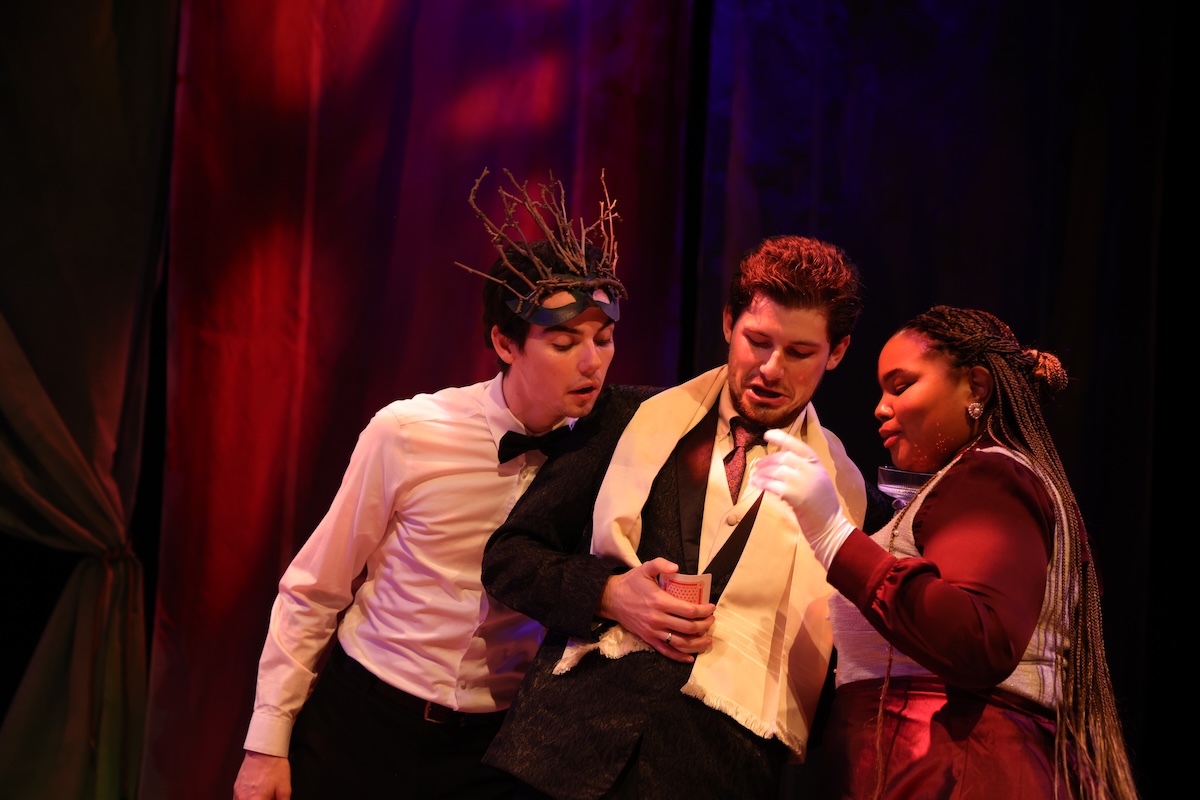
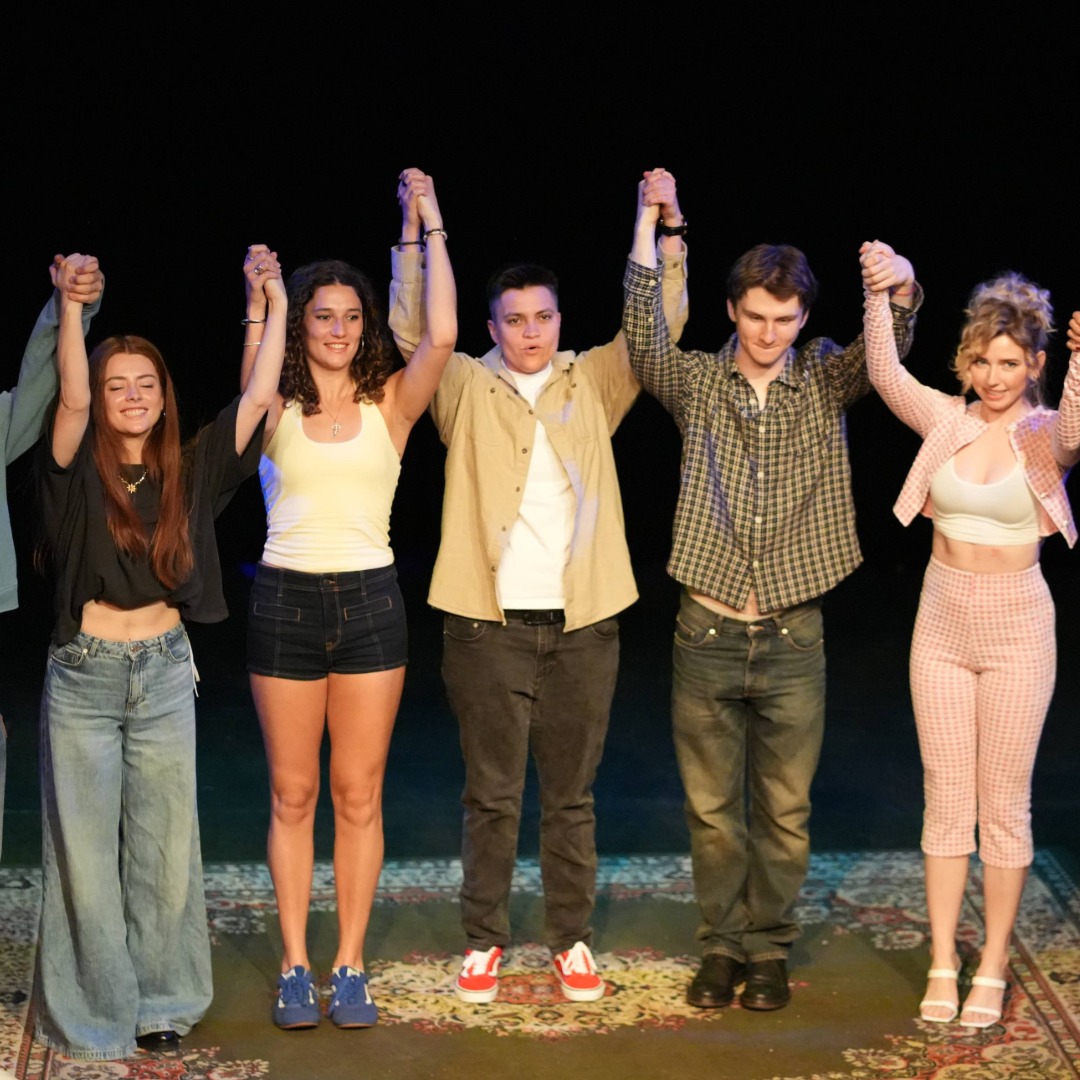
The final term of Year One introduced us to theatre production. We learned what it takes to mount a play and then had the opportunity to do it ourselves. Working with short stories by Dorothy Parker, we created and produced our own theatrical piece, The Parker Hotel. We took full responsibility for pre-production and collaboration while being guided by producer Carlos Colunga and director Tyee Tilghman. It was our first opportunity to combine everything we had learned and share it with a public audience.
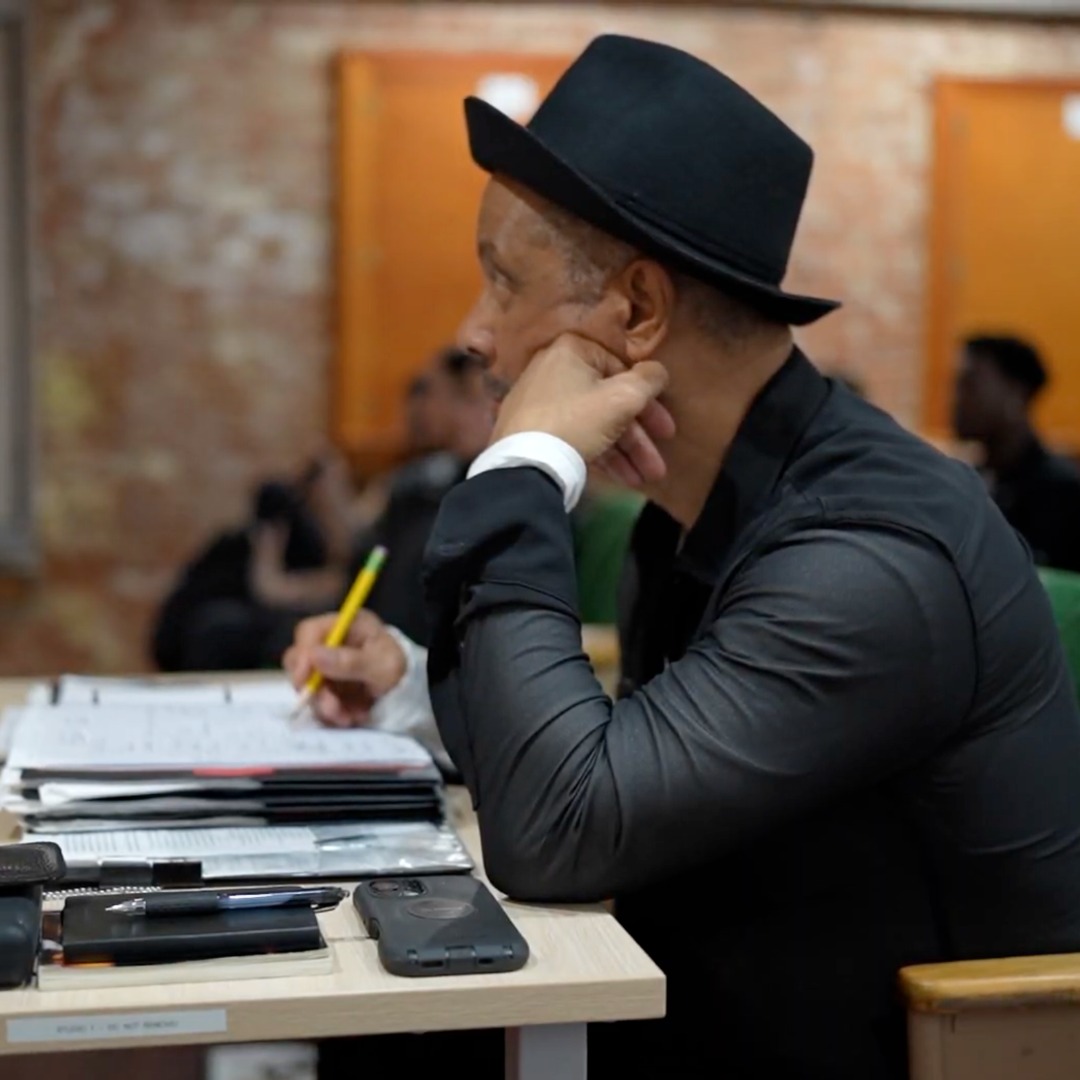
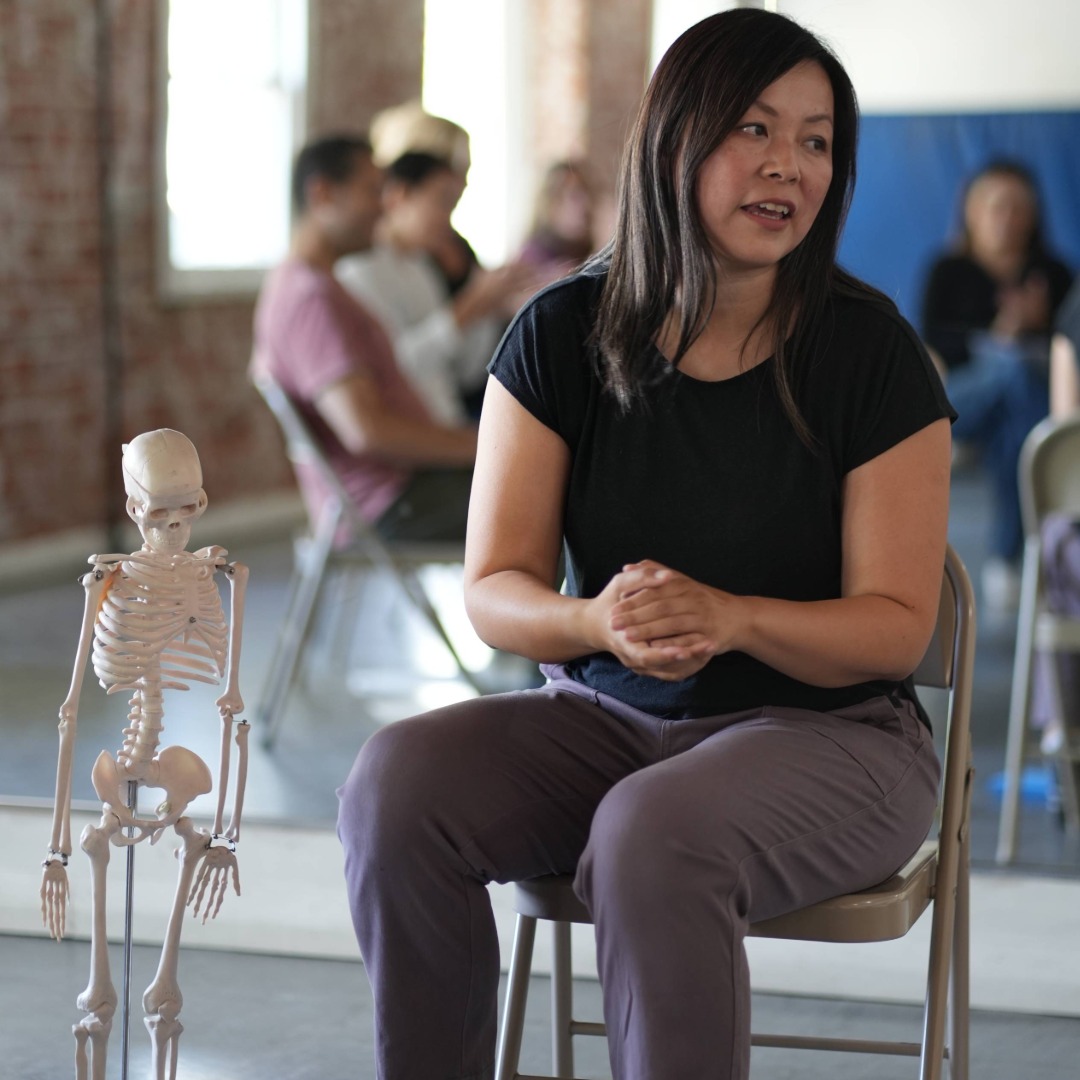
Year Two has been an entirely different beast.

With the foundational tools already established, the focus in Year Two shifted toward refining our individual processes and taking ownership of our training. As David Lee Strasberg tells us, it became about “putting ourselves on the hook.”

This year, our Method classes have been led by the unanimously adored Carlos Colunga, a Strasberg alumnus whose openness and unconditional support have encouraged us to make the work our own. Alongside him, David Lee Strasberg has guided us through Method Acting, Advanced Sensory Applications, and Craft to Career courses. 

In Advanced Sensory Applications, we analyze and refine our personal process, discovering what works best for each of us. In Craft to Career, we focus on the transition from training into the professional world—learning how to understand our strengths, define our artistic identity, and take ownership of our careers.

Carlos also led us through the Lee Strasberg Legacy Tapes, giving us the extraordinary opportunity to watch classes and lectures from Lee Strasberg himself. Seeing the work directly from the source helped demystify The Method and deepen our understanding of the training.

Year Two also introduced us to Animal Work with Alani Ilongwe, opening entirely new pathways of creativity and character exploration. Meanwhile, Sheldon Larry and Isabella Uzcàtegui introduced us to directing through Actors Directing Actors and Directed Scenes, giving us valuable insight into the actor-director relationship from both perspectives.

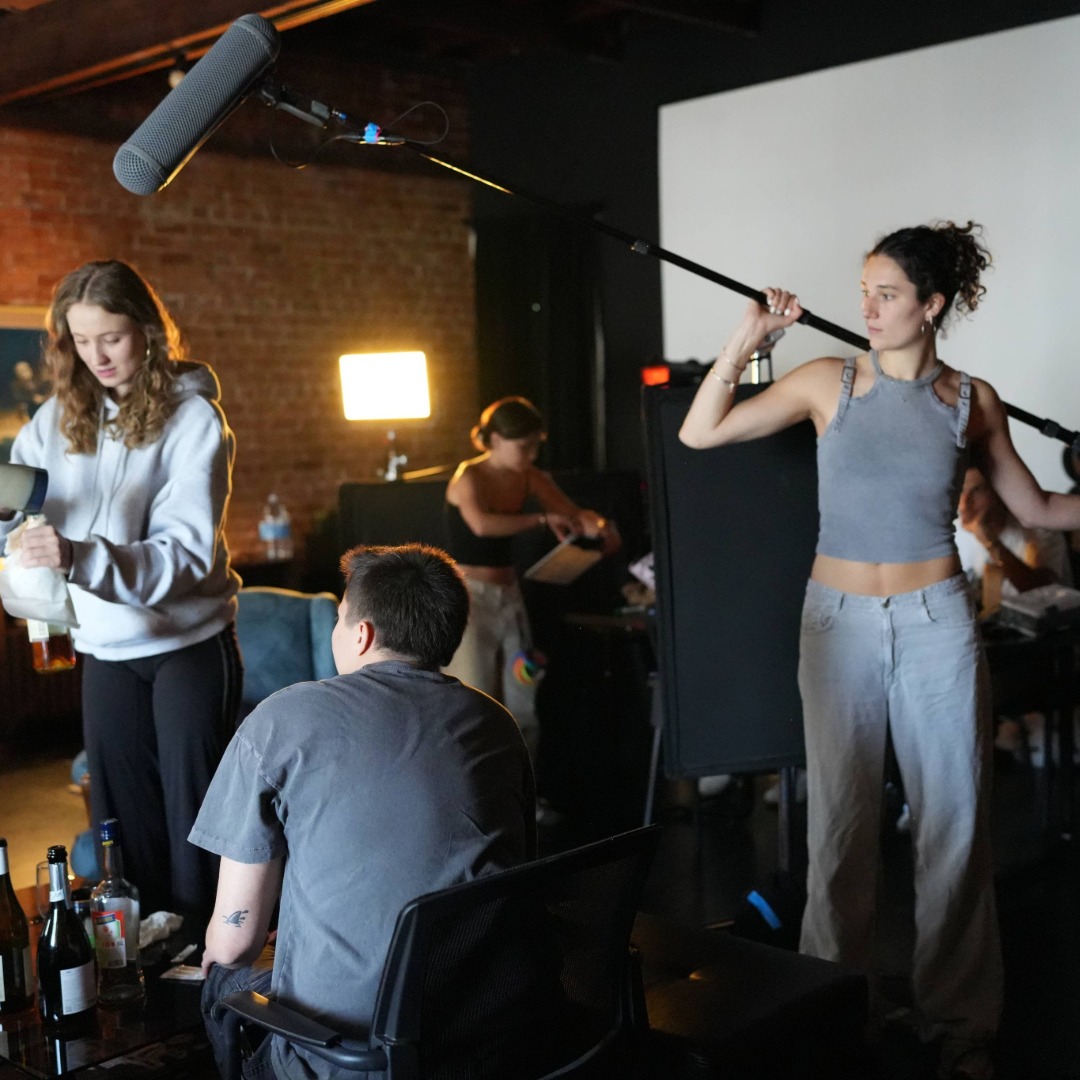
Our Film Production classes expanded that learning even further. We explored the practical realities of producing a film and each took on production roles, gaining firsthand experience of how a set functions. Many students, myself included, have since gone on to work as assistant directors and producers on outside projects because of the confidence and knowledge gained through these classes.

Now, under Sheldon Larry’s direction, we are filming scenes for our reels. Later this term, Isabella Uzcàtegui will direct our final reel production project, culminating in professionally produced scenes that will be showcased at our graduation in August, but more importantly will be a scene we can add to our reels to use on professional casting databases moving forward.
Connections to the industry beyond the classroom.

There have been countless opportunities to bridge the gap between training and the industry. Our incredibly resourceful Head of Talent Dana Theodoratos, regularly hosts StrasbergTALKS, bringing in guests from across the entertainment industry. These conversations have included casting directors such as Sony’s Dawn Steinberg and acclaimed actress Yael Grobglas, best known for her role as Petra Solano on Jane the Virgin. Students are encouraged to attend, participate in Q&As, and engage directly with working professionals.

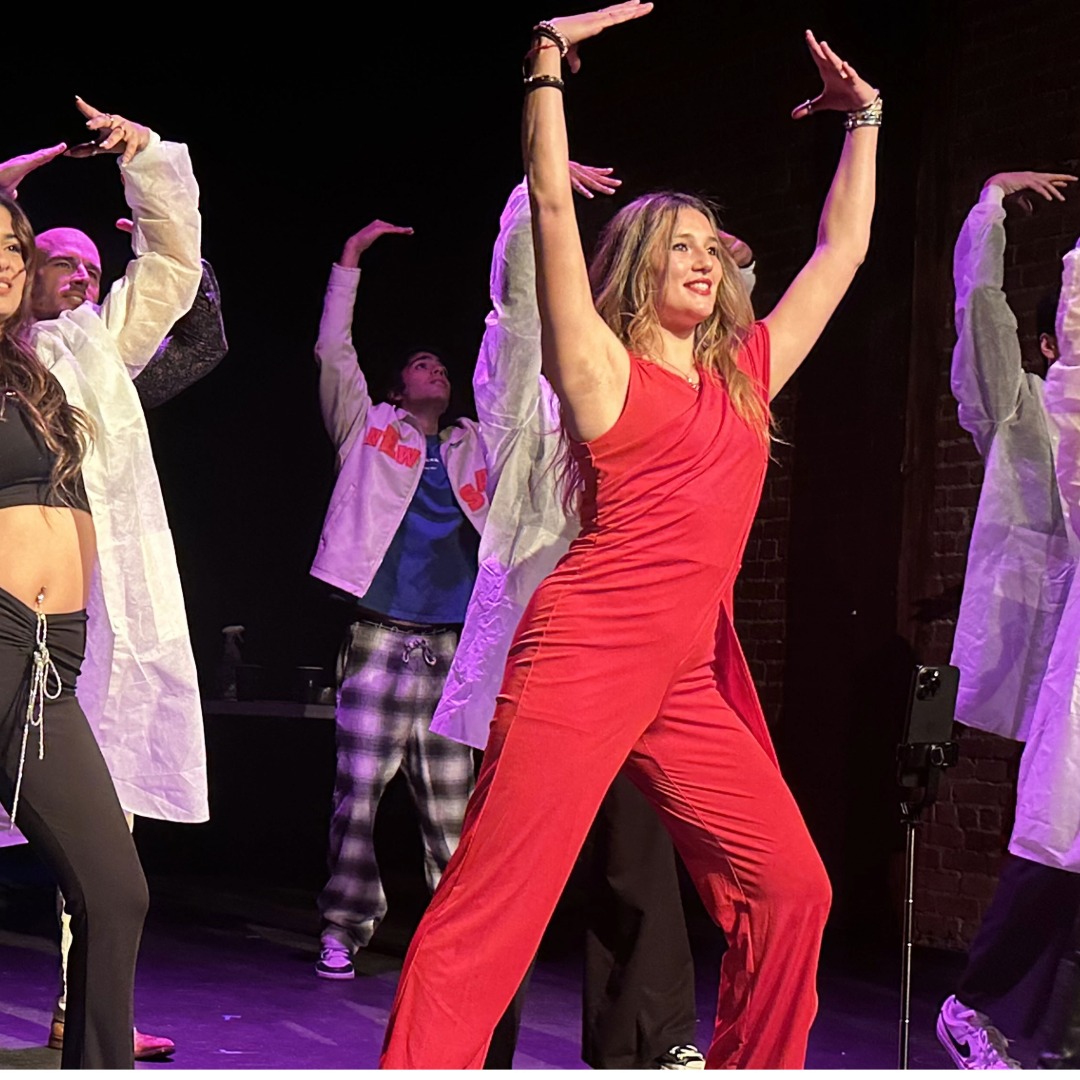
Another phenomenal opportunity was the annual Actor Showcase. Each year, a small group of students and recent alumni from both the Los Angeles and New York campuses is selected to perform for an audience of casting directors, agents, managers, producers, and other industry professionals. I was fortunate enough to be selected this year. Working closely with Dana, Carlos, David and Hillary (Marketing & Production Manager), we built a powerful evening of work that challenged us artistically and professionally. The rehearsal process was one of the steepest learning curves I have experienced. It required me to take ownership of my artistry, refine my process, and own my space in a room filled with industry professionals. It was a remarkable collaboration, and I continue to benefit from the experience today.
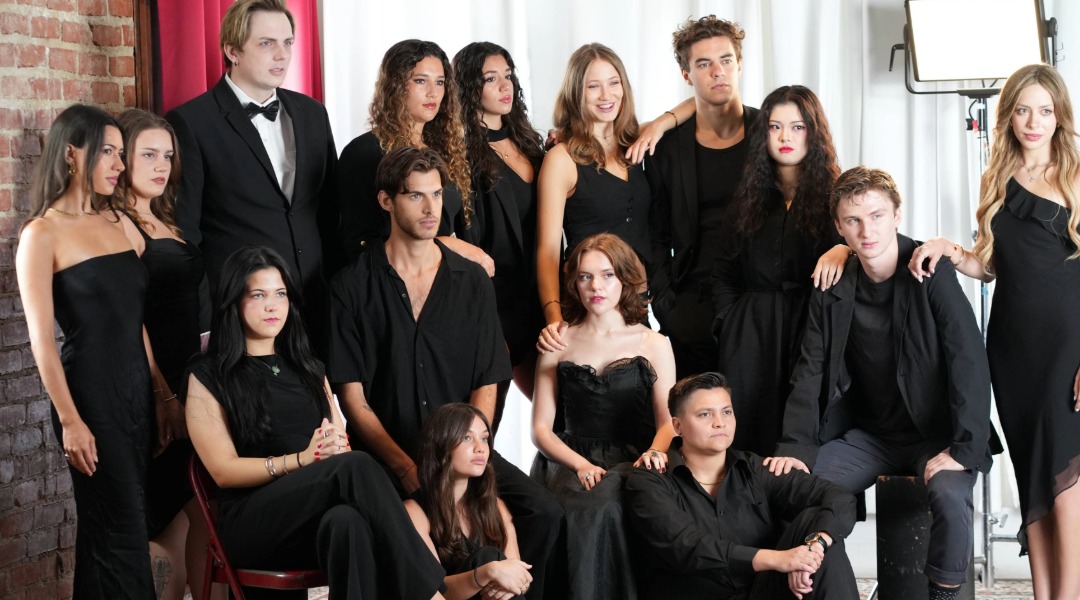
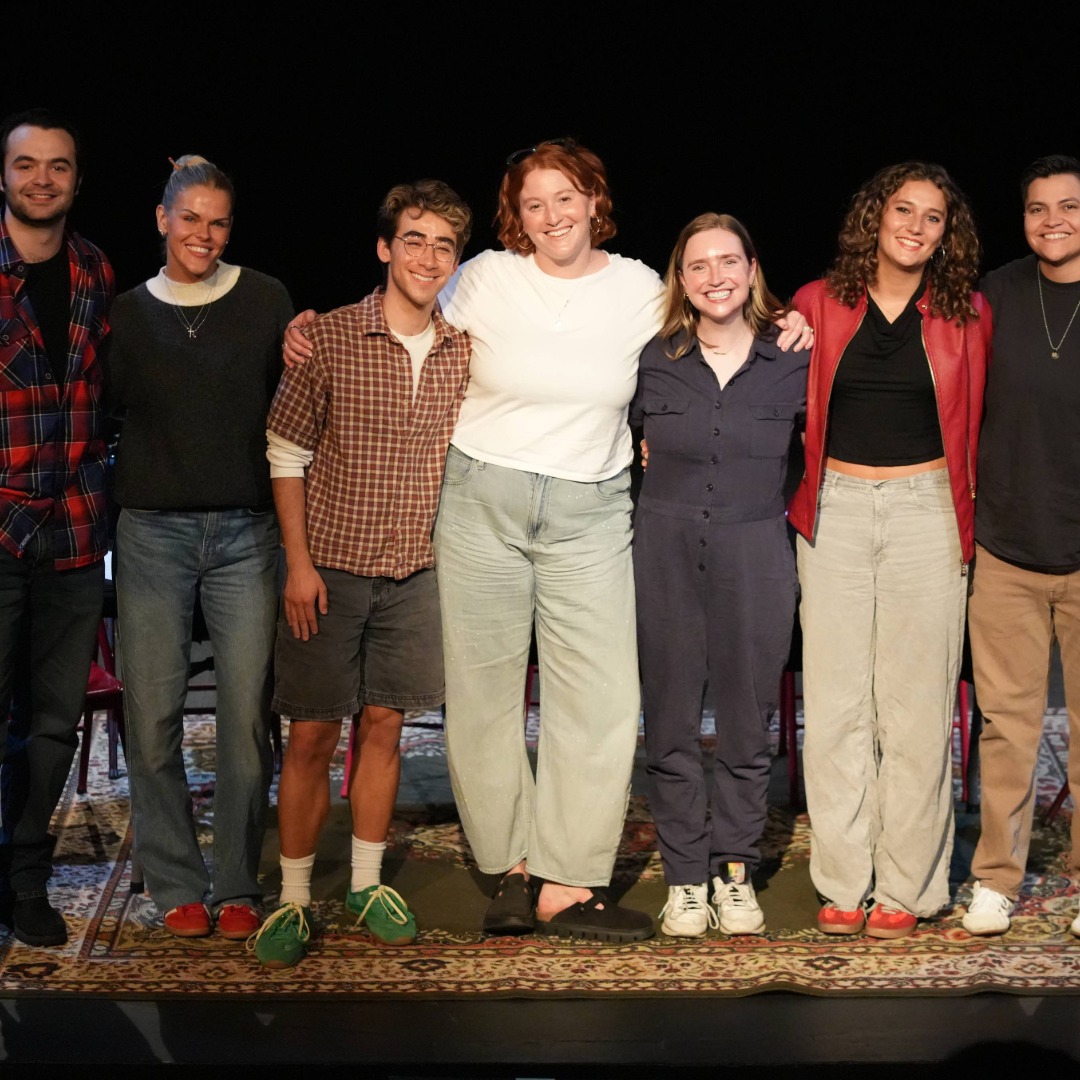
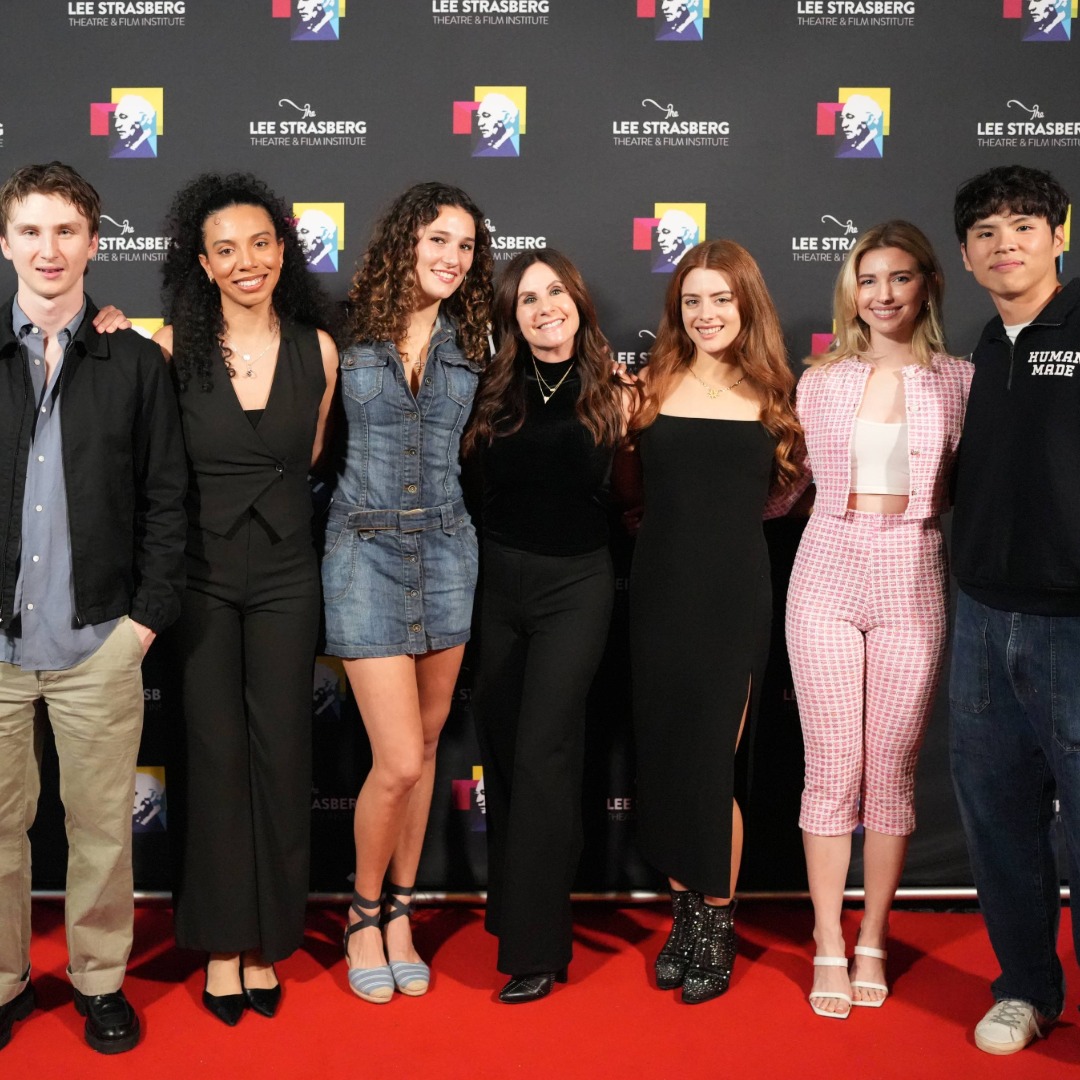
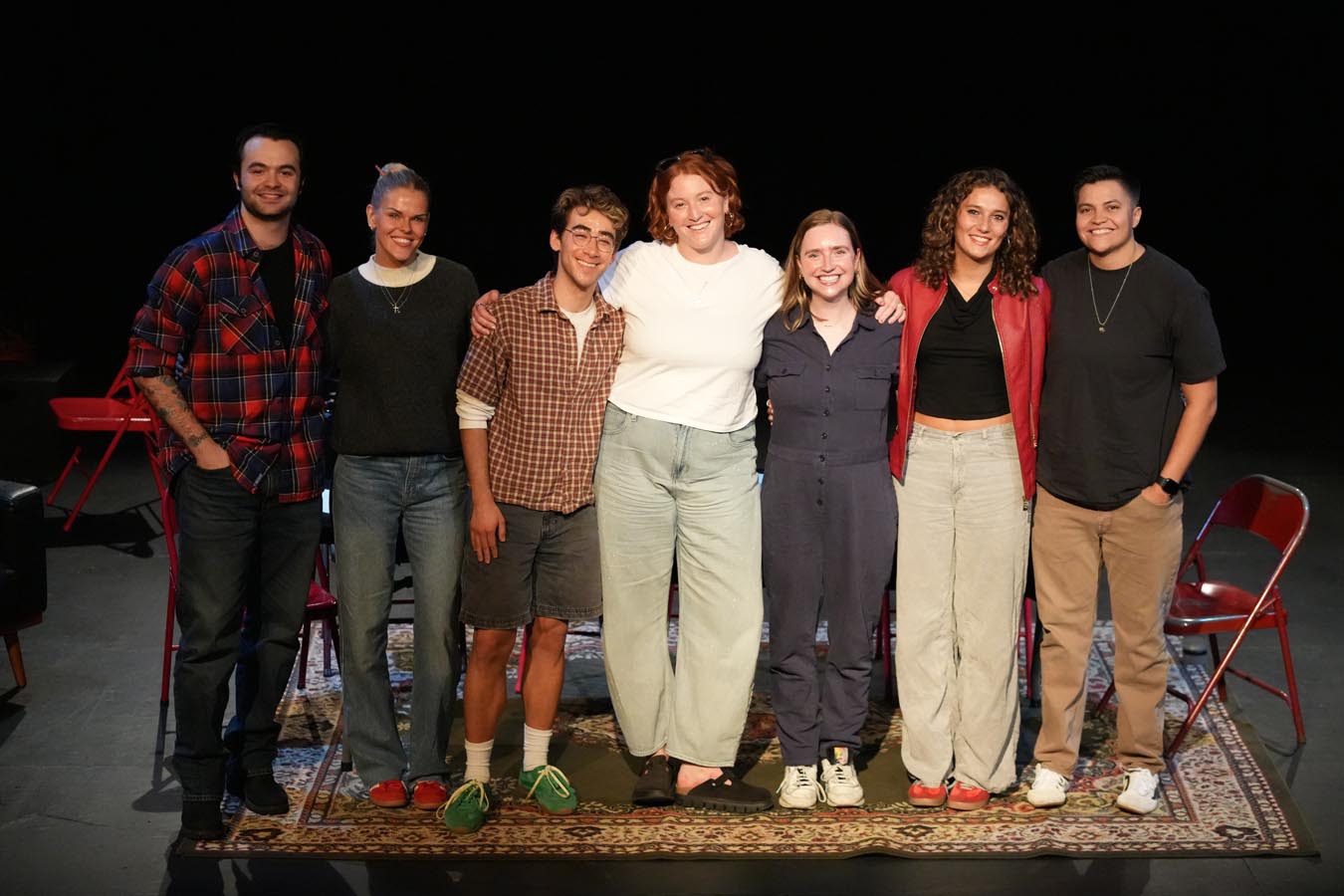
The LSTFI Associate of Occupational Studies in Method Acting Degree Class of 2026

It is why I became an actor.

One thing that becomes clear very quickly in this training is that “being an actor is a lifestyle choice.” It is “a lifelong commitment.” The work extends far beyond the classroom. As Dig told us in our very first class:

Dig Wayne, LSTFI Method Acting Instructor

The concept of truly living and being present is something I work toward every day. It requires curiosity, self-awareness, and a willingness to embrace who you really are. As Carlos says, “Meet yourself where you are, not where you think you are supposed to be.”

If I had to identify the area of my greatest growth as an actor, it would be exactly that: presence. Trusting that my experiences and my humanity are enough.

The training is rigorous. The preparation requires discipline, concentration, and commitment. But eventually, the work becomes about trust—about truly living and experiencing rather than performing an imitation of life. For me, that is the point of this work. It is why I became an actor.

To leave these two years with a clear process, a well-tested toolbox, and a deep understanding of how I work as an artist is an incredible gift. Combined with the training in relaxation, concentration, discipline, and sensitivity, it provides a foundation that feels unshakable. That is the acting we are training for.

The Lee Strasberg Theatre & Film Institute’s Associate Degree Program has given me a roadmap for continual growth while also teaching me to appreciate how far I have already come. As graduation approaches, I find myself filled with gratitude for the training, for my classmates, for my teachers, and for the journey itself and everything it may bring.
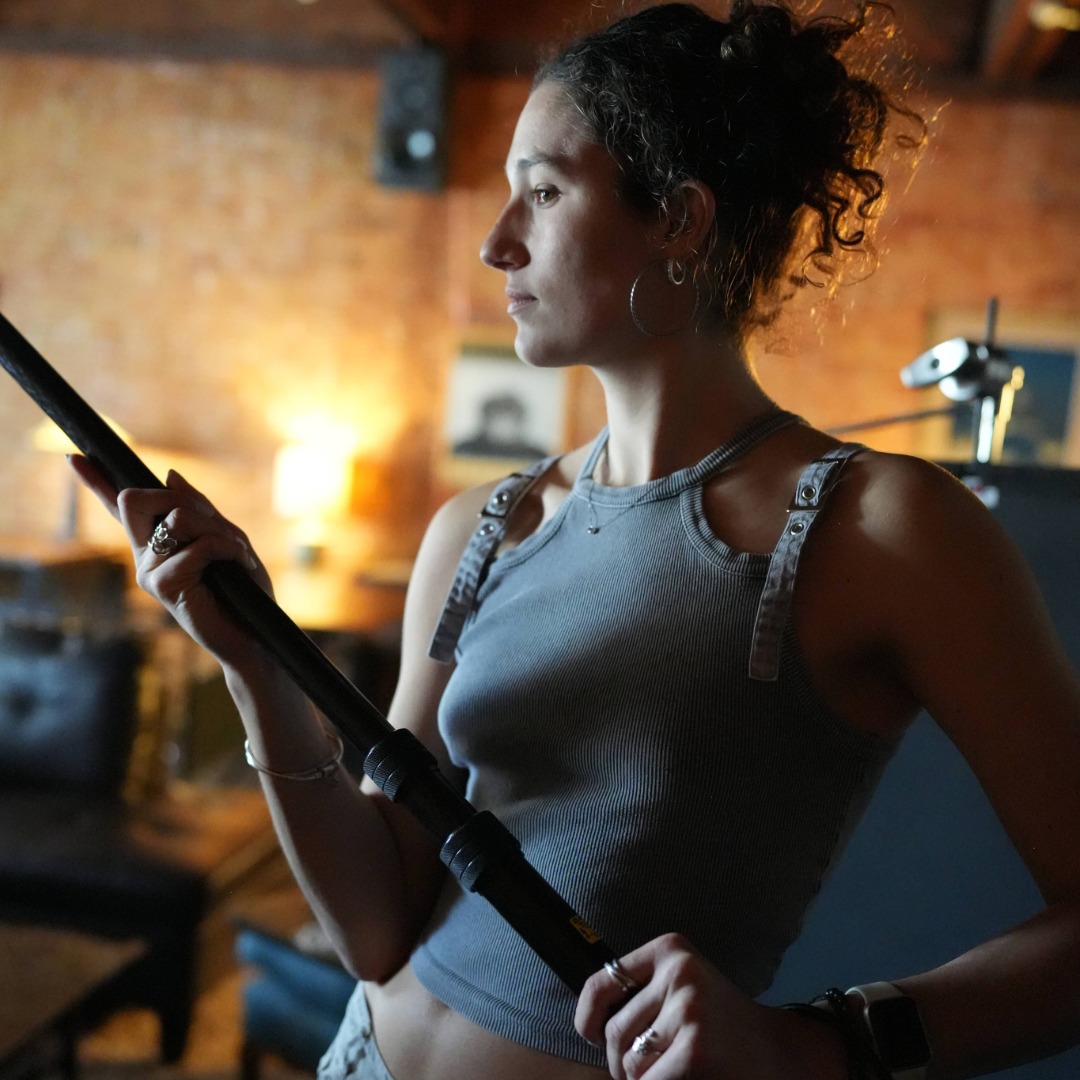

ABOUT THE AUTHOR
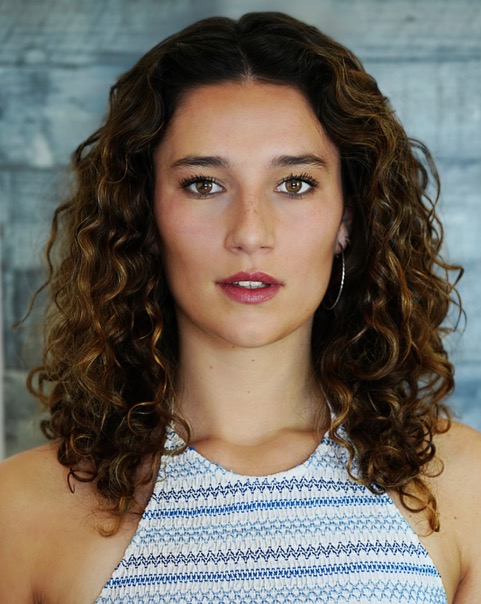
Giulia Abbondanza is an Italian actor who first found her love for the art of acting in the musical theatre world in England. Her highlights include the role of Reno Sweeney (Anything Goes) and Vivienne Kensington (Legally Blonde the Musical). She moved to Los Angeles in 2024 to pursue a film career, training at The Lee Strasberg Theatre & Film Institute and graduating with an AOS degree in Method Acting. She has been working in both stage and film in LA. Her highlights include roles in films The Roots and Maybe it’s the House Settling, stage roles in The Way of the Peaceful Warrior and The Parker Hotel, and The 2026 Lee Strasberg Actor Showcase.
Written by Emma Duchesneau 

R. Scott Gemmill’s medical drama The Pitt swept last awards season, bringing home 5 Primetime Emmys including Outstanding Drama Series and Outstanding Casting. What sets this show apart from other medical dramas is that each season follows a 15-hour shift at an ER in Pittsburgh, resulting in 15 hours of high-stakes, action-packed quality television. The cast works as a collaborative unit, and the structure of the episodes resembles that of theatre, with each actor performing their tasks simultaneously while the camera strategically ebbs in and out of storylines. The gifted ensemble is the heart of the show and keeps audiences coming back for more.

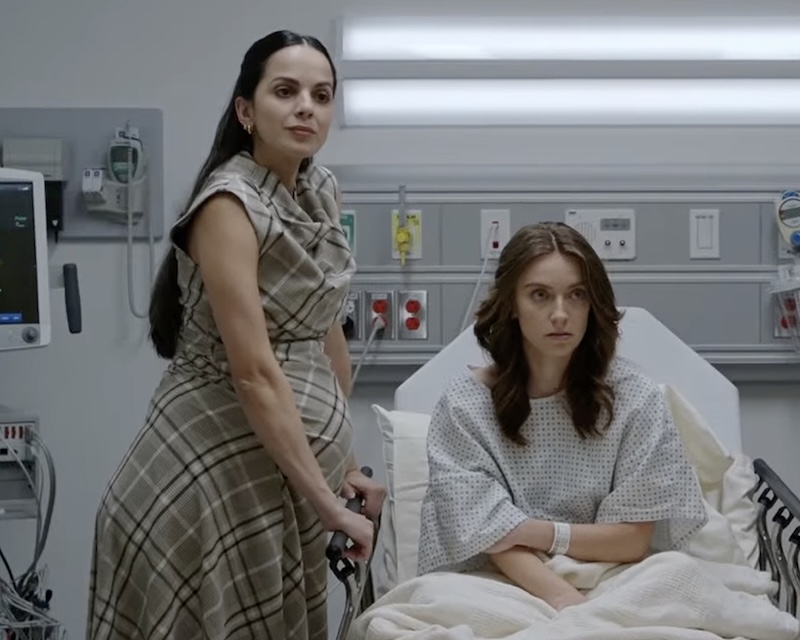
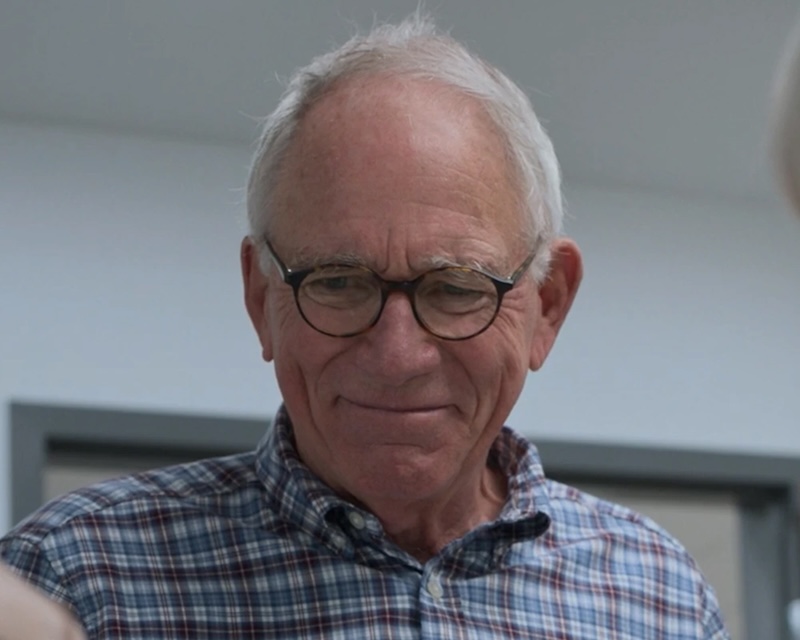
The Institute is proud to see its alumni among this talented cast. You may have seen alumna Shani Atias in the first season as Laura Fisher, the overbearing boss and possible trafficker. John Getz, who starred in the LSTFI-produced short film “Hawaii”, appeared in the second season as Lloyd Wilkins, the father of Roxie, the young mom with cancer.

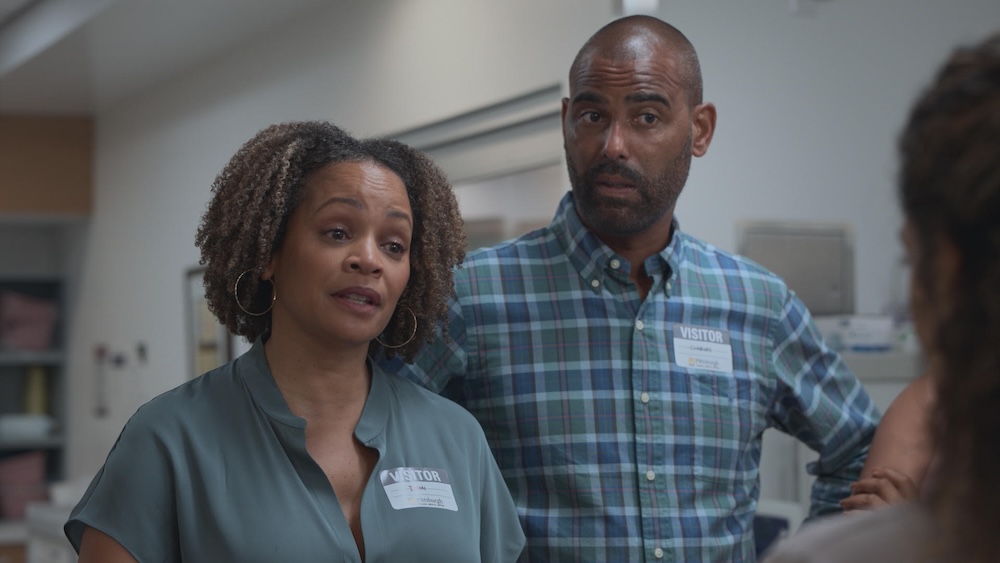
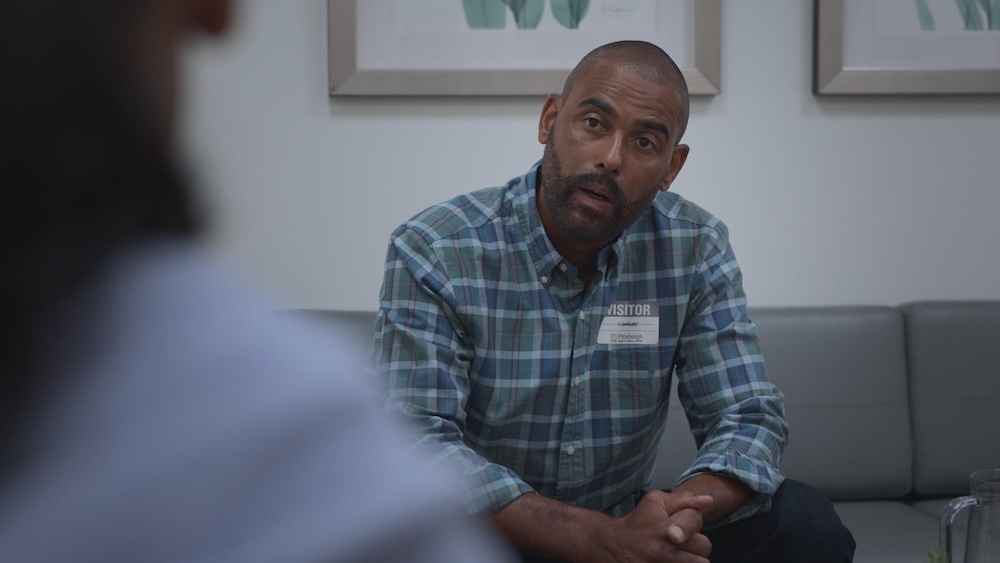
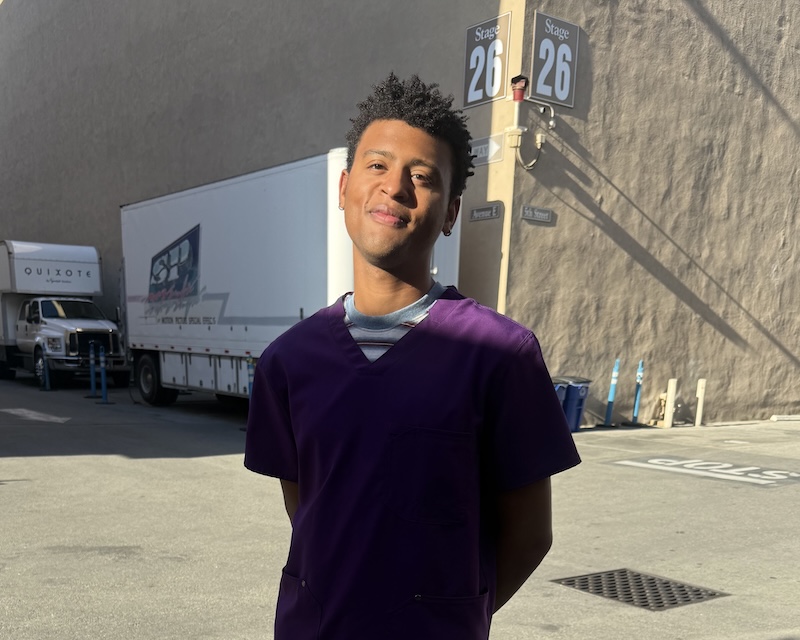
Other appearances from Season 2 include NYU Tisch at Strasberg alumnus Eric Easter and LSTFI instructor Dylan Mooney. Viewers can catch Easter in Episode 9 as Kenny Bell, an assistant X-ray technician, and Mooney in Episodes 7 and 8 as Charles Davis, the father of the college student who had to be sedated. Both actors were able to share more about their experience working on The Pitt.

Easter’s Early Training 

Eric Easter’s artistic journey began in Washington D.C., where he discovered his love for the stage through children’s ballet. “We were basically just emoting on stage, and like hopping around, but I had the time of my life,” Easter explained. His passion for storytelling evolved as he discovered musical theatre and dove deeper into training at his high school, Duke Ellington School of the Arts. While this provided him with a solid blueprint, he always dreamed of attending a school like NYU to further his craft.

During his time at NYU, Easter trained at LSTFI, the Royal Academy of Dramatic Arts (RADA) in London, and the Atlantic Acting School, but he felt the Institute was where he best developed his emotional range. “I think the Institute was a beautiful foundation for me, it helped me really tap into my emotions.” 

One of his first memories at the Institute was with Method Acting instructor Tim Crouse. Easter recalls, “he’s able to describe the Method in a way that feels very palatable and is open to any and every question, and it just felt like pure play.”

From Stage to Screen 

After graduation, Easter continued to audition and was a part of an off-Broadway play, Sulfur Bottom, at the Theater Center. While working on this production, he received an audition for The Pitt

He describes the challenge of auditioning for a show like The Pitt: you receive a page of context, but only have one line to embody what is happening in the scene. Easter believes the success for him was all about making a choice. He also mentions a note from Noah Wiley, the show’s lead actor and executive producer, that was attached from casting, which talked about leaving your ego at the door. “This show is very community based. It goes back to the whole idea of being a part of something greater than yourself,” Easter added.

Easter was ecstatic when he learned he landed the part, especially after noting that a role like this receives thousands of submissions. The Pitt would also be his first professional job on screen.

A Doctorate in Acting 

As Easter prepared to scrub in and become Kenny Bell, the X-ray technician, he felt confident knowing this opportunity was not based on luck, but rather his hard work and NYU training.

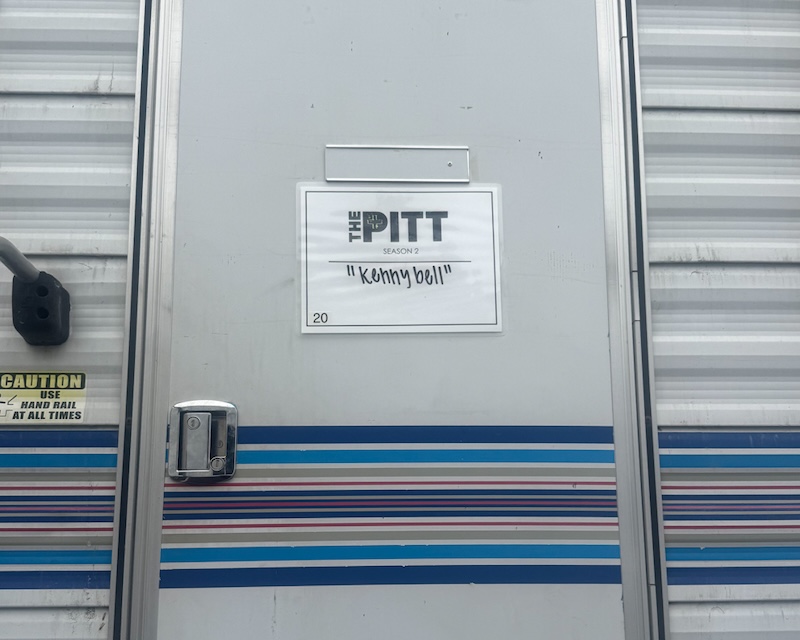
When Easter arrived on set, he was able to observe since he didn’t have any lines that day. It was his first time being on the Warner Bros’ lot, and seeing a trailer with his name on it was a surreal moment. He felt comforted knowing he had a friend on set, Laetita Hollard (Nurse Emma Nolan), who took him for In-N-Out before filming began and helped him settle in.

Due to the nature of the show, all cast members do background work at some point, fostering a stronger sense of community on set. Easter also notes that the set is a phone and sides-free environment.

Embodying Kenny Bell

The Pitt is unique in its execution because of its attention to detail. The series strives to be as medically accurate as possible, and actors playing medical experts undergo training so they look like they know what they’re doing.

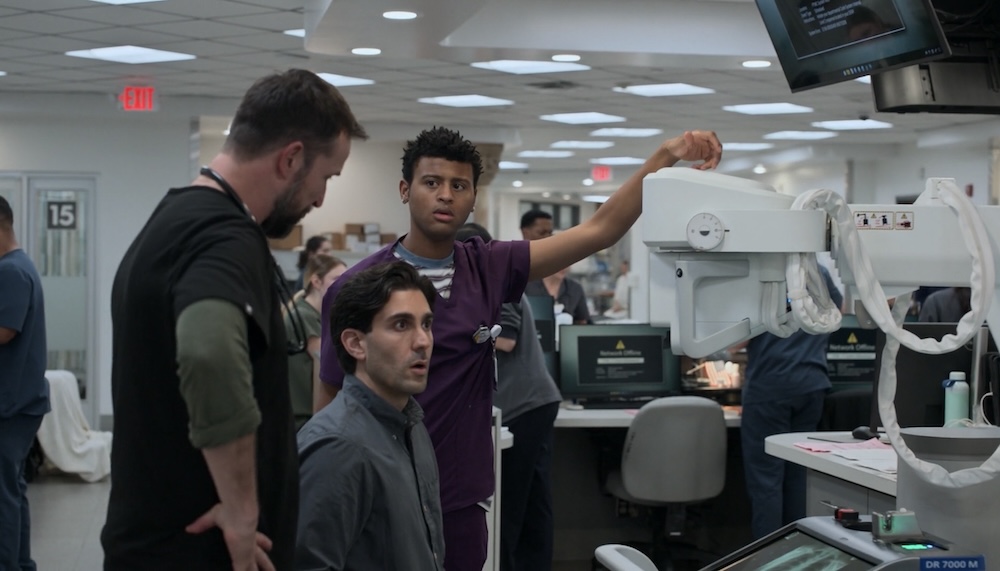
For his appearance in Episode 9, Easter went through extensive training with a medical specialist to make his performance an X-ray technician realistic. “I spent an hour with the person from the company that owns the X-ray machine. She talked to me for an entire hour about how to work the machine and make it look authentic. I learned how to flip through the X-rays and the files, lift it up and down, and move it around the hospital,” Easter explained.

When it came time to film his scene with the series regulars, he felt prepared since he’d spent the last day observing the process. The set operated “just like a machine,” he described, “at the end of the day, it’s like, you were a very small cog and a very large machine.” In his scene, Easter snaps at Noah Wiley’s character, which he described as “very funny” since Wiley was “the big boss on set.”

Celebrating Your Wins

When speaking to Easter about his experience, his gratitude shone through. He underlined the importance of celebrating every moment, because it’s not a “normal experience to be on TV,” and recognizing the hard work and training that got him to where he is today.

“I just feel really grateful to my manager for helping me through that whole process, and for everybody on set being so welcoming to me,” Easter shares. “For that being my first job, I feel like I can take over the world now.”

Mooney Before the Institute

Dylan Mooney currently teaches the Business of Acting at the Institute’s Los Angeles campus, but professor is just one of Mooney’s many titles. The actor, producer, and educator had a non-linear start, first training to play basketball for most of his life. Once he got to college, however, he realized that he felt unfulfilled by basketball. Ultimately, he gave up his scholarship at Holy Names University in pursuit of a degree in theater arts and dance from Cal State LA.

Mooney began auditioning for professional jobs and, eventually, booked his first co-star on a show called Brothers & Sisters. There, he met one of his best friends and collaborators, Ben Shelton, who got him into producing, working with the production company SoulPancake and on a TV show called Impress Me. More recently, Mooney has been recurring on the crime drama series The Family Business and now on this most recent season of The Pitt.

Mooney never planned on teaching, but he has found the experience both fulfilling and deeply informative to his craft. “In between that acting journey, I became friends with David Lee Strasberg and a couple other people from the Institute,” Mooney shares, “they hit me up about teaching, and I did it, and I fell in love with it.”

Professions from a Professor

Mooney expressed that The Method has always been a key part of his process, even before knowing what it was; “I’ve been a Method actor my entire life. I didn’t even know what the Method was when I started. I just knew that if I was going to do something, I was going to do it for real.” Finding the truth of experience is a pivotal part of Mooney’s process as he works to discover authenticity in every role he takes on.

He spoke about the importance of training as both a student and an educator, “I’m an actor. And yes, I am your teacher, but because of my experiences, I can give you knowledge and tools and things like that.” Mooney added, “I don’t think we’re ever done growing, or learning, or anything like that, especially as an actor.”

He also delved into his audition process and emphasized the importance of a coach. He explained that he always has another person observing his work, whether that is for a co-star or a principal role in a film, because you can never be as objective as someone else watching your work.

No Small Actors

Before even getting to set, Mooney could sense that The Pitt was different from any project he had worked on before.

“When I showed up, from the moment I stepped foot on Warner Bros., somebody came to me, and was so excited to see me, and was so excited to show me where things were and what was happening. It was just this love and this joy of everybody knowing that there’s something special going on with this show.”

Mooney expressed his gratitude to be working on a show that represented “something so important, which is healthcare and workers behind this amazing industry that we all depend on.”

He described his experience as “mesmerizing,” as so much was poured into the show both on and off camera. In particular, he made note of the extensive background acting team who “funnel in and out, every second of every scene,” as well as being able to watch the series regulars and “their authenticity” in each take.

The Pitt and Real Life

The Pitt works to mirror real life, providing a platform to showcase real and difficult issues. This past season highlighted storylines surrounding consent, ICE, and mental health, to name a few. Mooney’s character, Charles Davis, is the father of a young man suffering from undiagnosed bipolar disorder or schizophrenia. The show not only depicts the patient experience, but also what their families go through.

When speaking with Mooney about his character’s storyline, he expressed that growing up “mental health was something you just don’t talk about, it just didn’t exist,” and that “The Pitt does such a great job, not just our subject matter and our storyline, but bringing out so many different, prevalent, modern, common issues between families and people.” 

He went a step further to acknowledge, “I really think this show does something for people’s mental health, to be honest with you, to help ease their soul.”

What’s Next?

Recently, Mooney stepped into the role of director and made his directorial debut with an independent series, Villa Hollywood. He feels grateful to be surrounded by such talent on set and behind the scenes as he takes on this new role.

It was actually a former professor who first noticed Mooney’s gift for directing. When asked to direct a scene at Cal State LA, Mooney’s attention to detail stood out above the rest. His instructor, Professor Gonzalez, said he would “become a director one day,” to which Mooney replied, “nah, I’m gonna be an actor.” As his career progressed, it was his interest in producing that ultimately led him to want to try out directing.

Be on the lookout for the limited series and more of Mooney’s work in the near future.

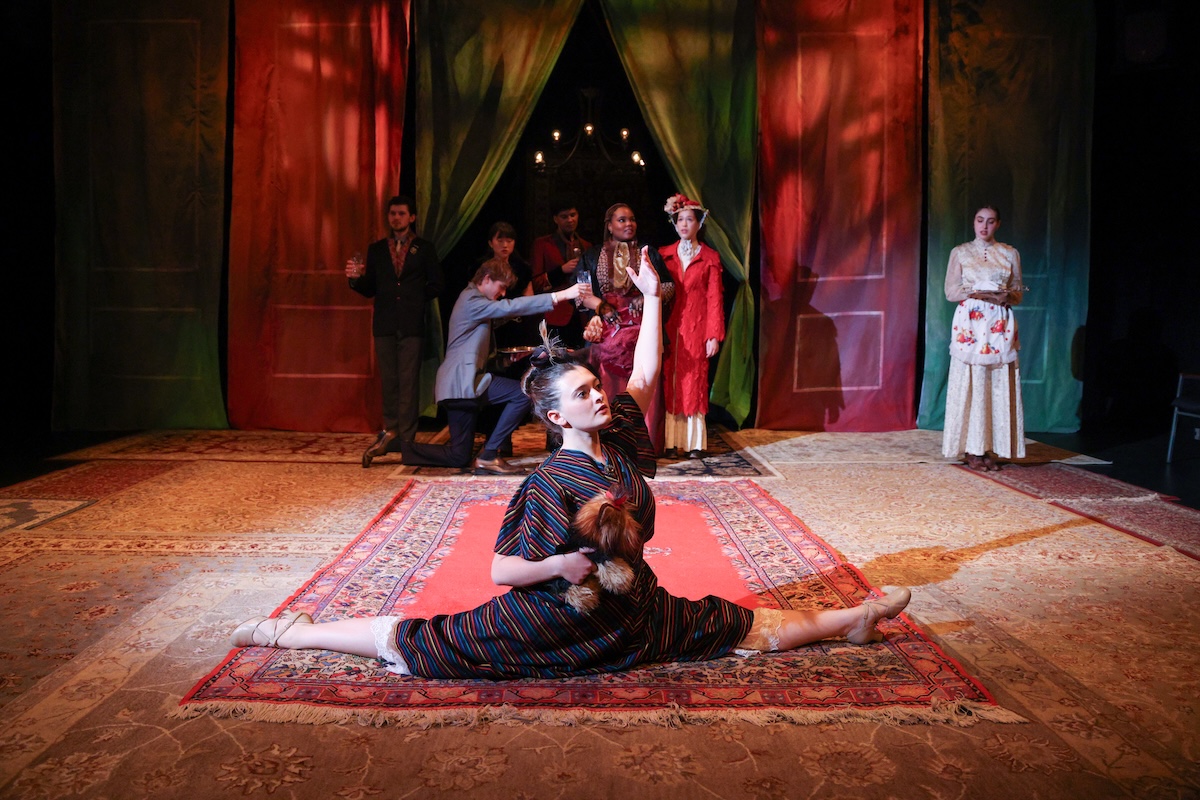
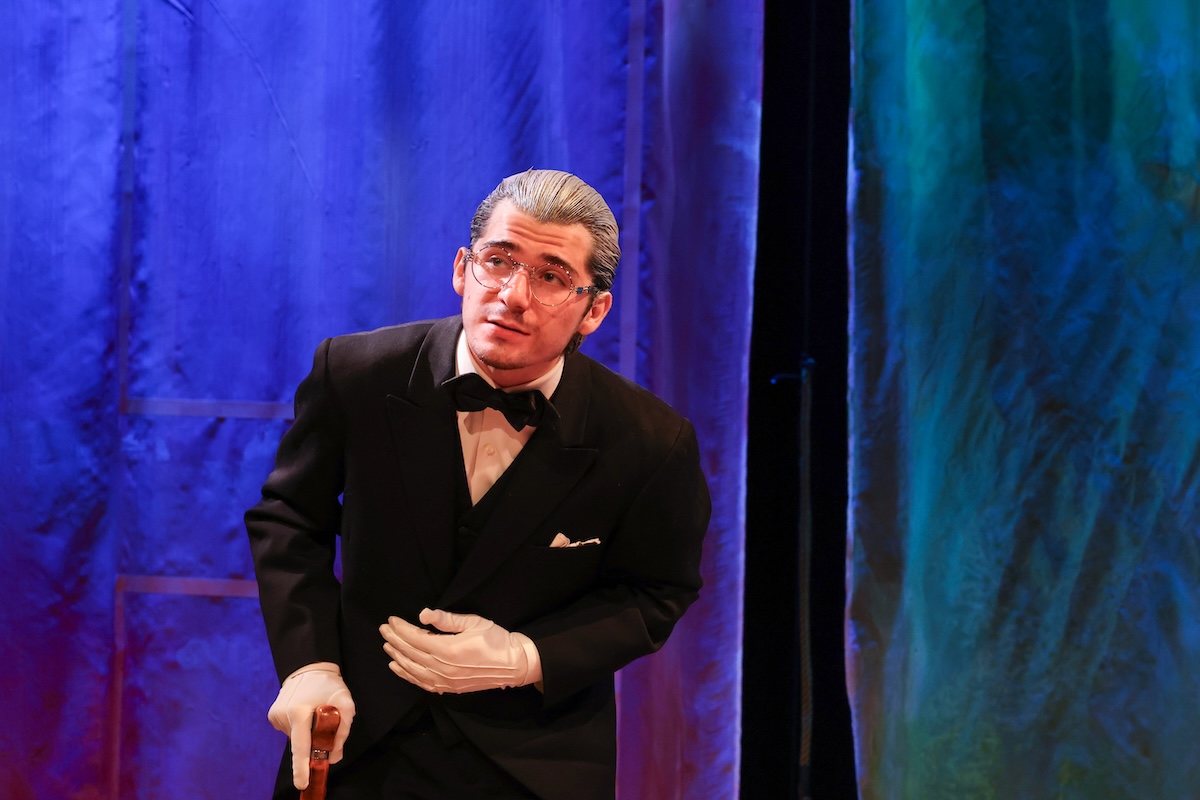
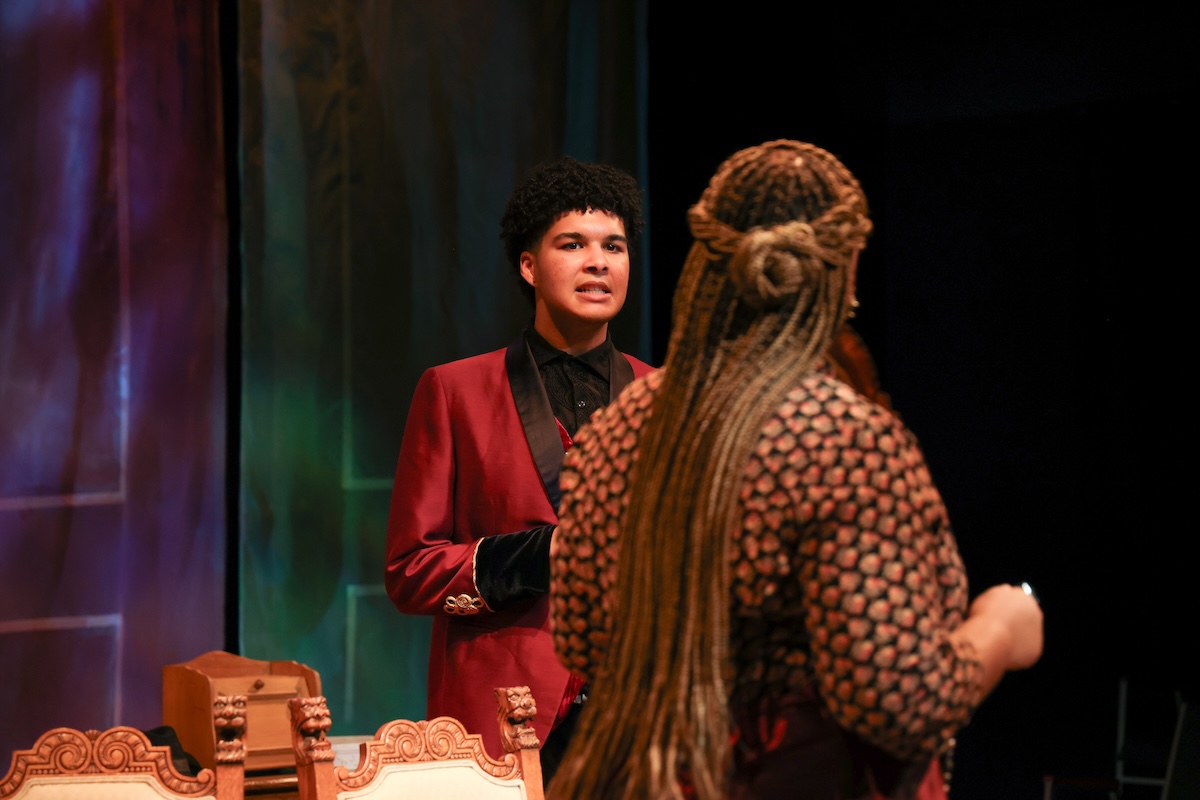
Dinner Party
Written by Reina Macias
Directed by Tyrel Jackson Williams

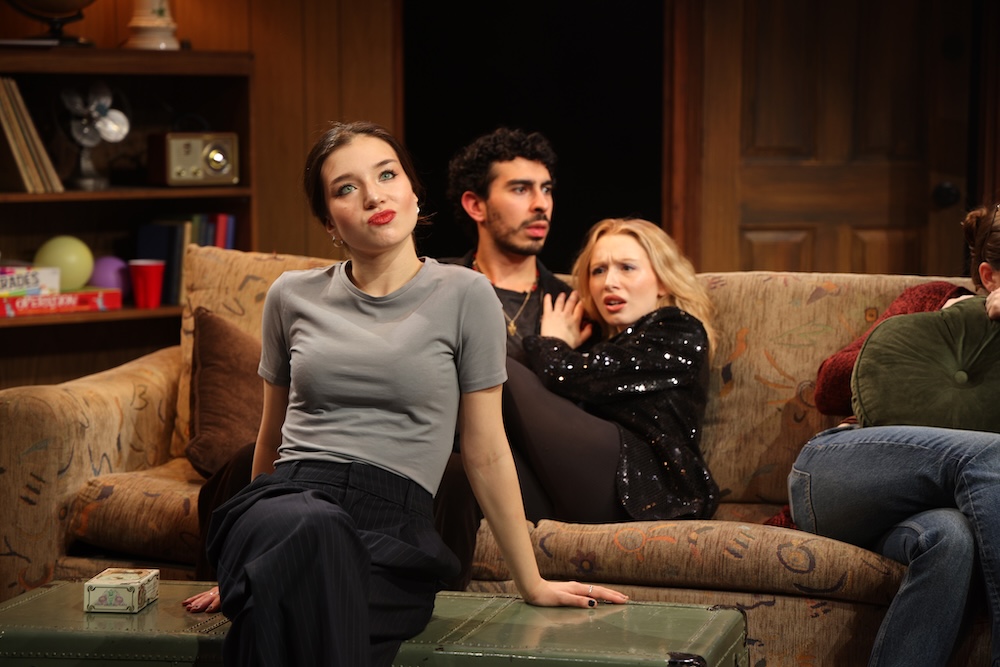
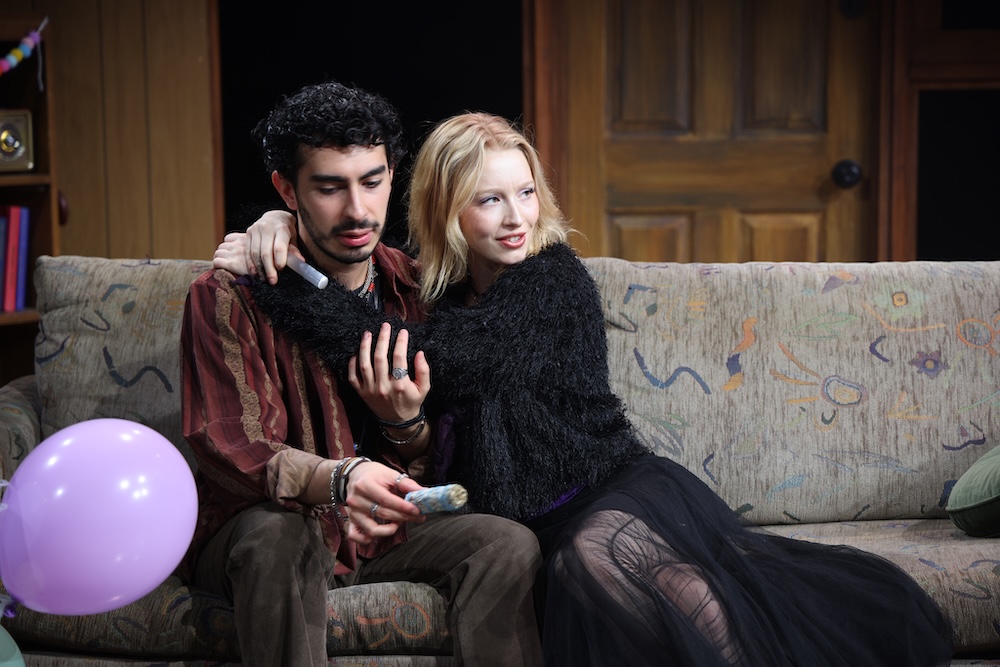
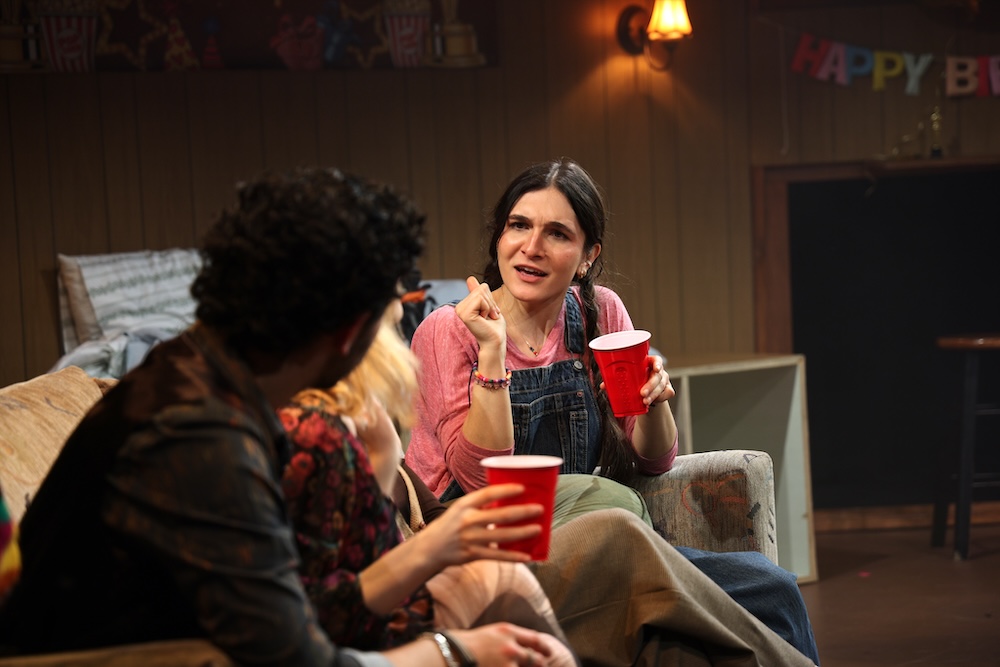
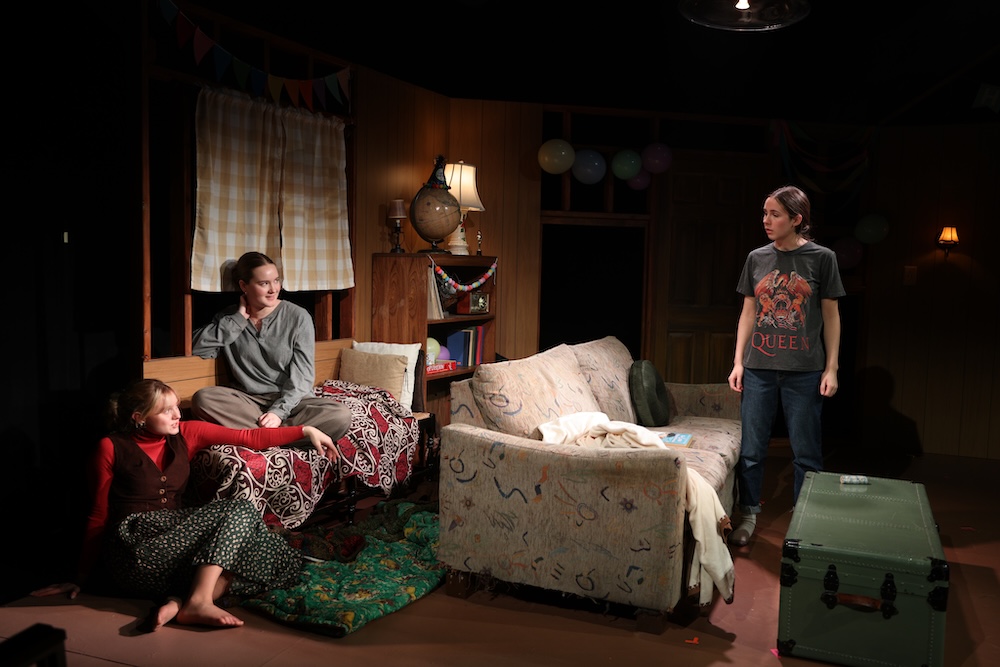
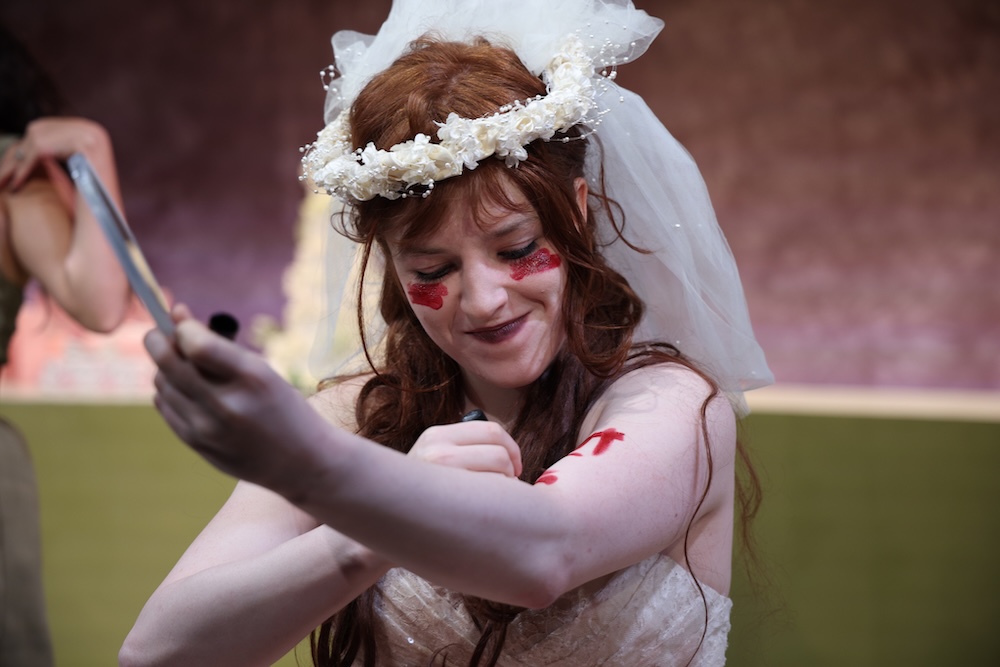
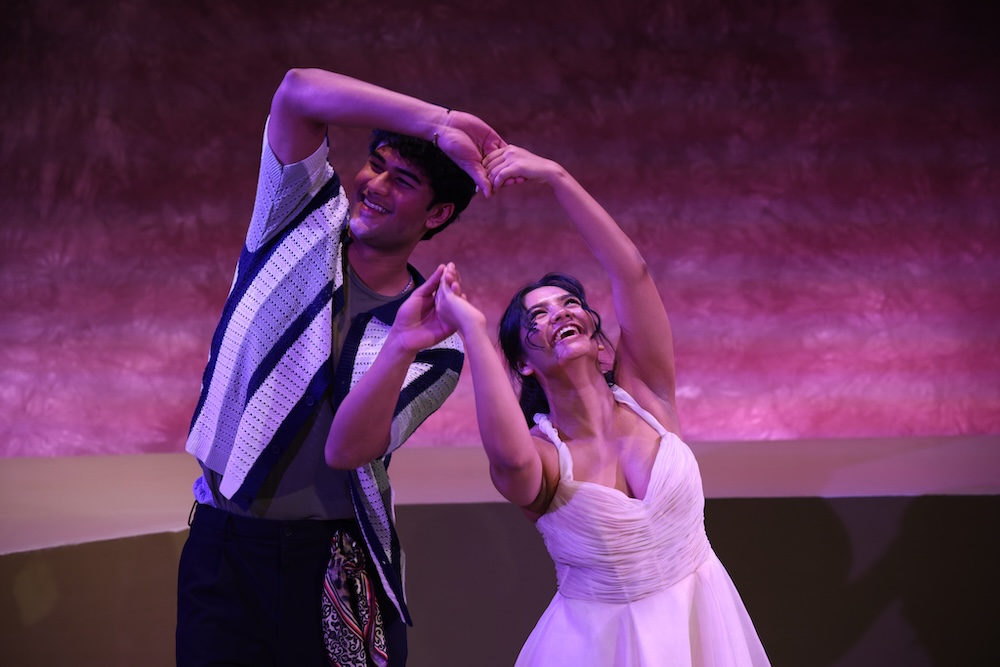
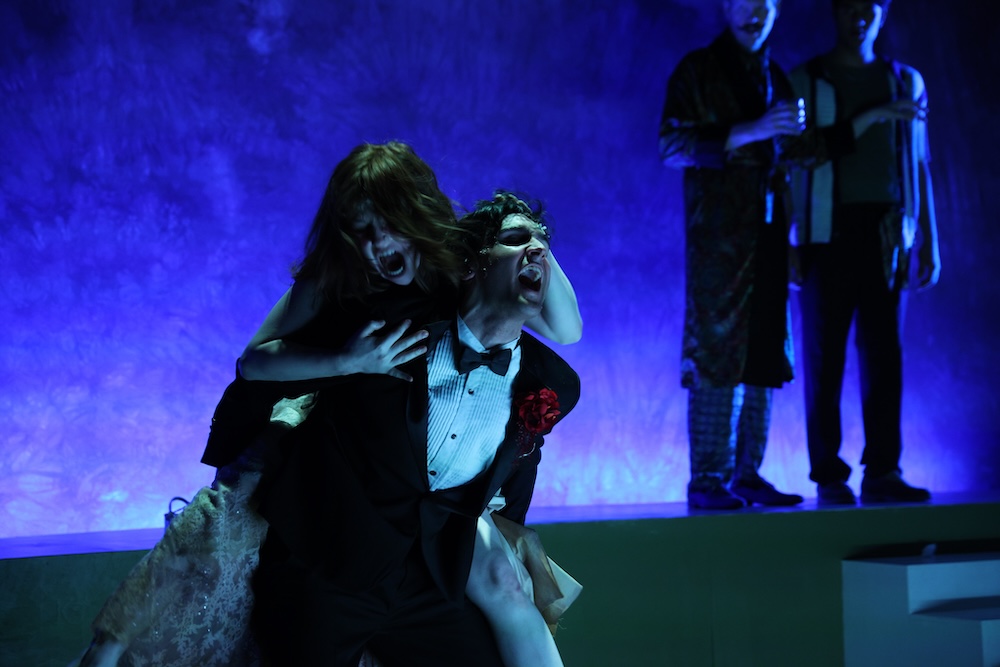
2026 StrasbergWORKS Selection

May 7 – 9, 2026 | The Marilyn Monroe Theatre

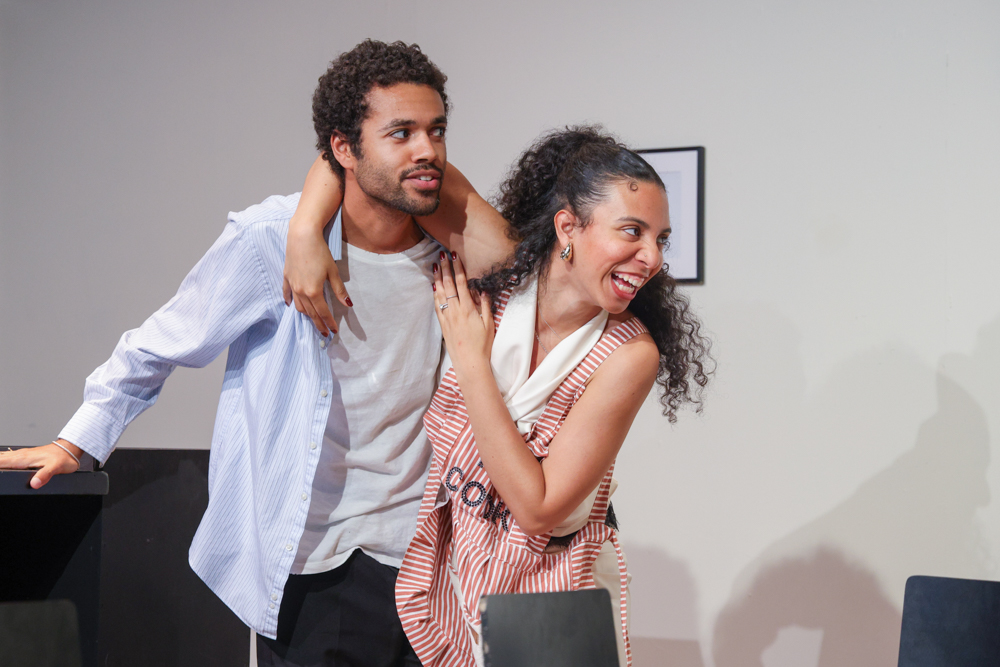
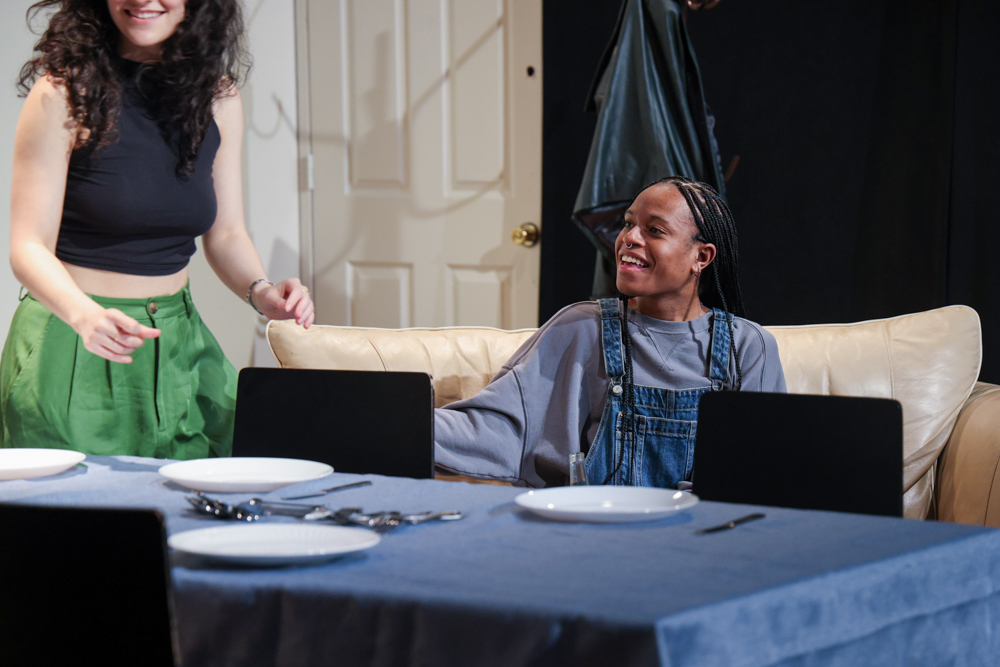
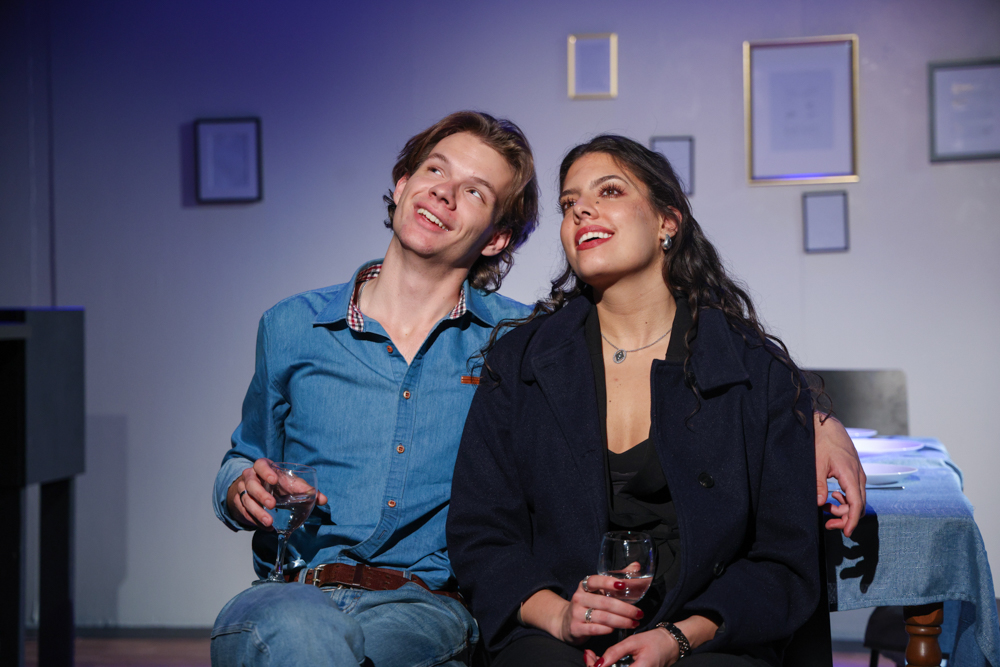
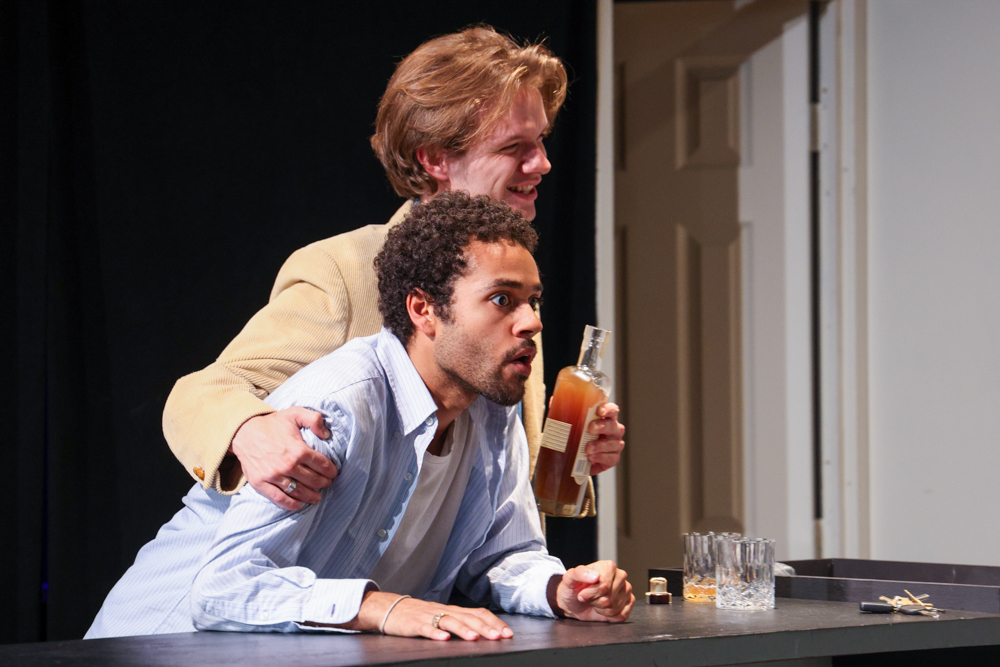
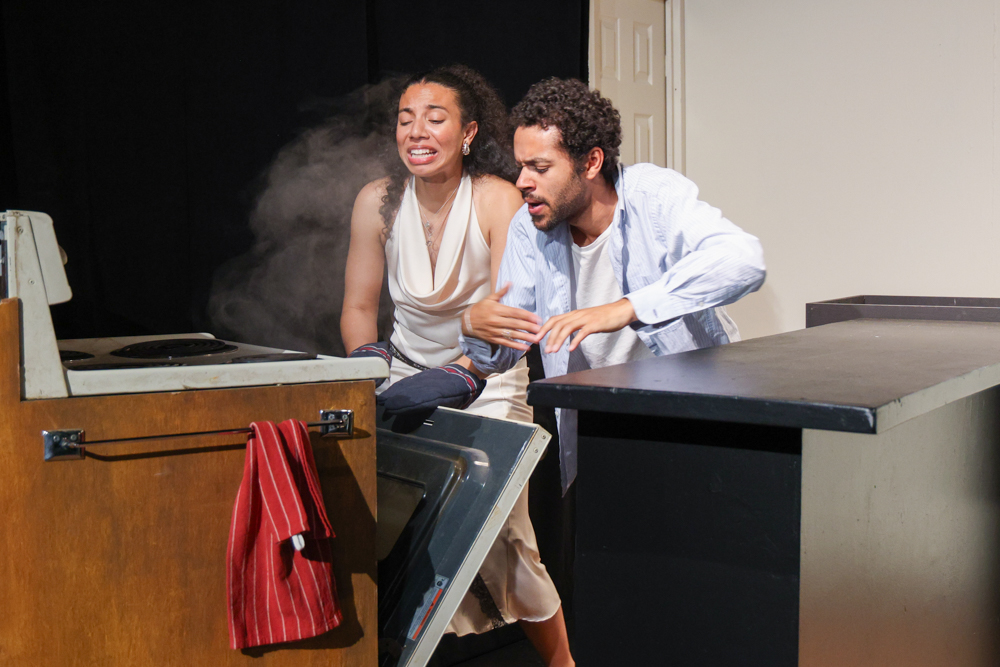
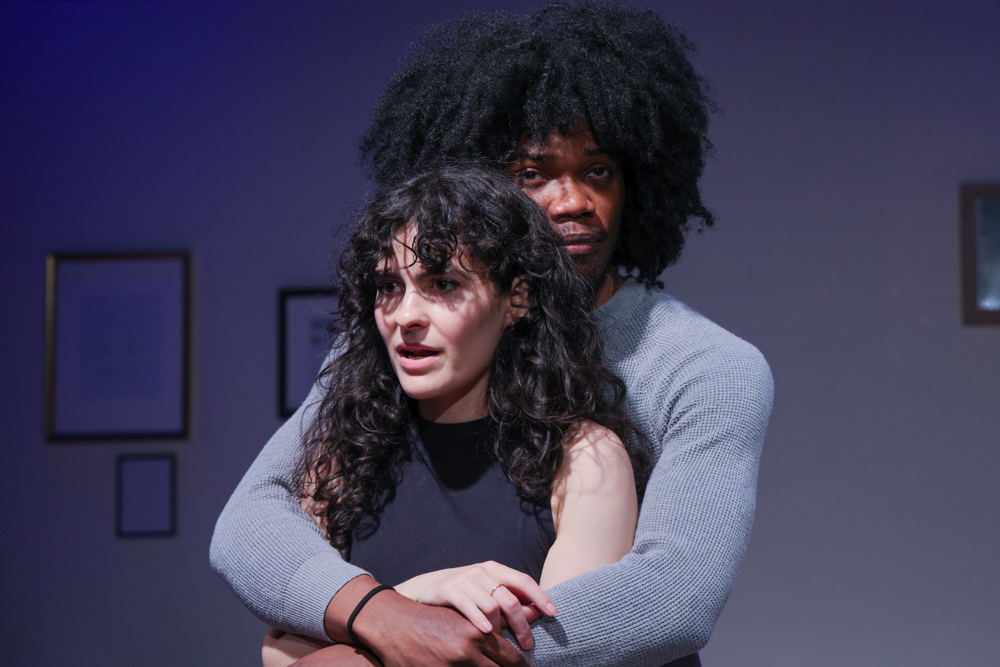
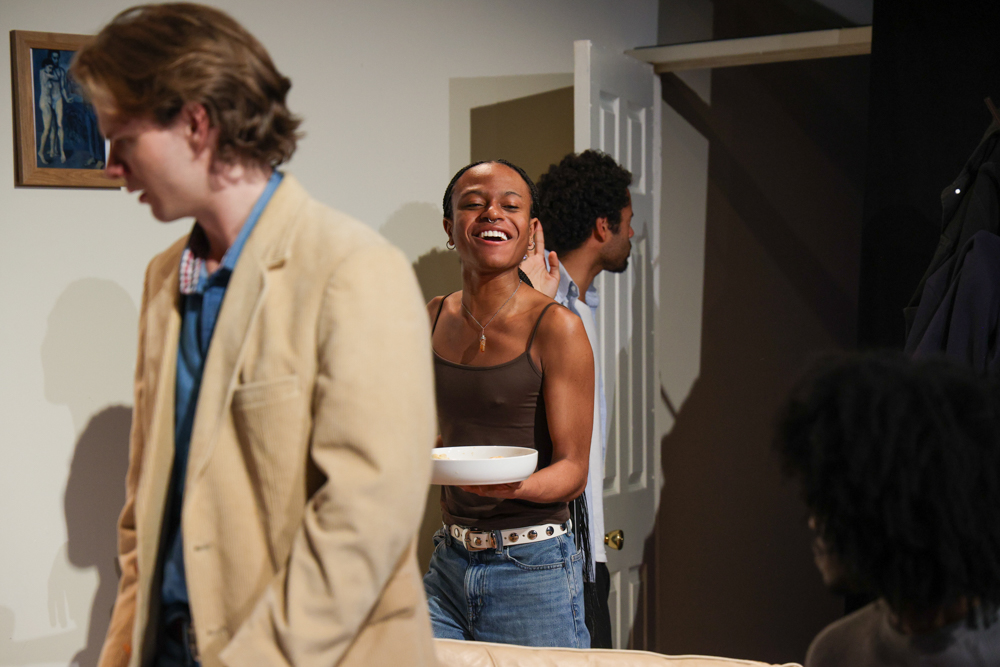
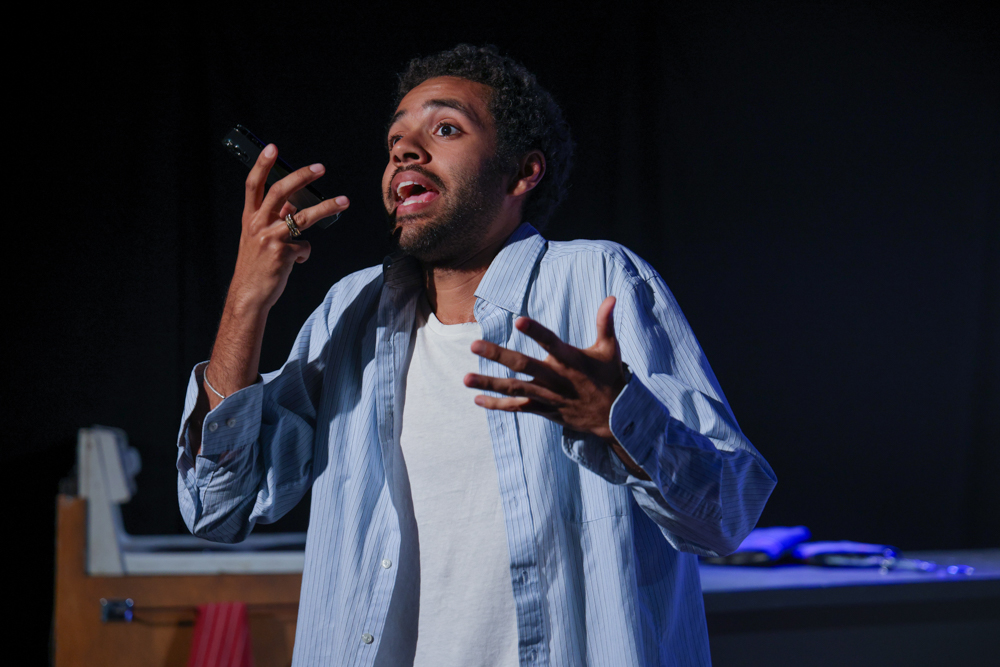
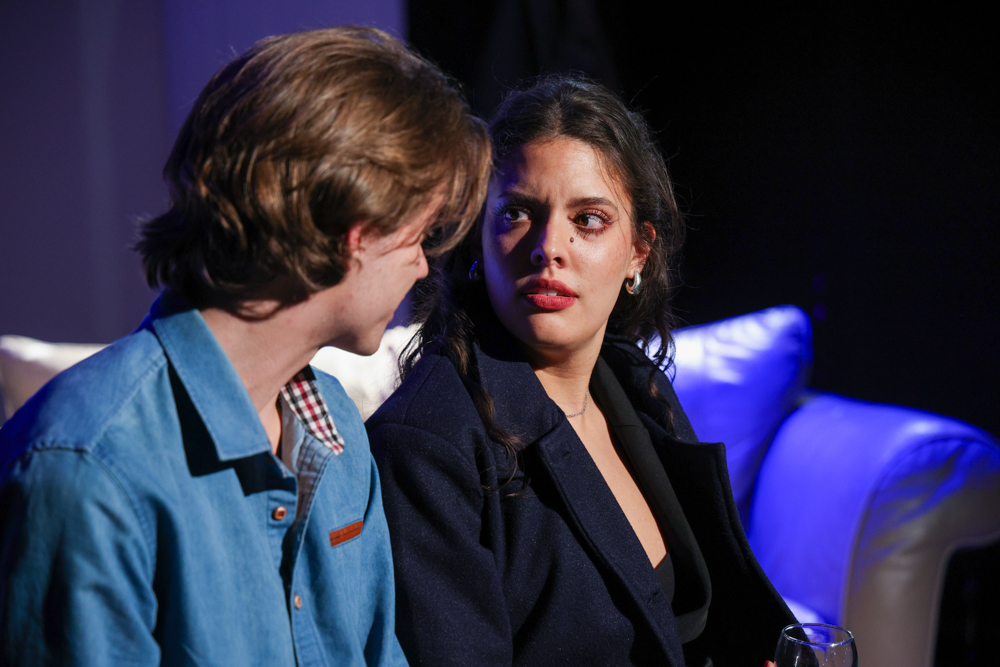
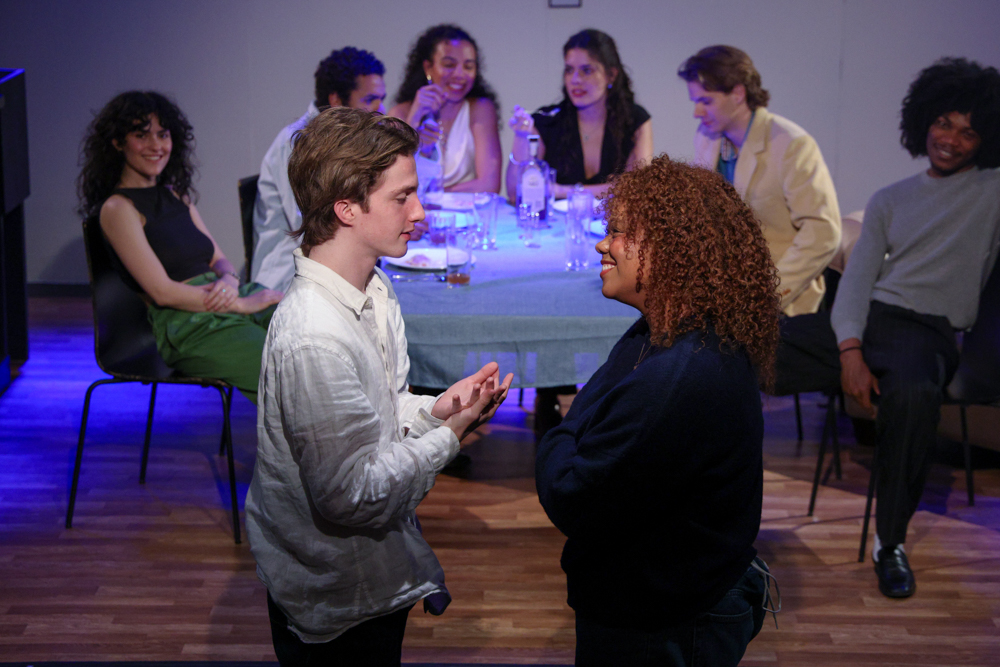
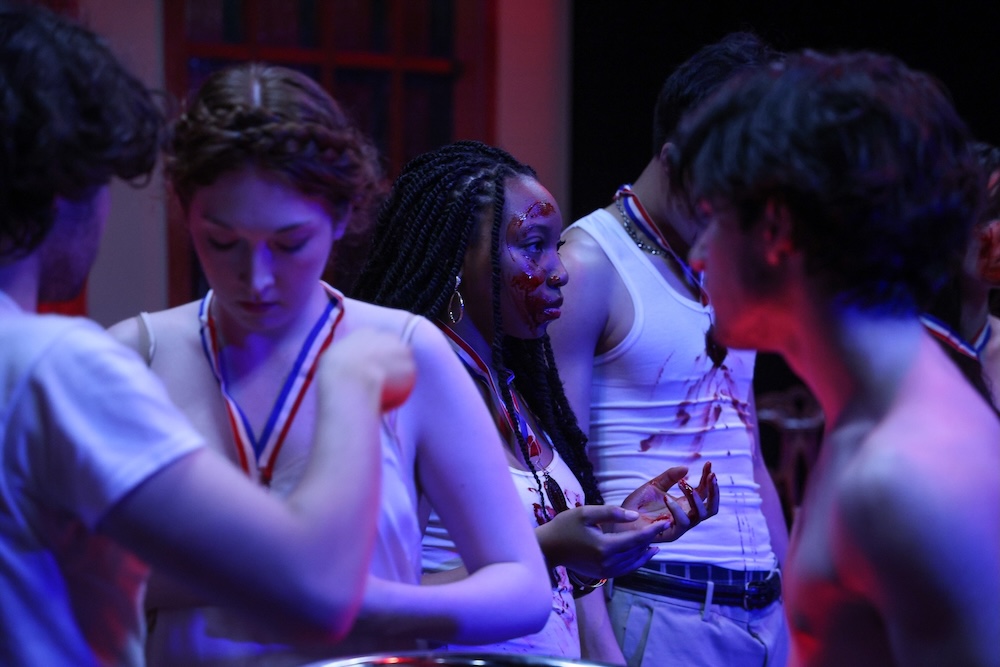
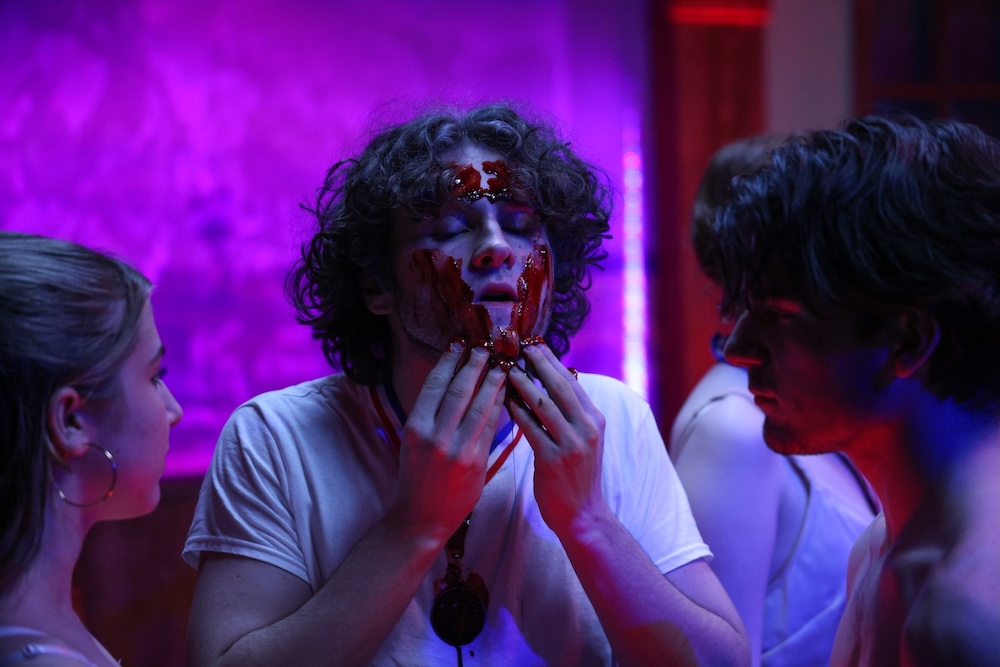
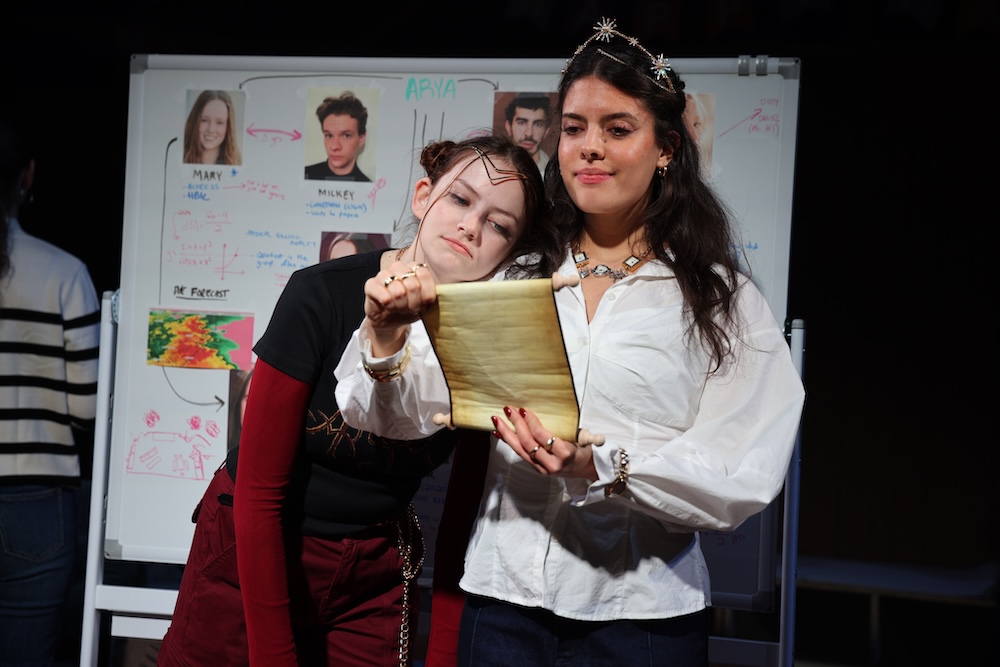
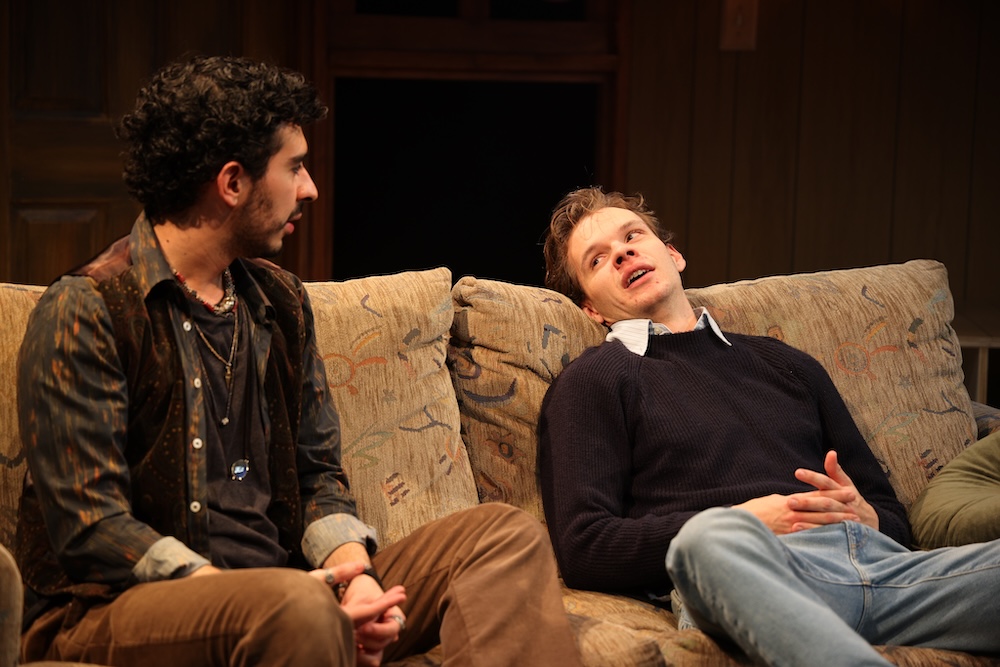
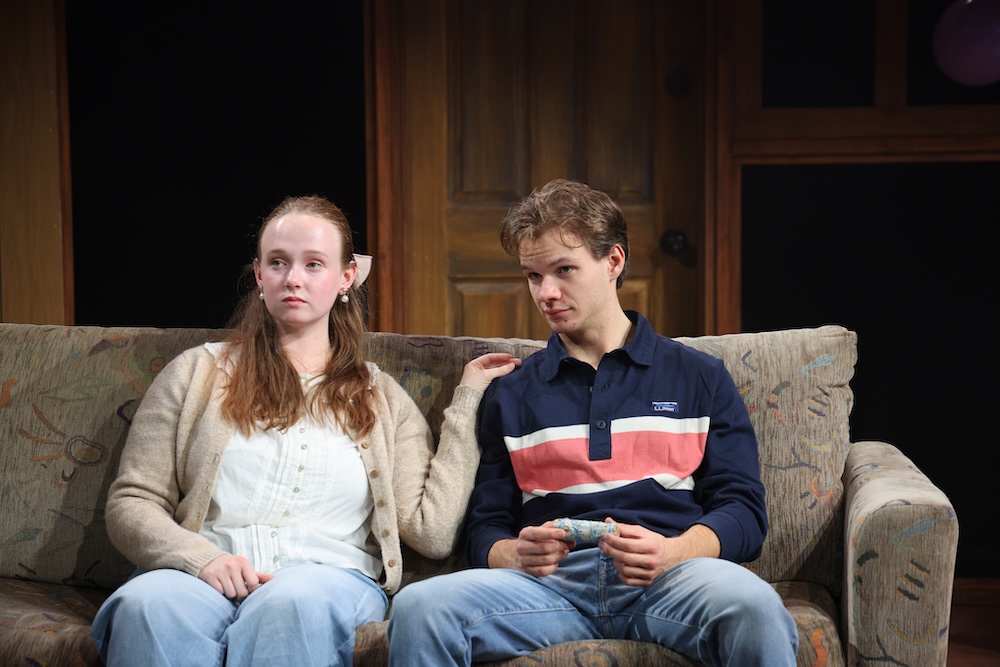
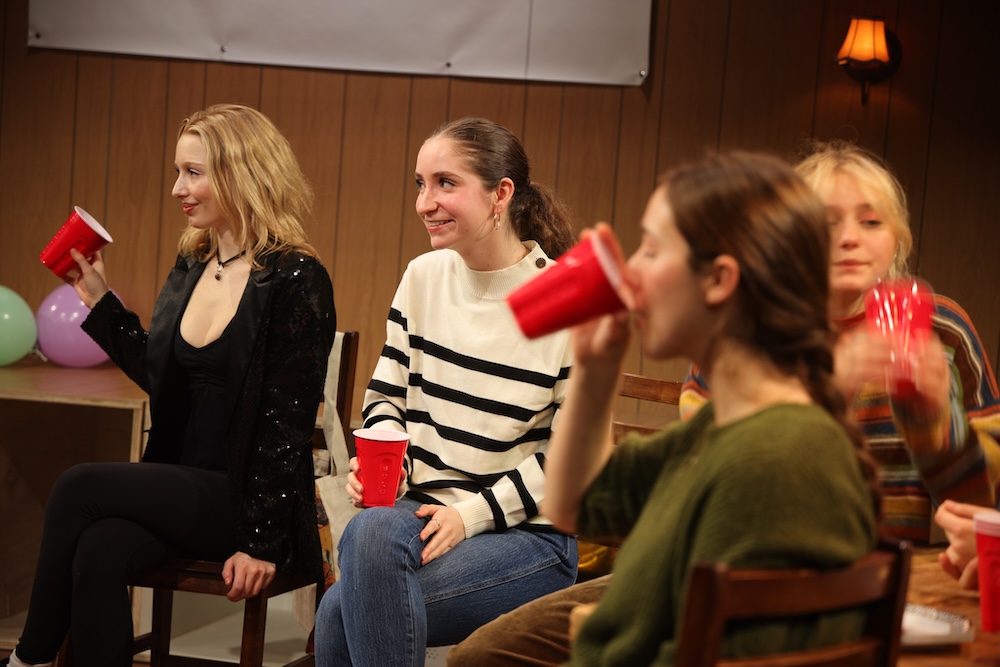
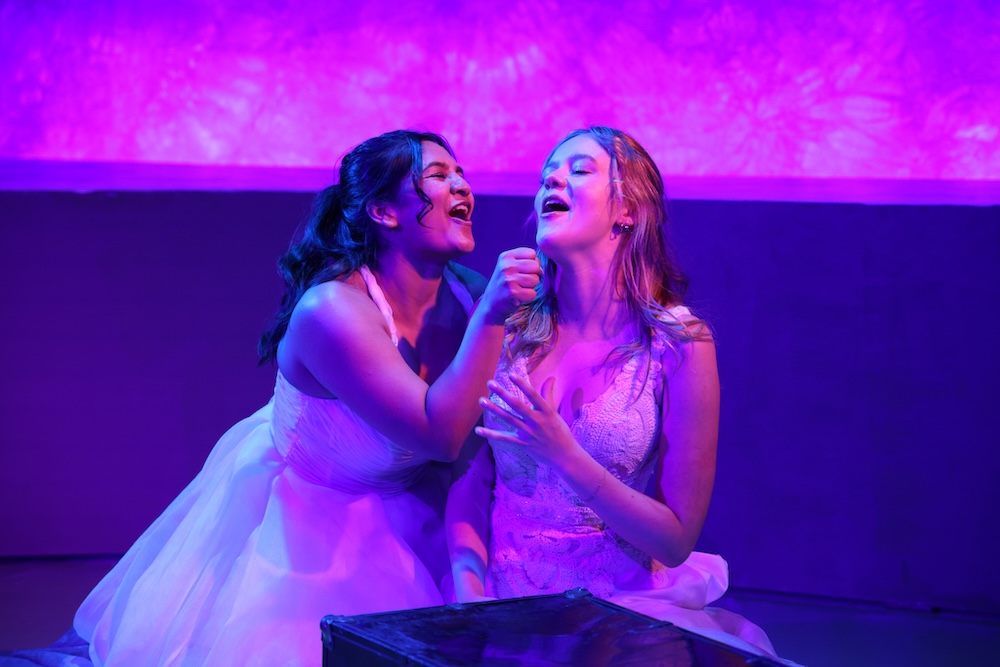
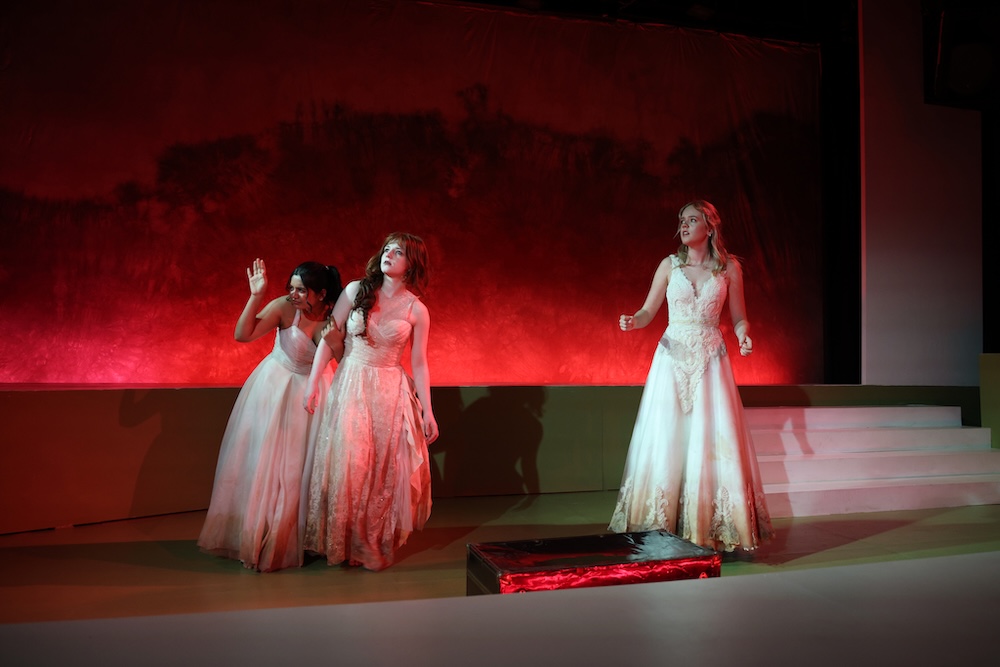
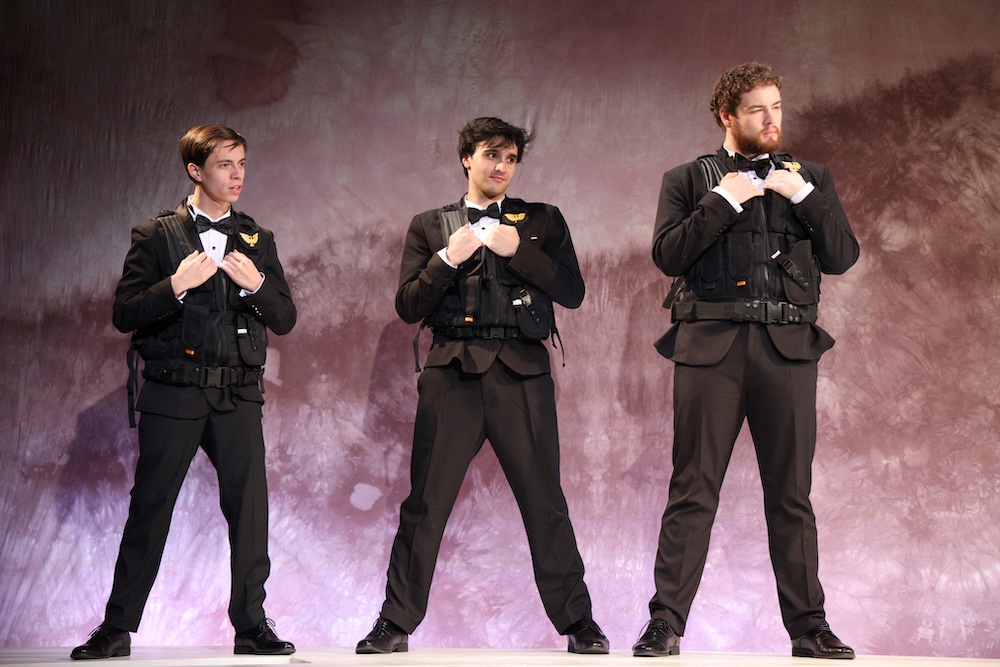
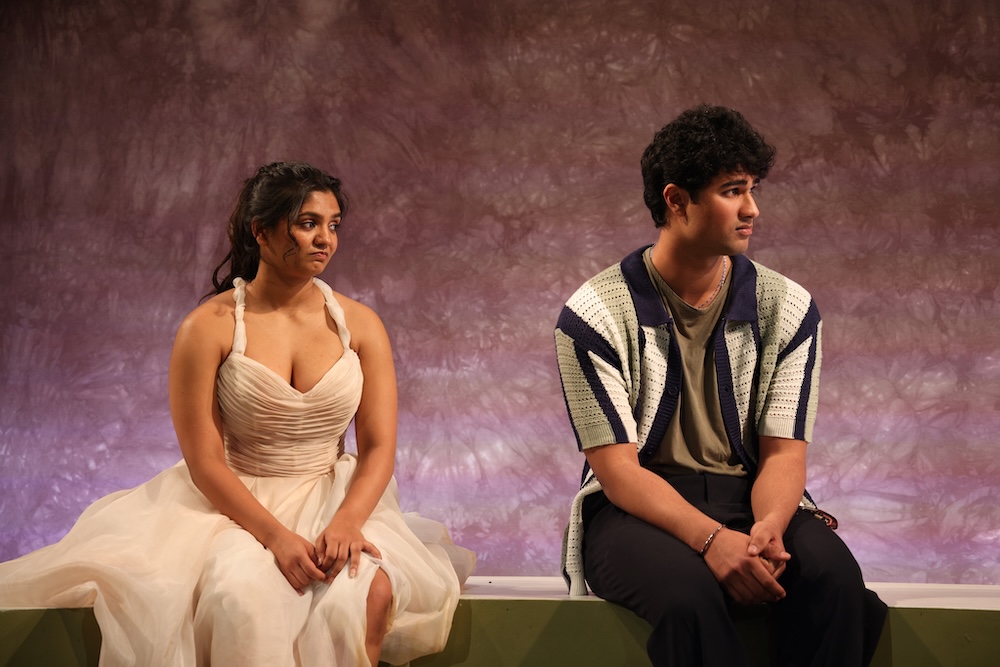
SYNOPSIS: Six friends gather for a celebratory dinner party, but what starts as a sitcom-style hang quickly fractures as tensions around womanhood, race, masculinity, and the quiet pressure placed on young Black and Brown adults to “stay strong” emerge. Secrets surface, old wounds reopen, and the friends are forced to confront who they’ve become and who they’re afraid of becoming.

FEATURING
Melanie Berry, Reece Dobbs, Jervaris Etienne, Reina Macias, Gavin McGinn, Valentina Rubio, Dylan Speirs, Scarlett Strasberg, and Jeremy Watson

Written by Giulia Abbondanza

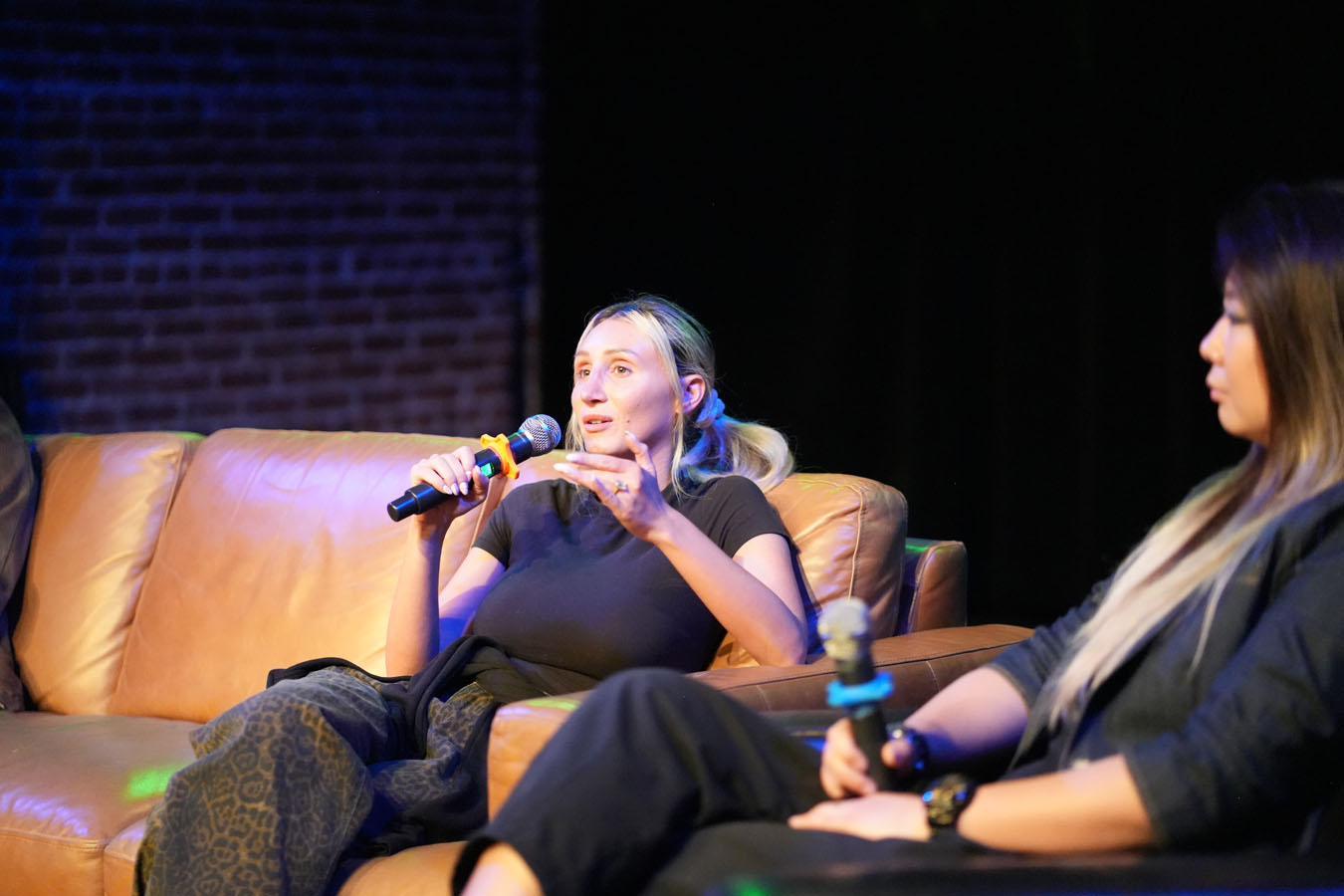
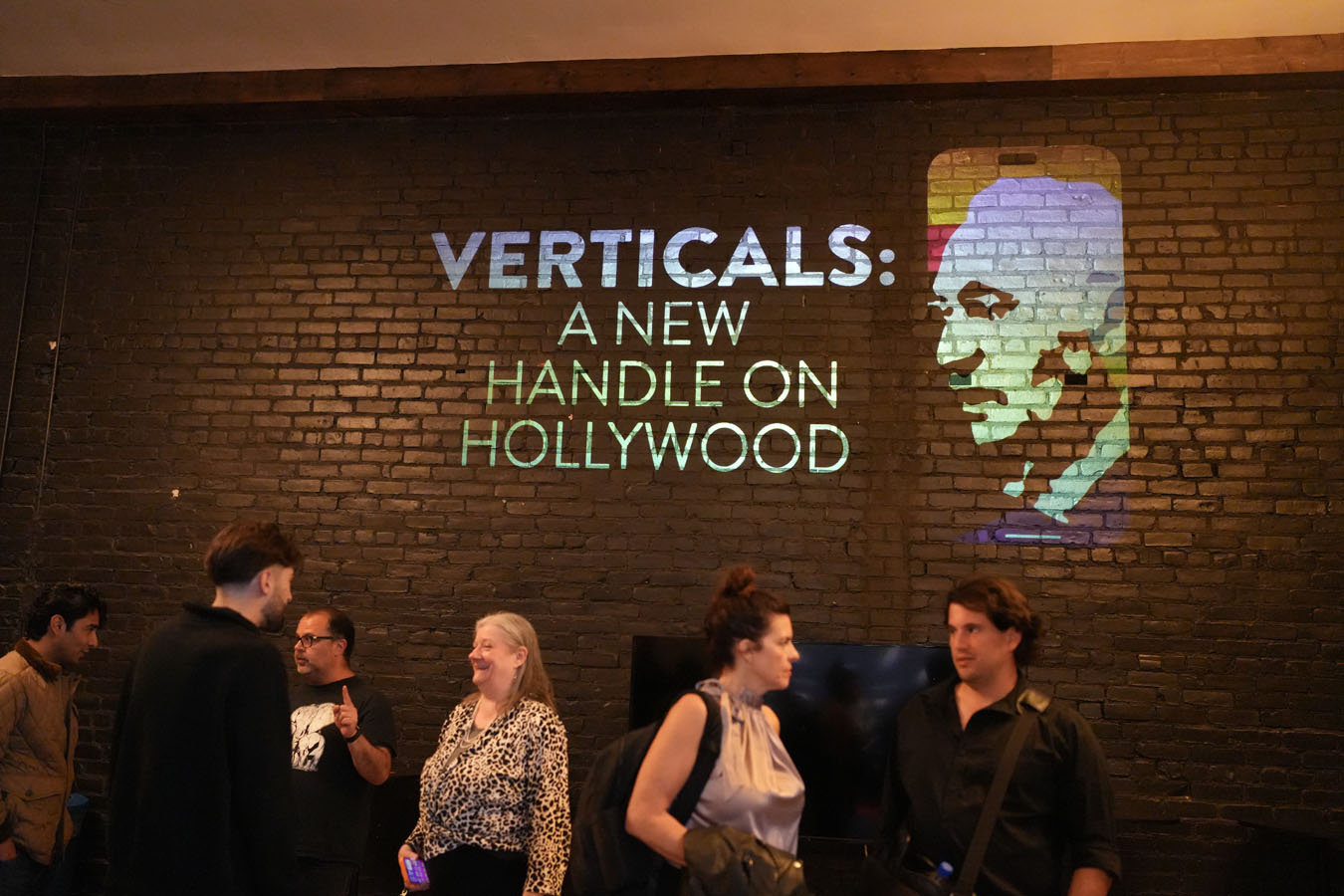
Vertical series casting opportunities are becoming more and more prevalent, bringing both opportunity and skepticism with their growing popularity. Last week at Lee Strasberg Theatre & Film Institute in Los Angeles, students got a clearer look at what’s actually behind the microdrama boom, the vertical format, and whether it’s all worth their attention.

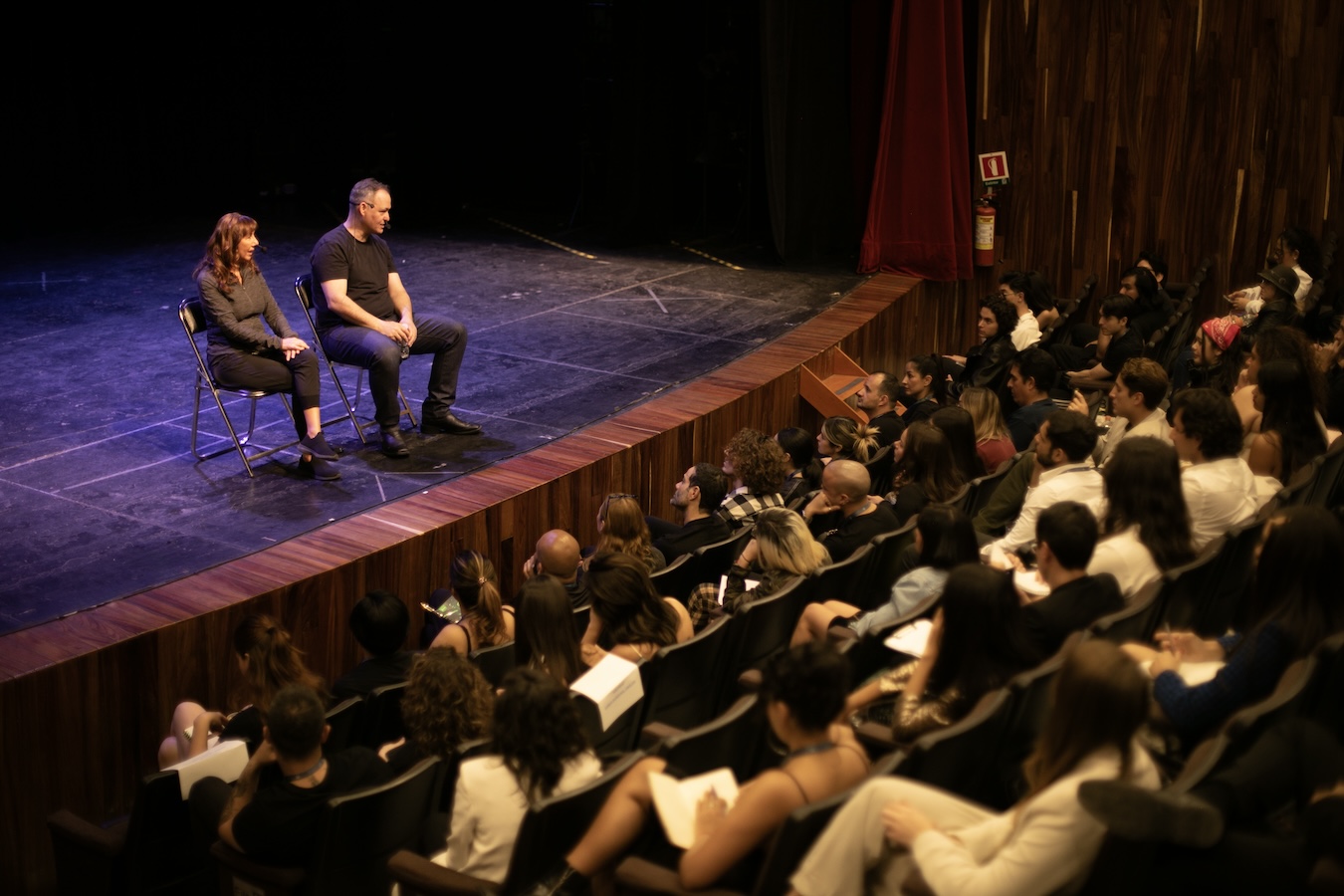
LSTFI Head of Film, Sheldon Larry, moderated the panel discussion in the Marilyn Monroe Theatre with seasoned vertical series producers, directors, and cinematographers. The conversation aimed to move past the outrageous, tabloid-esque show titles—some standouts from the panel’s credits were “Secretly Pregnant with My Boss’s Baby” and “Christmas With a Country Bad Boy”—and take a more grounded look at vertical storytelling.

Starting their own production companies.

Panel guests Eris Zhao, Craig Lief, and Josie Andrews spoke about their entry into the vertical space. Eris and Craig founded their film production company, Bad Larry Productions in 2023 with Josie also starting her own production company, Dumm Blonde. Their companies’ high-quality production value eventually caught the eye of notable platforms like Dramabox and ReelShort.

“If you can handle verticals, you can handle almost anything on set.”

A key focus of the discussion was the pace and pressure of vertical production. Compared to traditional film and television, the turnaround of the product is fast— extremely fast. The panel described shooting schedules that allow for as few as two takes per setup and days that can cover upward of 15 script pages. It’s a volume-driven model that prioritizes efficiency.

For actors, that environment presents both challenges and opportunities. The material itself can lean heightened or melodramatic, requiring a level of commitment that doesn’t leave much room for hesitation. At the same time, the speed of production means constant repetition, something Josie framed as a practical benefit to any actor trying to get their legs in on-camera work. Having just come off working on a feature film, Josie noted that while every set has its difficulties, vertical productions demand a different kind of endurance than traditional long-form projects.

Craig put it bluntly, “If you can handle verticals, you can handle almost anything on set.”

Where do verticals fit into our industry and where are they headed?

The takeaway wasn’t that vertical storytelling is the only path for all working actors, but that it’s a growing corner of our industry—one that could offer real, valuable experience, especially for actors early in their careers. As Josie summed it up, the format can be a space to “get reps in,” test instincts, and learn how to work quickly within a highly technical framework (literally staying in the vertical frame).

For students in The Marilyn, the conversation wasn’t about selling a trend, it was about understanding the conditions of the work, and deciding where it might fit into their own path. Students left the theatre with much to be discussed in the lobby, and a better handle on the significance of vertical storytelling in the entertainment industry.

For more information about upcoming educational and entertainment events at The Lee Strasberg Institute check out our Los Angeles events calendar!

Written by Anna Grace Griffin

One of the most thrilling, and sometimes inconvenient, parts of being an artist is traveling around the world for projects. With the industry becoming more global and taking you to places you never thought you would go, staying connected to your craft has never been more important. Here are five ways to continue learning and keep your actor training sharp while you are shooting on location abroad, cast in a touring or regional production, trying out living in a new city, or simply taking a trip.

Take Virtual Acting Classes

The Lee Strasberg Theatre & Film Institute (LSTFI) offers a variety of virtual class options that are open to students worldwide. Classes include Method 101, a foundational course aimed at introducing The Method, as well as Method in Focus, a class that explores a key facet of Method Acting or the industry every quarter. Online classes are held live on Zoom, allowing for real-time interaction, scene work, and personalized feedback while offering the flexibility for actors to train from any location. These classes offer a secure approach to sharpening your skills and keeping you accountable. The best part? Since you can access these classes from anywhere, you get to connect and network with other students from everywhere.

Join Local Workshops

LSTFI offers workshops and intensive training globally, allowing students from all over the world to train and study The Method. These workshops provides an in-person training experience unlike any other on-campus experience. Upcoming workshops will be held in Ljubljana, Slovenia; Berlin, Germany; Sofia, Bulgaria; and Warsaw, Poland this summer.

Find Plays at Local Libraries

Reading new and old plays is one of the best ways to strengthen your skills as an artist and keep a pulse on what’s trending in the industry. Finding local libraries and book stores for plays not only deepens your knowledge of new work, but also allows for an outing to see the culture of the city. Furthermore, you may discover a new place to curl up with a play. Some historic picks abroad include The Royal Court Library in London and The National Library of France in Paris.

Read the Blog

Great job! You are already staying connected to LSTFI by keeping up with the blog. The Institute features all sorts of content, including alumni news, faculty news, audition tips, industry advice, and ways to connect with other actors. Reading and learning about LSTFI at large can help grow your sense of community within the industry. The blog also showcases a variety of contributors and writers, each adding unique perspectives on The Method and the entertainment industry.

Explore & Take in Life

See new plays in new languages. In basements. Concert houses. On the street. Watch dance shows, stand-up comedians, and guitar players in the park. Go to local cinemas, and see a film you haven’t heard about or in a language you don’t know. Go to museums, gardens, and parties. Talk to someone who leads a completely different life from your own and learn as much about them as you can. Take a breath. Sometimes finding some distance from the work reveals how important it is, and reminds you how much you love what you do.

Written by Alex Alexander

For LSTFI faculty member Madeline Jaye, the line between teaching and performing has never been a boundary — it’s been a feedback loop, and her debut solo show is the latest proof.

About Madeline Jaye 

Jaye’s artistic training began in earnest at the New Jersey School of Ballet, them home to teachers from the New York City Ballet, before expanding into modern, tap, and gymnastics. She graduated high school early, spent time studying abroad in Switzerland, and even performed in a professional dance show in Cairo during her years at Butler University.

Jaye arrived in New York City at 21 with a foundation that was already unusually broad. She kept building on it — commercial technique, scene study, acting technique — and steadily moved from chorus dancer to fully realized triple threat, equally at home as a dancer, actor, and what she calls a “utility singer.” Work with the renowned Radio City Rockettes and in professional musical theater followed, all while she continued training and developing as a creator.

Jaye and LSTFI

Jaye joined the faculty at the Lee Strasberg Theatre & Film Institute in 1995 as a dance teacher, initially through the Institute’s partnership with New York University. She describes the role as one that let her stay artistically alive while building a life outside the studio, supported by LSTFI leadership to continue growing and working as a performer. Over the years, her role deepened and expanded from NYU classes into the Institute itself, where she developed original movement work tailored specifically to actors: physical exercises designed to integrate The Method, ground performers in their bodies, and bring them into genuine presence. She teaches this work and more in her Movement for Method Actors classes.

The Institute’s commitment to faculty who are actively working artists, not just teachers, is something Jaye names as part of what has kept her here. “They want teachers to nurture their own talent,” she says of LSTFI’s ethos. Faculty are fulfilled not only as guides of the next generation but as individual artists. An added benefit for the students, these teachers also become reporters from the front lines of the industry. Jaye shared fondly the stories of bringing current, lived experience into the classroom: the highs and lows of auditions left in tears of joy and frustration; intel about current trends among producers; and most importantly, the personal journey of being a working artist and developing your own practice.

The Institute also supports faculty that are focused primarily, or even solely, on teaching, as well as the working-performer-teachers. Jaye praises her colleagues whose primary focus is their teaching journey, saying that it gives the students the most well-rounded instruction, something all LTSFI students know to be true.

On Teaching and Being a Working Artist

For Jaye, teaching is not what happens when you’re not performing — it’s its own creative act. The students at LSTFI are part of what sustains that energy: a genuinely diverse group, in terms of background, body, training, and expectation, who keep the work from going stale. Her own unconventional path, navigating injuries, a body that didn’t fit the mold, and institutional dismissal, all shaped her into a teacher who knows how to work around a problem rather than be stopped by it.

This exchange runs in both directions. Being directed in her own show reminded her of the same generosity she asks of her students: that there is not only one path to a true moment, and that trusting another artist’s instincts is its own skill. “As an actor, I’m always relearning that truth from my students,” Jaye reflects, “and as a teacher, I remember to be generous with other people’s process.”

Dementia and Other Exit Strategies

Dementia and Other Exit Strategies emerged not from a plan but from necessity. Specifically, the exhausted, darkly funny necessity of being the primary caregiver for two aging parents while raising two children, all while maintaining a full teaching and coaching schedule. While caring for her father as his health declined, and her mother as her memory issues increased, Jaye came home and shared hilariously tragic stories, full of “gallows humor”, with her husband. Eventually, Jaye began writing down what happened each day as a simple exercise, using what she calls her “mull and blurt” method, with encouragement from her husband and then a women’s artist collective she joined through a friend.

The brain-dumps-turned-monologues accumulated quietly, with no agenda, until by November 2024 a full play existed. In the precious and limited holiday break between semesters, while juggling teaching commitments and family, Jaye arranged the writings into something cohesive over a marathon fifteen-hour session, cut ruthlessly, and emerged from the blue-light haze with a show. She had a reading in January for twenty-five people — an experience she describes as physically overwhelming in its intimacy.

Theatre 4the People Festival

The show received its first full staging in November 2025 as part of a solo festival at Theatre 4The People. Following her intuition and strong self-knowledge, Jaye leaned on a core technique of The Method, the place exercise, to design the set herself. She knew how critical the set would be, not only to provide a frame for work to shine on but also because following her artistic intuition was a critical component of the piece. Inspired by Shel Silverstein’s hand-drawn illustration, the set was perfectly imperfect, made of cardboard and assembled into three dimensions on stage, anchored by a large sculptural dog.

The feedback loop, it turns out, runs deeper than classroom and stage. It runs through grief, caregiving, humor, and the particular courage it takes to stand alone in a room full of people and tell the truth. Jaye has been training for this her whole career, she just didn’t know it yet.​​​​​​​​​​​​​​​​

Written by Isa Barrett

In 1670, a play titled The Forc’d Marriage premiered on the London stage. Its author, Aphra Behn, had done something almost unheard of for a woman of her time. She made her living as a professional playwright. 

Writing for the public theatre in Restoration England meant competing directly with male contemporaries for commercial success, critical recognition, and production opportunities. Yet Behn did not write anonymously or publish privately. She wrote boldly and publicly, going on to produce comedies such as The Rover (1677), one of the most successful plays of its era. 

Centuries later, Virginia Woolf reflected on Behn’s legacy in A Room of One’s Own, writing: 

“All women together ought to let flowers fall upon the tomb of Aphra Behn… for it was she who earned them the right to speak their minds.” 

Still, the path forward was neither immediate nor equal. For generations, female playwrights faced systemic barriers to production, publication, and critical recognition. Despite this, women continued to reshape theatre, introducing new forms, expanding representation, and creating some of the most psychologically complex roles ever written. 

Today, their influence spans realism, surrealism, political drama, and experimental performance. For actors, their work offers some of the most challenging and rewarding material in the dramatic canon. The following playwrights represent both a lineage and a living evolution, from early pioneers of modern realism to contemporary voices redefining theatrical storytelling.


Lillian Hellman (1905–1984)

Lillian Hellman emerged as one of the defining American playwrights of the 20th century, known for her moral seriousness and sharply observed characters. Her breakthrough play, The Children’s Hour, premiered on Broadway in 1934 at the Maxine Elliott Theatre and ran for nearly 700 performances, an extraordinary achievement for a debut playwright. The play’s controversial subject matter (centered on a student’s false accusation that two female teachers were involved in a romantic relationship) challenged prevailing social taboos and led to the play being banned in several cities. Its exploration of reputational destruction established Hellman as a fearless and uncompromising dramatic voice. 

Her later play, The Little Foxes, premiered on Broadway in 1939 starring Tallulah Bankhead as Regina Giddens, one of the most formidable female roles in American theatre. Hellman’s work gave actresses opportunities to portray women driven not by sentimentality, but by ambition, intelligence, and moral complexity.

Other Notable Works

  • Watch on the Rhine (1941)
  • Another Part of the Forest (1946)
  • Toys in the Attic (1960)

María Irene Fornés (1930–2018)

María Irene Fornés was one of the central figures of the Off-Off-Broadway movement, which emerged in New York in the 1960s as a space for experimental theatre. Her play Fefu and Her Friends premiered in 1977 and broke traditional staging conventions by placing scenes in different rooms, requiring audiences to move through the performance space. 

In addition to her own writing, Fornés was an extraordinarily influential teacher, mentoring playwrights who would go on to define contemporary American theatre, including Tony Kushner, Marsha Norman, Nilo Cruz, Paula Vogel, and Suzan-Lori Parks.

Other Notable Works

  • Mud (1983)
  • Sarita (1984)
  • Abingdon Square (1987)
  • Enter the Night (1993)

Lorraine Hansberry (1930–1965)

When Lorraine Hansberry’s A Raisin in the Sun premiered on Broadway in 1959 at the Ethel Barrymore Theatre, it marked a historic moment. Directed by Lloyd Richards and starring Sidney Poitier and Ruby Dee, it was the first produced Broadway play written by a Black woman. Its success demonstrated that American theatre audiences were eager for stories that reflected the realities of Black family life. 

Hansberry’s characters pursue dignity, independence, and creative fulfillment, often in the face of systemic barriers. Her writing helped expand the emotional and political scope of American realism. 

Other Notable Works

  • The Sign in Sidney Brustein’s Window (1964)
  • Les Blancs (1970)
  • To Be Young, Gifted and Black (1969)

Adrienne Kennedy (1931– )

When Adrienne Kennedy’s Funnyhouse of a Negro premiered Off-Broadway in 1964 at the East End Theatre Club, it marked a radical departure from conventional American realism. Produced during the height of the Civil Rights Movement, the play explored identity, race, and psychological fragmentation through surreal imagery and nonlinear structure. Rather than presenting a traditional narrative, Kennedy constructed an interior landscape, dramatizing the subconscious life of her protagonist.

Her work challenged audiences to reconsider what theatrical storytelling could look like, expanding beyond external action into psychological and symbolic space. Kennedy became one of the most influential experimental playwrights of the 20th century, influencing generations of writers interested in poetic and nontraditional forms.

Other Notable Works

  • The Owl Answers (1965)
  • A Movie Star Has to Star in Black and White (1976)
  • The Ohio State Murders (1991)
  • He Brought Her Heart Back in a Box (2018)

Caryl Churchill (1938– )

Caryl Churchill emerged as a central figure in late 20th century theatre through her association with London’s Royal Court Theatre, known for producing formally innovative new work. Her play Cloud Nine premiered there in 1979 and immediately challenged conventional theatrical realism through nonlinear time, cross-gender casting, and political critique.

Top Girls (1982), which also premiered at the Royal Court Theatre, examines feminism, labor, and ambition through an episodic structure that moved across historical and contemporary settings. Churchill’s experimentation was not purely aesthetic but deeply political. By disrupting narrative continuity, destabilizing identity, and rejecting realism, she forced audiences to actively interpret meaning rather than passively consume it.

Other Notable Works

  • Serious Money (1987)
  • A Number (2002)
  • Escaped Alone (2016)

Paula Vogel (1951– )

Paula Vogel’s How I Learned to Drive premiered Off-Broadway at the Vineyard Theatre in 1997 starring Mary-Louise Parker. The play’s nonlinear structure and emotional restraint allowed audiences to experience memory as the protagonist experiences it, rather than as a chronological narrative. It received the Pulitzer Prize for Drama and has since become one of the most widely studied contemporary plays. 

In addition to her own writing, Vogel has had a profound influence as a teacher, mentoring many of today’s most important contemporary playwrights during her tenure at Brown University and later at the Yale School of Drama. Her students include Pulitzer Prize winners Lynn Nottage and Suzan-Lori Parks, as well as influential writers such as Sarah Ruhl, Quiara Alegría Hudes, Branden Jacobs-Jenkins, and Tarell Alvin McCraney.

Other Notable Works

  • The Baltimore Waltz (1992)
  • Desdemona: A Play About a Handkerchief (1993)
  • Indecent (2015)

Lynn Nottage (1964– )

Lynn Nottage is the first and only woman to win the Pulitzer Prize for Drama twice. Ruined premiered in 2008 at the Goodman Theatre in Chicago before transferring to New York, bringing international attention to her work. Her later play Sweat premiered at the Oregon Shakespeare Festival in 2015 and transferred to Broadway in 2017 at Studio 54. Her plays center working-class characters and communities often overlooked in mainstream theatre, portraying their lives with empathy and specificity.

Other Notable Works

  • Intimate Apparel (2003)
  • By the Way, Meet Vera Stark (2011)
  • Clyde’s (2021)

Sarah Ruhl (1974– )

Sarah Ruhl emerged as a major voice in early 21st century American theatre with her play Eurydice, which premiered in 2003 at the Madison Repertory Theatre and later received widely acclaimed productions Off-Broadway and internationally. The play reimagines the Greek myth from Eurydice’s perspective, focusing on memory, loss, and the father-daughter relationship. 

Her later play, In the Next Room (or The Vibrator Play), premiered at Berkeley Repertory Theatre in 2009 before transferring to Broadway at the Lyceum Theatre. The production received multiple Tony Award nominations and demonstrated Ruhl’s ability to blend emotional intimacy with historical context and theatrical invention. 

Ruhl’s work is known for its poetic language, inventive staging, and emotional clarity. She has become one of the most widely produced contemporary playwrights in the United States. 

Other Notable Works

  • The Clean House (2004)
  • Dead Man’s Cell Phone (2007)
  • Stage Kiss (2011)
  • How to Transcend a Happy Marriage (2017)

Lucy Prebble (1980– )

Lucy Prebble established herself as a major British playwright with her play ENRON, which premiered at the Royal Court Theatre in London in 2009 before transferring to the West End and Broadway. The production used multimedia to dramatize corporate financial collapse, demonstrating how theatre could engage with complex economic systems.

Her later play, The Effect, premiered at the Royal National Theatre in 2012 starring Billie Piper. The play explored neuroscience, depression, and emotional experience, questioning the biological basis of human connection. The play had a widely acclaimed revival in 2023 at the National Theatre and subsequent international stagings.

In addition to her theatrical work, Prebble was a writer and executive producer on the HBO series Succession.

Other Notable Works

  • The Sugar Syndrome (2003)
  • A Very Expensive Poison (2019)

Annie Baker (1981– )

Annie Baker’s The Flick premiered Off-Broadway at Playwrights Horizons in 2013 and won the Pulitzer Prize for Drama the following year. Starring Reed Birney, the play used extended silence and stillness to portray the lives of three movie theatre employees. Baker’s use of duration challenged conventional pacing, allowing audiences to observe characters with unusual intimacy.

Her work reflects a shift toward hyper-naturalism and behavioral authenticity in contemporary theatre.

Other Notable Works

  • Circle Mirror Transformation (2009)
  • The Aliens (2010)
  • John (2015)

Martyna Majok (1985– )

Martyna Majok gained widespread recognition with her play Cost of Living, which premiered Off-Broadway at Manhattan Theatre Club in 2017. The play, which follows four individuals navigating disability, economic insecurity, and caregiving, won the Pulitzer Prize for Drama in 2018. Its casting of disabled actors in disabled roles marked an important moment for representation in American theatre.

Majok’s work frequently explores themes of immigration, survival, and emotional dependency. Her characters are often navigating economic and personal precarity, reflecting the lived realities of contemporary urban life.

Other Notable Works

  • Ironbound (2016)
  • Queens (2018)
  • Sanctuary City (2021)

Clare Barron

Clare Barron gained national attention with her play Dance Nation, which premiered Off-Broadway at Playwrights Horizons in 2018. The play follows a group of adolescent competitive dancers and explores ambition and the emotional intensity of adolescence. It was nominated for the Pulitzer Prize for Drama and widely praised for its originality and emotional honesty.

Barron’s writing captures the psychological interiority of young women with unusual precision. Her play, You Got Older, is currently being staged at Cherry Lane Theatre, a historic Off-Broadway venue now owned and operated by A24.

Other Notable Works

  • Baby Screams Miracle (2013)
  • You Got Older (2014)
  • I’ll Never Love Again (2023)

Celine Song (1988– )

Celine Song emerged as an important theatrical voice with her play Endlings, which premiered in 2019 at the American Repertory Theater under the direction of Diane Paulus. The play moves between elderly female divers in South Korea and a contemporary playwright in New York, exploring artistic creation, migration, and cultural memory.

Song’s success across theatre and film reflects the increasingly fluid boundaries between artistic mediums. She made her feature directorial debut with Past Lives, a critically acclaimed romantic drama that premiered at the Sundance Film Festival and was later nominated for the Academy Awards, including Best Picture and Best Original Screenplay. She followed this with Materialists, starring Dakota Johnson, Chris Evans, and Pedro Pascal, further establishing her as a major contemporary filmmaker.

Other Notable Works

  • The Seagull on The Sims 4 (2020)
  • Tom & Eliza (2016)

A Living Legacy and the Next Generation 

From Aphra Behn’s groundbreaking decision to write professionally for the public stage in the 17th century to the internationally produced playwrights of today, women have continually reshaped what theatre makes possible. 

Each of these writers expanded the form in distinct ways, whether through the moral realism of Lillian Hellman, the social and emotional clarity of Lorraine Hansberry, or the formal innovation of writers like Caryl Churchill and Adrienne Kennedy. Their work not only created complex and lasting roles for actors, but also broadened whose stories could exist onstage and how those stories could be told. 

That evolution continues today through a rising generation of playwrights already shaping the future of theatre. Writers such as Sanaz Toossi, whose Pulitzer Prize–winning English examines language and identity; Sylvia Khoury, whose Selling Kabul explores political displacement and survival; Eboni Booth, whose Primary Trust brings quiet emotional transformation to the forefront; Zora Howard, whose Stew blends poetic language with intimate family portraiture; and Ngozi Anyanwu, whose character-driven work explores belonging and self-definition, represent the next chapter in this lineage. Their voices, alongside those of their predecessors, ensure that theatre remains not only a reflection of human experience but an ever-evolving space for new perspectives, new forms, and new possibilities.

Written by Anna Grace Griffin

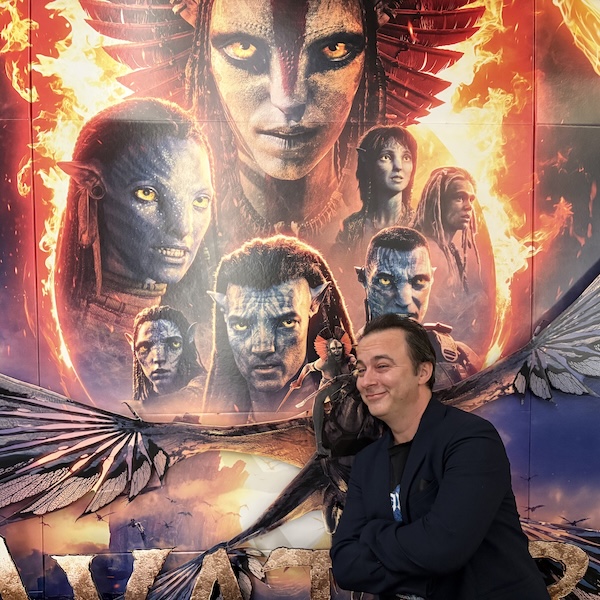
The Avatar franchise, created by James Cameron, has become a box office breaking hit and worldwide phenomenon. Released in dozens of languages, Alexander Notkin is responsible for the official Russian dub of the film’s beloved protagonist, Jake Scully. Notkin has built a strong reputation in the voiceover industry for his work across multiple projects, all using The Method as his approach. When he is not acting, directing, or doing voiceover, he teaches Method Acting at The Lee Strasberg Theatre & Film Institute.

Life Before Avatar 

Originally from St. Petersburg, Notkin began his training at a small acting studio in Israel. He then returned to Russia where he continued to train and work as a professional actor until making the move to New York City in 2014. There, he knew there was only one place he wanted to train: The Lee Strasberg Theatre & Film Institute. His training at The Institute was a major stepping stone in his development as an actor in New York City.

“I started my research, and I discovered more in-depth what Lee Strasberg was about, and I became very interested, and I figured out that this is one of the most iconic and interesting schools for actors. So I decided, since I was already working as a trained actor, I decided to upgrade myself and go into that amazing school, you know, and I wasn’t disappointed.” Notkin says.

Getting the Call that Changed Everything 

When Notkin was first approached about joining the original Avatar, he had no idea what it was. While a voiceover veteran at this point in his career, having done the Russian dub of major movies such as Terminator 4, this was an experience unlike any before.

“When I came to the studio, I suddenly realized it must be a big deal, because everybody was very excited about this project. It was super secret, and you were not allowed to talk. I think I’ve signed five NDAs, and then they gathered us in a very, very small movie theater. It was like a very secret, closed movie theater with only 10 seats, and they gathered all the cast. They showed us the movie before even anyone could see it. It was black and white and still some graphics were not finished, but they showed us the movie for us to understand our characters. And I said, ‘Wow, this is a big movie. This is amazing,'” Notkin recalls.

Preparing for a Massive Role Over the Years

With the entertainment industry rapidly changing, voiceover is no exception. Notkin says his experience on Avatar: Fire and Ash was very different compared to his experience on the first film due to the security around the story.

“Back in the day, you had to listen to the CDs. They taught us the Navi language, because at some point we need to speak the Na’vi language in the film. So we had to, not really memorize, but get familiar with the language. And then we started doing the dubbing. It was very exciting. I saw this amazing character portrayed by Sam Worthington, who I find an amazing actor, and it was very interesting to blend into his acting work, into his emotion, and bring a little bit of myself to create this wonderful work of James Cameron’s vision of Avatar.”

The Key to a Perfect Dubbing 

While the role of dubbing is to perfectly match your voice to the character and the original actor’s performance, Notkin says bringing himself to the character is extremely important to his performance success.

“It’s interesting, because on one hand, you have to keep the authenticity of the character and whatever the original performer brings to the table. However, you can also add your own stuff. So it’s a kind of a blend between the character and yourself, which has to be a balanced blend. If you give them a completely new life, it will not match the character. Because it’s not only the lip sync that has to match, it’s your whole physicality. And not only physicality, it’s the spiritual print of the character.”

The practicality of the job is also important.

“The trick is that it has to match 100% and, the audience who are watching, they should not understand that this is dubbing. They should think this is the real performance. And if that’s how they feel, you did your job well. So it’s a very tricky thing.”

Using The Method in Real Time

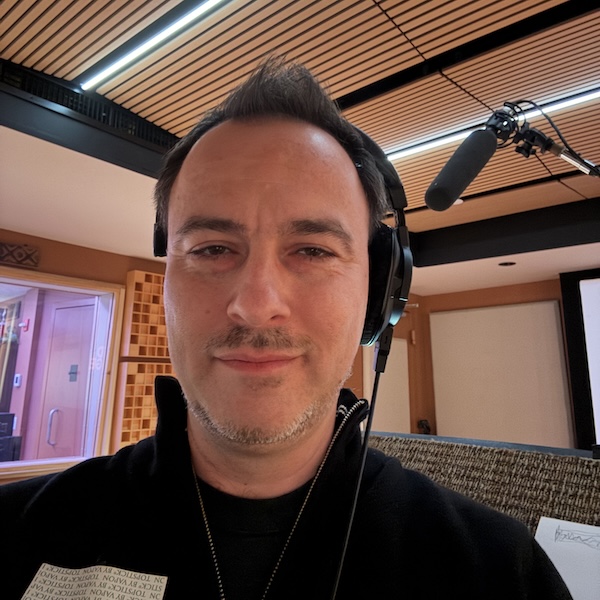
Notkin heavily relies on his Method Acting training when doing voice work. “The Method work helps a great, great deal in voiceover,” he explains. “First of all, there’s a lot of sensory work, a lot of physicality. A lot of, what is the characters experiencing physically right now? Is he experiencing hot weather? Is he experiencing pain? Is he experiencing the cold snow? You know, whatever the character is experiencing physically. In The Method, this is covered 100%.”

Notkin’s use of The Method also expands beyond his work in voiceover into his entire acting career:

“Sometimes, if you’re on a movie set, the director tells you, ‘Okay, today we’re shooting the last scene.’ You’re starting from the last scene, and you don’t have this whole emotional preparation. You didn’t go with your character, you didn’t follow what’s what brought you to this final moment, you didn’t live through it. That’s where The Method is extremely helpful,” he shares. “You have to search your own experience, in your own life and your own pain or your own happiness, to portray that when it’s out of sequence.”

Applying The Method works similarly across different mediums, according to Notkin. “Sometimes you’re doing a scene [for voiceover] and you’re like, it’s nine o’clock in the morning and you have to cry because of the loss of your loved one. And it’s nine o’clock in the morning, you’re not exactly prepared. You didn’t accumulate this emotion, these feelings. So that’s when The Method comes in. You start searching your own life, what’s happened to you when you lost someone, and you’re bringing this. You’re bringing the right emotion. That’s extremely helpful in voiceover. I do it all the time.”

Advice for the Future of Voiceover Work

Notkin has been a long time teacher of The Method at LSTFI, but that doesn’t stop him from being a student. He says he is constantly learning from those around him, and hopes to help others who are interested in voiceover succeed.

“I definitely recommend you try. Voice training is extremely important for voiceover to be able to change your voice. Be able to do different accents, different dialects. It’s extremely helpful for voiceover acting.”

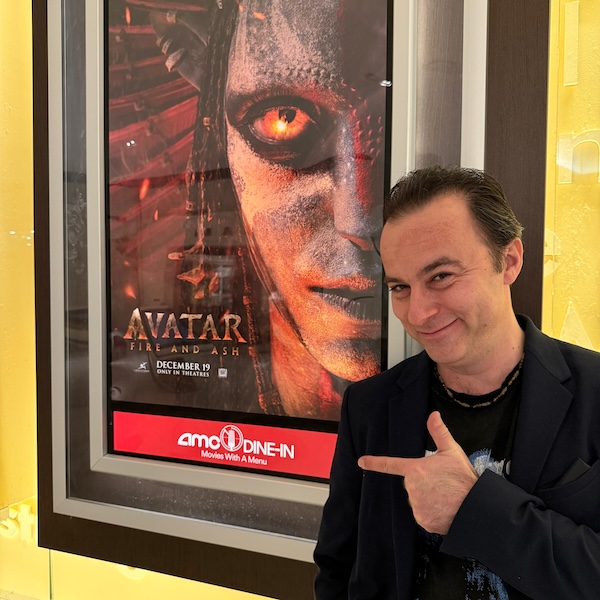
Avatar: Fire and Ash is still playing in select theaters, with an anticipated 2026 streaming release.
Written by Isa Barrett

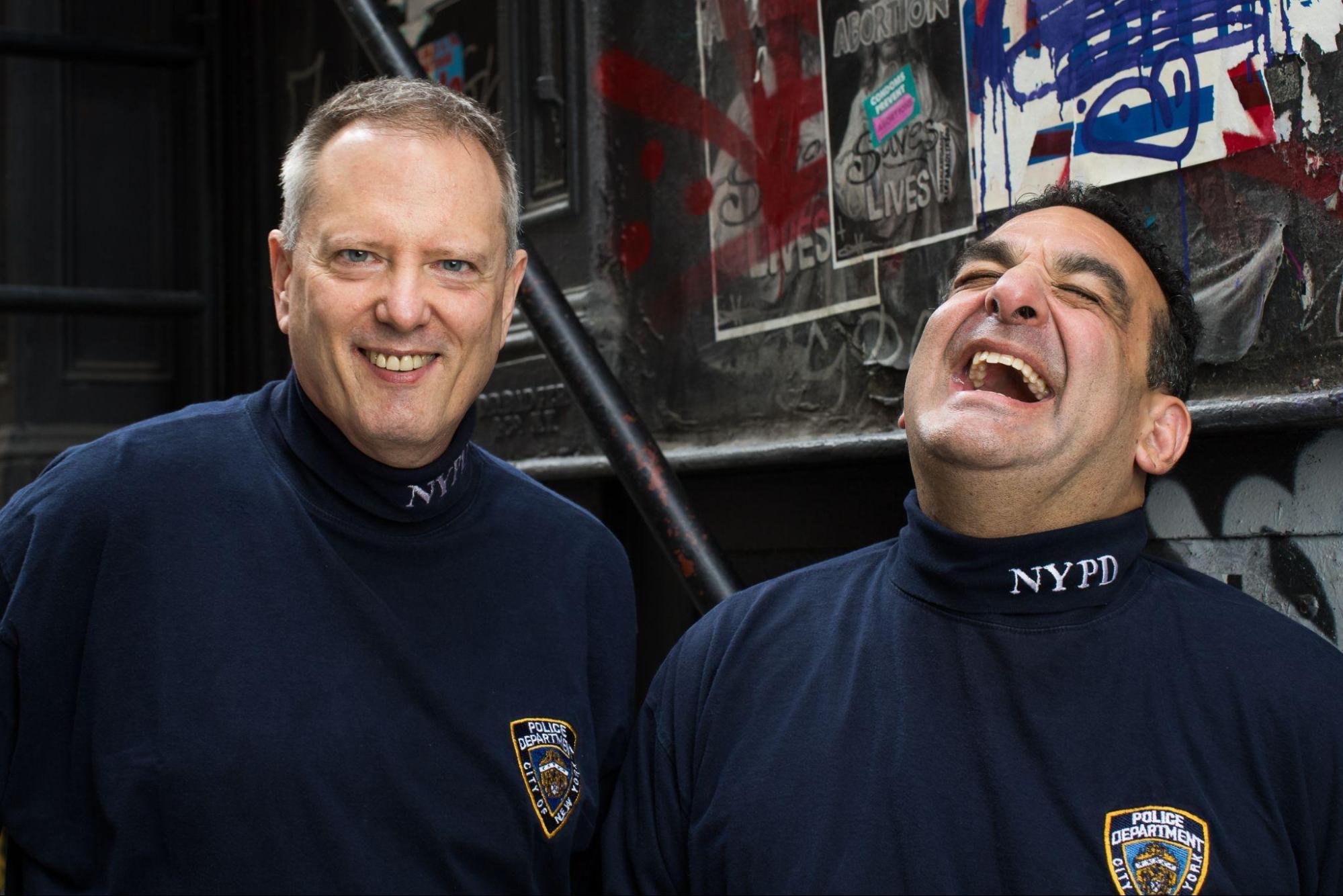
Steven Sarao, a 1989 BFA graduate of NYU Tisch School of the Arts, recently brought his original play The Boys From Kingsbridge to Theater for the New City. 

His journey from a small town in southern New Jersey to the New York City stage reflects a career shaped by discipline and sustained curiosity. Alongside his life in the theater, Sarao built a 22-year career with the New York City Police Department, eventually rising to the rank of Lieutenant Detective. Rather than existing in opposition, these two paths have continually informed one another.

Set in 1999 New York City, The Boys From Kingsbridge follows two childhood friends from the Bronx who grow up to become NYPD officers. Written by Sarao, who also starred in the production, the play marked a return to the New York stage and to storytelling rooted in personal history.

From Southern New Jersey to NYU Tisch 

Sarao grew up in a very small town in southern New Jersey. His early encouragement came from his middle school teachers:

“I was lucky enough to have two teachers in middle school who could see me, who understood that I likely had something to say and that my less-than-stellar behavior could be channeled in a way that was more productive.”

He went on to earn his BFA from New York University’s Tisch School of the Arts in 1989, training at The Lee Strasberg Theatre & Film Institute for four years as part of the undergraduate studio program. He studied with Hope Arthur, Harv Dean, David Gideon, Geoffrey Horne, Irma Sandrey, and Tom Nielsen, many of whom had worked directly with Lee Strasberg.

“It was mind-blowing and eye-opening. I had never trained in acting before in my life, so for me to be in New York City was completely overwhelming and an exciting journey.”

Even years out of school, The Method continues to inform Sarao’s craft. “It continues to evolve for me,” he shares, “but relaxation is a key component that serves me in my creative work as an actor, allowing expression to be where it’s needed. Most importantly, it allows me to continue to have a working knowledge of my instrument.”

Balancing the Arts with a Second Career

After graduating, Sarao worked professionally as an actor, director, and producer before joining the NYPD. Over more than two decades, he worked in intelligence and counterterrorism, holding leadership roles focused on terrorism interdiction and racially and ethnically motivated extremism. He lectured nationally and internationally on public safety and crisis management while continuing to carry his artistic training with him.

“It is a constant struggle,” he says of navigating the transition from training to professional life. “Many folks have other careers, and quite frankly, it feeds our artistic journey, not only financially but in terms of giving us very useful things to work with.” 

For Sarao, law enforcement did not pull him away from the stage. It strengthened his artistry and shaped the stories he now tells. 

Developing The Boys From Kingsbridge 

Returning to acting class years later, Sarao found himself reflecting on his time in the NYPD and began shaping a story set in pre-9/11 New York. With a group of close collaborators, he developed a play that humanizes the men and women who work in law enforcement. Rather than presenting officers as distant figures, the story centers on friendship, ambition, identity, and the pressures of institutional life. 

In the early stages of development, Sarao stayed offstage, listening as trusted actors read the work aloud. A staged reading was directed by LSTFI faculty member Susan DiDonna, with fellow alumnus Kevin Corrigan playing the role of Mikey. 

The full production of The Boys From Kingsbridge ran at Theater for the New City in August 2025. Directed by Anna Rebek, Sarao returned to the stage, and the run was extended multiple times, drawing packed houses and strong audience response.
A Global Education 

In 2014, Sarao received his master’s degree from Harvard Kennedy School as a New York City Public Service Fellow. Following the program, he participated in a postgraduate fellowship in Africa, spending time in Nigeria, Ghana, Sudan, Ethiopia, and Sierra Leone. 
In Ghana, he observed an annual film festival that consistently showcased strong work year after year. He also noted how technological access shapes artistic innovation. In regions where mobile device usage outpaced traditional internet infrastructure, filmmakers developed early short-form and vertical storytelling techniques that have since become mainstream.
The fellowship broadened his understanding of how storytelling adapts to culture, access, and environment, reinforcing his belief that artists benefit from engaging fully with the world around them.

What’s Ahead

“All my writing is based on real things, real people, or experiences,” Sarao notes. 

He is currently finalizing a full-length play, Gambling in the Garden, set amid the developing casinos of Atlantic City, poverty, and a group of musicians determined to make music. He is also preparing a staged reading at La MaMa Experimental Theatre Club in Spring 2026 of a new work titled Ode to Daddy, which explores a family navigating the deconstruction of industry in the 1950s within a male-dominated world.

When asked what continues to fuel his creative work, he says, “I continue to have stories in my head that inspire me, that I wish to share, that I find meaningful.”

At this stage of his career, his definition of success remains grounded:

“Success is not having credit card debt. Success is having solid friendships. Success is knowing that you have loved, are loved, and will continue to have and do those things. Success is creating a wonderful piece of art and hopefully sharing it with the world. Oh, success above all, is being nice.”

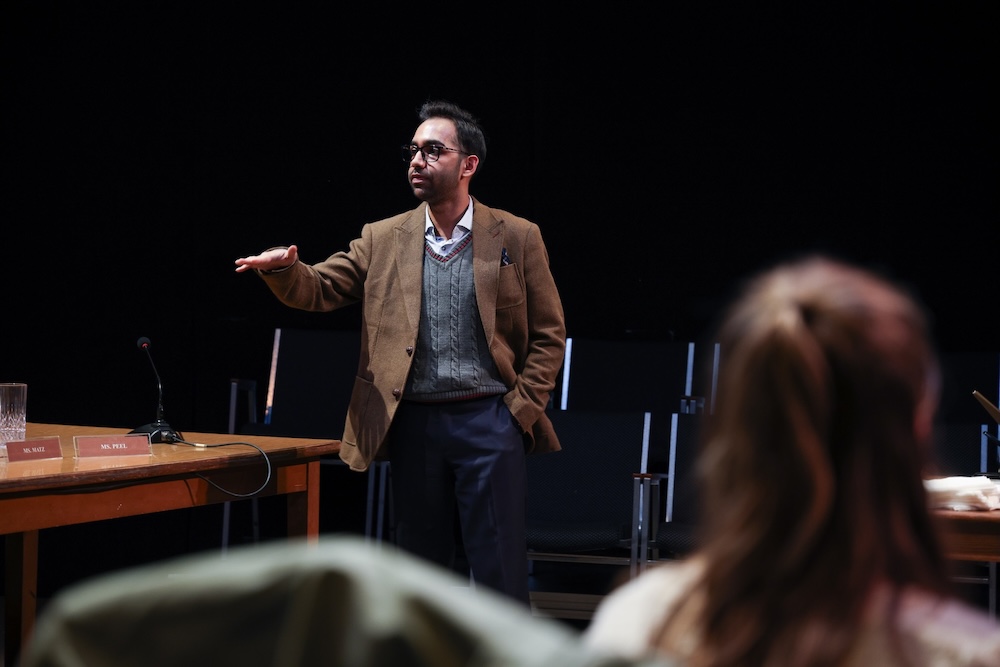
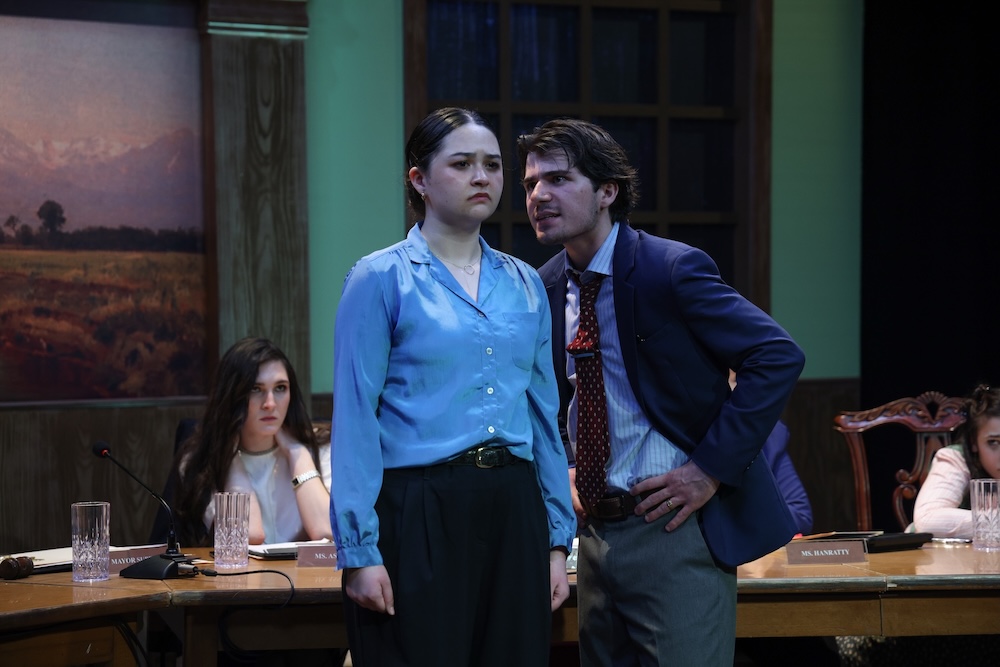
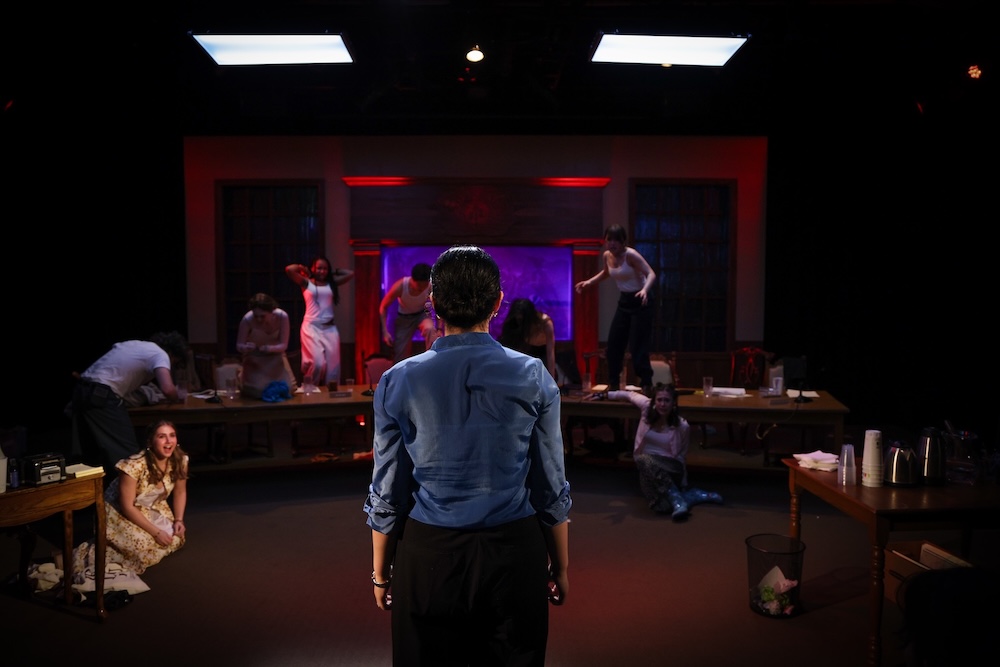
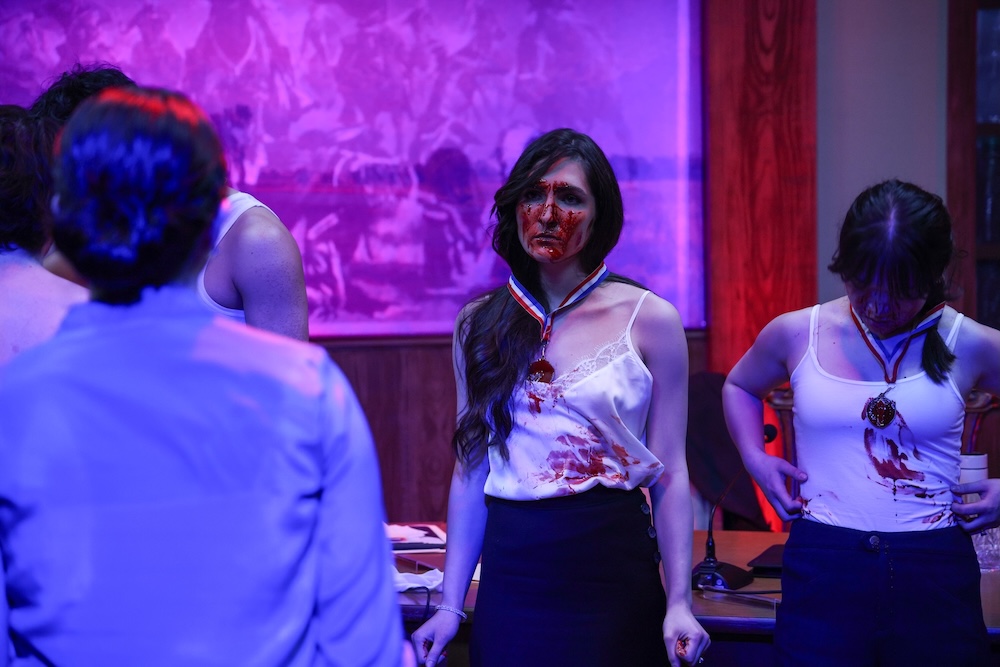
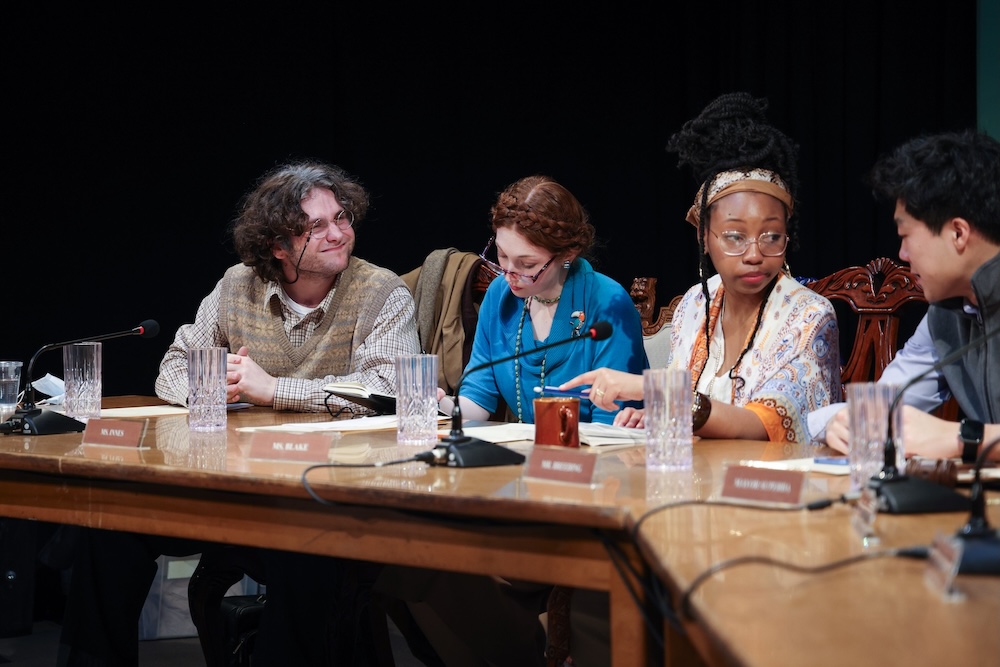
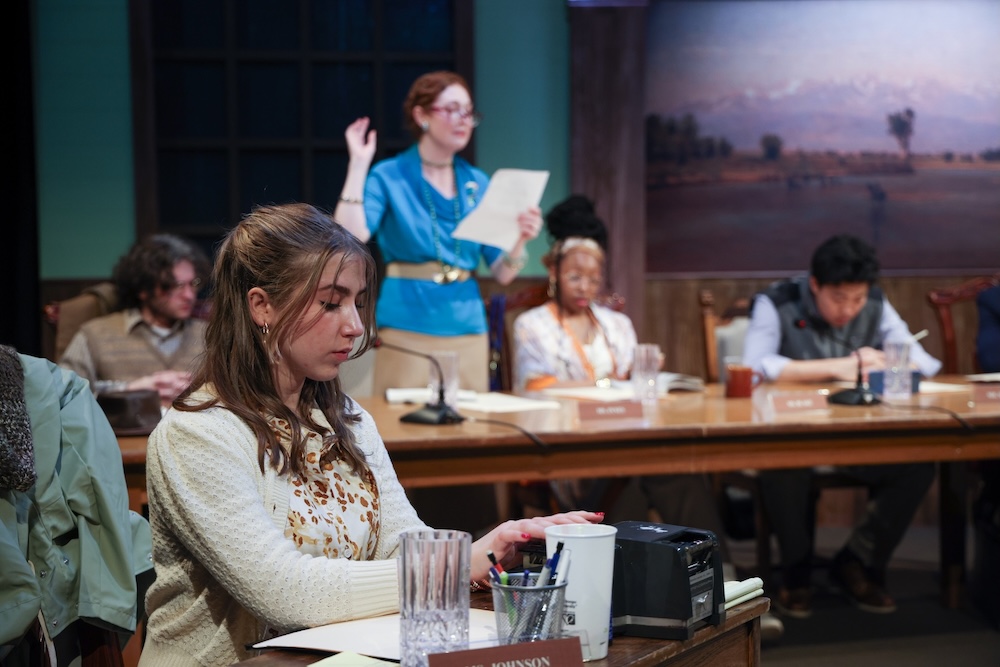
The Minutes
Written by Tracy Letts
Directed by Attilio Rigotti

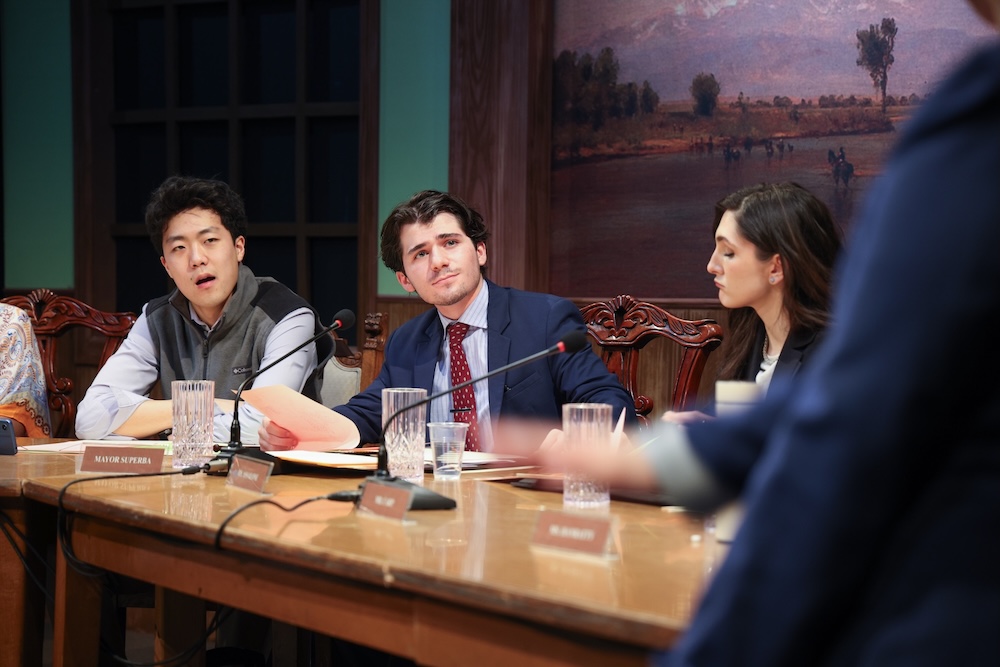
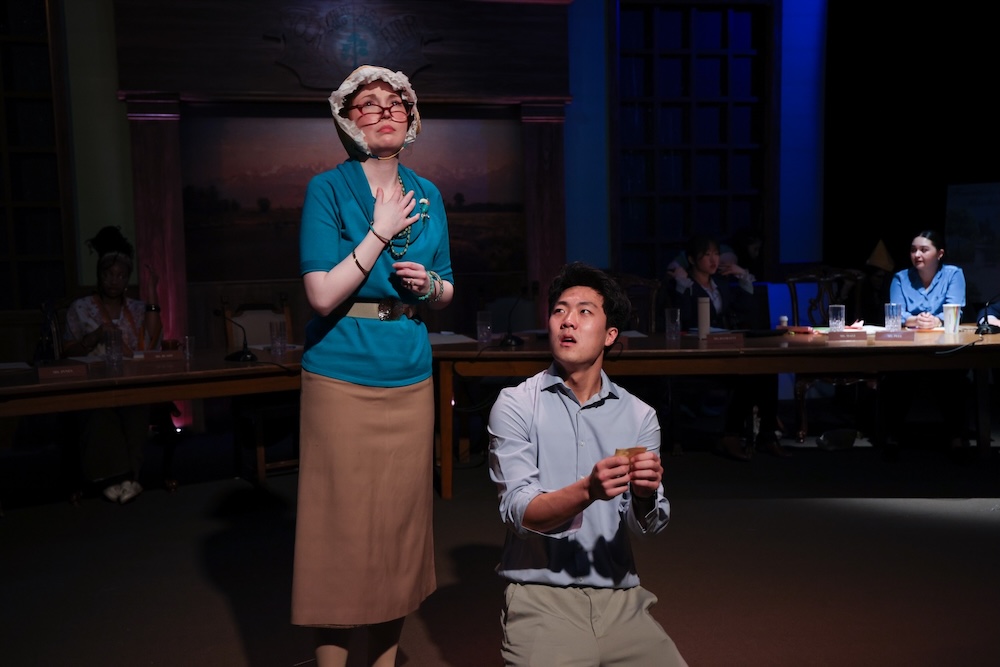
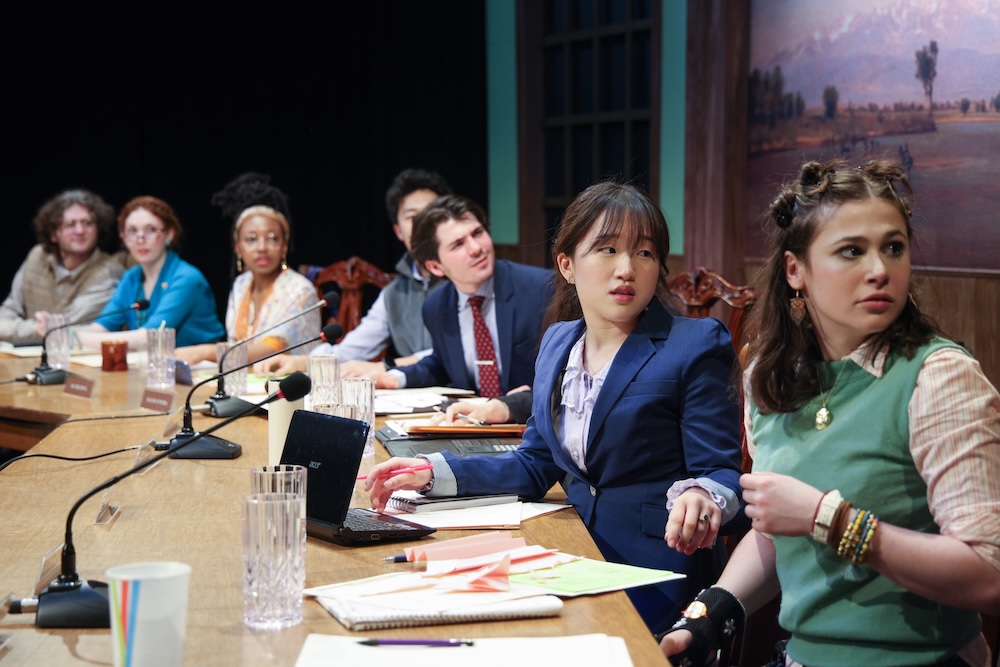
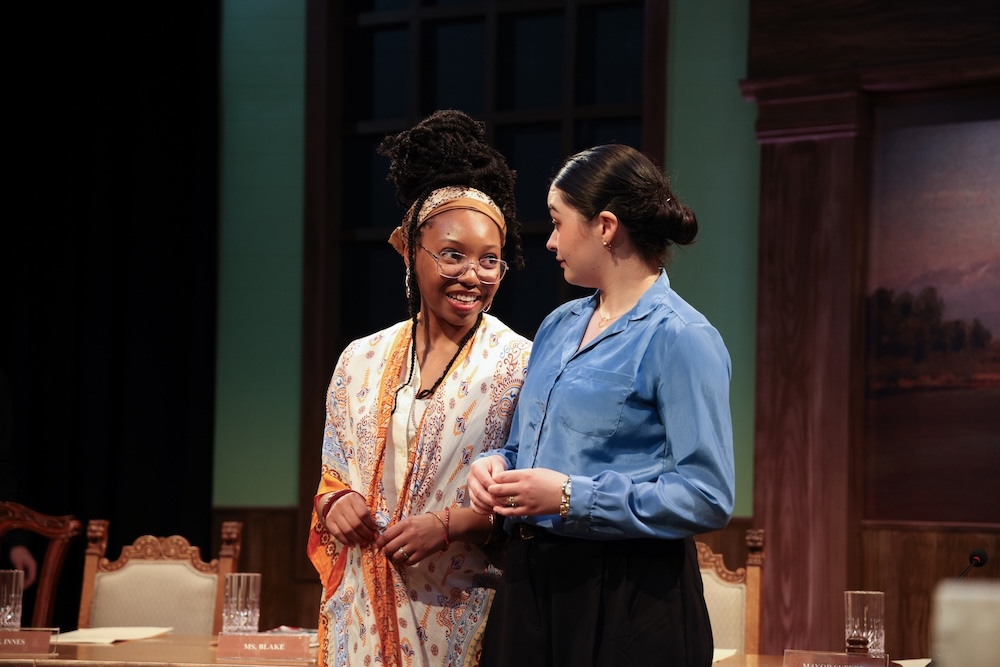
SYNOPSIS: Set in the fictional town of Big Cherry, The Minutes unfolds in real time at a local council meeting, where idealistic newcomer Mr. Peel demands to know what he missed at the previous week’s meeting… and why will no one tell him? Hypocrisy, greed, and buried secrets come to life in this this dark comedy from Pulitzer Prize-winning playwright Tracy Letts.

STARRING
Adrian Anthony, Monet Davis, Bradi Harrison, Bram Kerwin, Eli Klotz, Andrew Lee, Sophia Pontet, Mikaila Son, Mikayla Stoltz, Abby Wentworth, and Emi Zimmerman

Written by Isa Barrett

Yvonne Eisenring steps into her first leading role with Love Roulette, now playing in Swiss cinemas. The film premiered in Zurich in front of nearly 1,000 people, a rare scale for a Swiss theatrical release, and screened simultaneously across six theaters within a single cinema complex. The strong debut signals a meaningful moment not only for the film but for Eisenring herself, who also served as the film’s screenwriter.

From Script to Screen

Eisenring began writing Love Roulette in 2020 with no intention of playing the lead role herself. Throughout the early development process, she and the producers held differing ideas about what the female lead should look like, and Eisenring remained firmly behind the scenes. It wasn’t until three years later, during renewed casting discussions, that Tellfilm producer Stefan Jäger suggested she audition for the role.

At first, Eisenring declined. Instead, she chose to test her aptitude and passion for acting by joining various workshops and training programs around the world. “I also wanted to see whether my teachers thought I had talent,” she shares. “I did not want to participate in something if I believed I never really had a chance.” This mission ultimately lead her to New York City, where she completed an intensive program at The Lee Strasberg Theatre & Film Institute (LSTFI) in summer 2023.

Training at LSTFI

Eisenring’s training at LSTFI played a central role in her transition from writer to actor. Working closely with teachers in an intensive setting gave her space to test her abilities, receive direct feedback, and build trust in her instincts as a performer. She credits the structure of the training and the emphasis on Method Acting as a tool that helped her in developing confidence, both in her craft and in her willingness to audition for Love Roulette.

By the time auditions took place in spring 2024, Eisenring was ready. She auditioned alongside other actresses through the standard process and was eventually offered the role. “Of course, I may have had a small advantage in learning the lines, but apart from that, not really,” she shares. Ultimately, Eisenring stepped into the project with a clearer sense of herself as an actor.

Developing the Character of Charlie

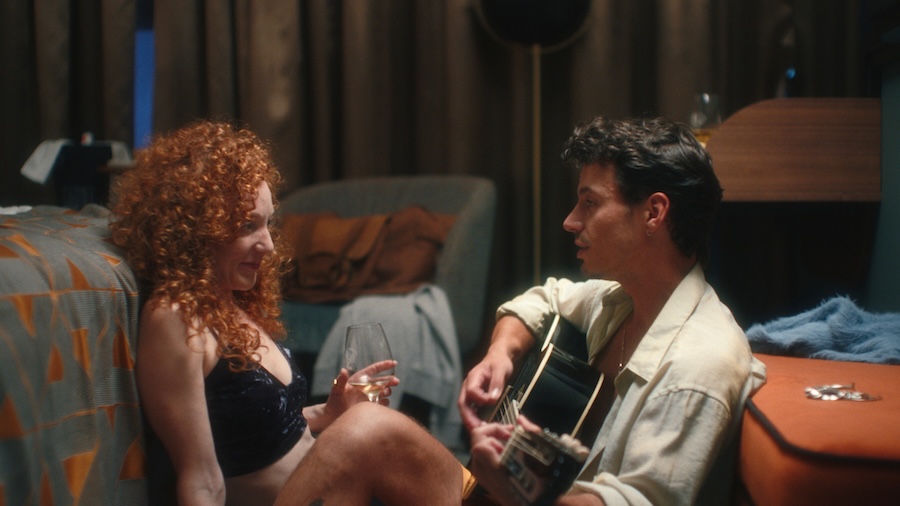
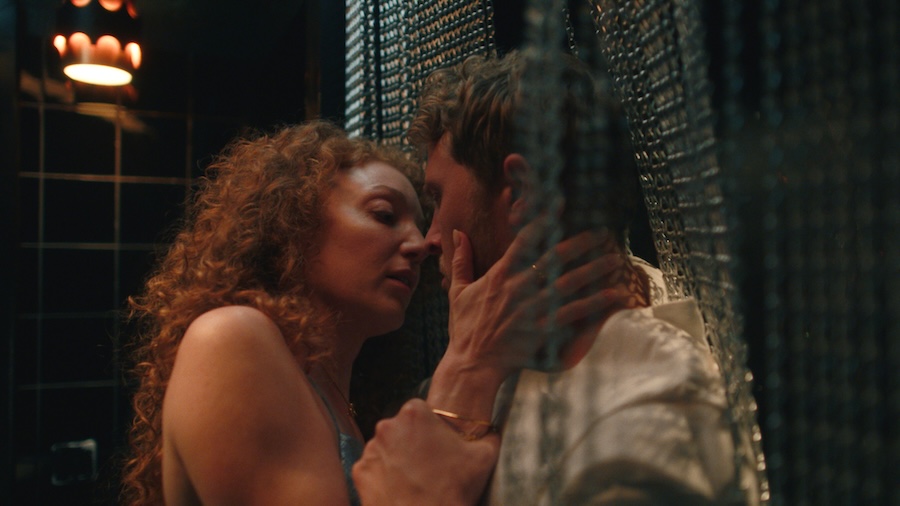
Love Roulette follows Charlie (Eisenring) and Tom (Max Hubacher), high school sweethearts who have been together for fifteen years. As they prepare for marriage, doubts surface and the couple decides to give themselves one last taste of single life before tying the knot. The romantic comedy examines commitment, desire, and the fear of missing out in an era where one click can reshuffle everything.

Eisenring was drawn to Charlie’s agency within the relationship, particularly the fact that Charlie is the one who wants to open up the relationship, an element that remains uncommon for female-driven narratives. To embody Charlie’s restless energy, Eisenring incorporated a physical lightness into her walk and movements. The role also demanded practical preparation: because Charlie studies fashion design, Eisenring learned how to use a sewing machine to authentically inhabit the character’s world.

One of the most demanding moments in the film is a long argument scene spanning more than eight pages of dialogue. Eisenring describes the scene as emotionally intense, especially given that her character is being yelled at throughout. The extended sequence required sustained emotional focus and endurance over multiple takes.

What Comes Next

The response to Love Roulette in Switzerland has been overwhelmingly positive. Audience enthusiasm has already translated into new opportunities, with several film inquiries currently in development and a sequel to Love Roulette underway. Eisenring is also in the process of dubbing the film into standard German for its upcoming broadcast on German free television, voicing her own performance.

Following the success of its Swiss run, Love Roulette will make its New York debut on March 19, 2026 at Nitehawk Cinema. Learn more and find tickets here.

Looking ahead, Eisenring hopes to expand her career beyond Switzerland. She is eager to work more in Germany and abroad, setting her sights set on English-language roles. She hopes to act in English in the future and shares that taking on an English-language role is a personal goal.

With Love Roulette, Eisenring steps forward not only as a leading actress but as an artist willing to challenge herself, trust her instincts, and take creative risks on both page and screen.

Written by Isa Barrett

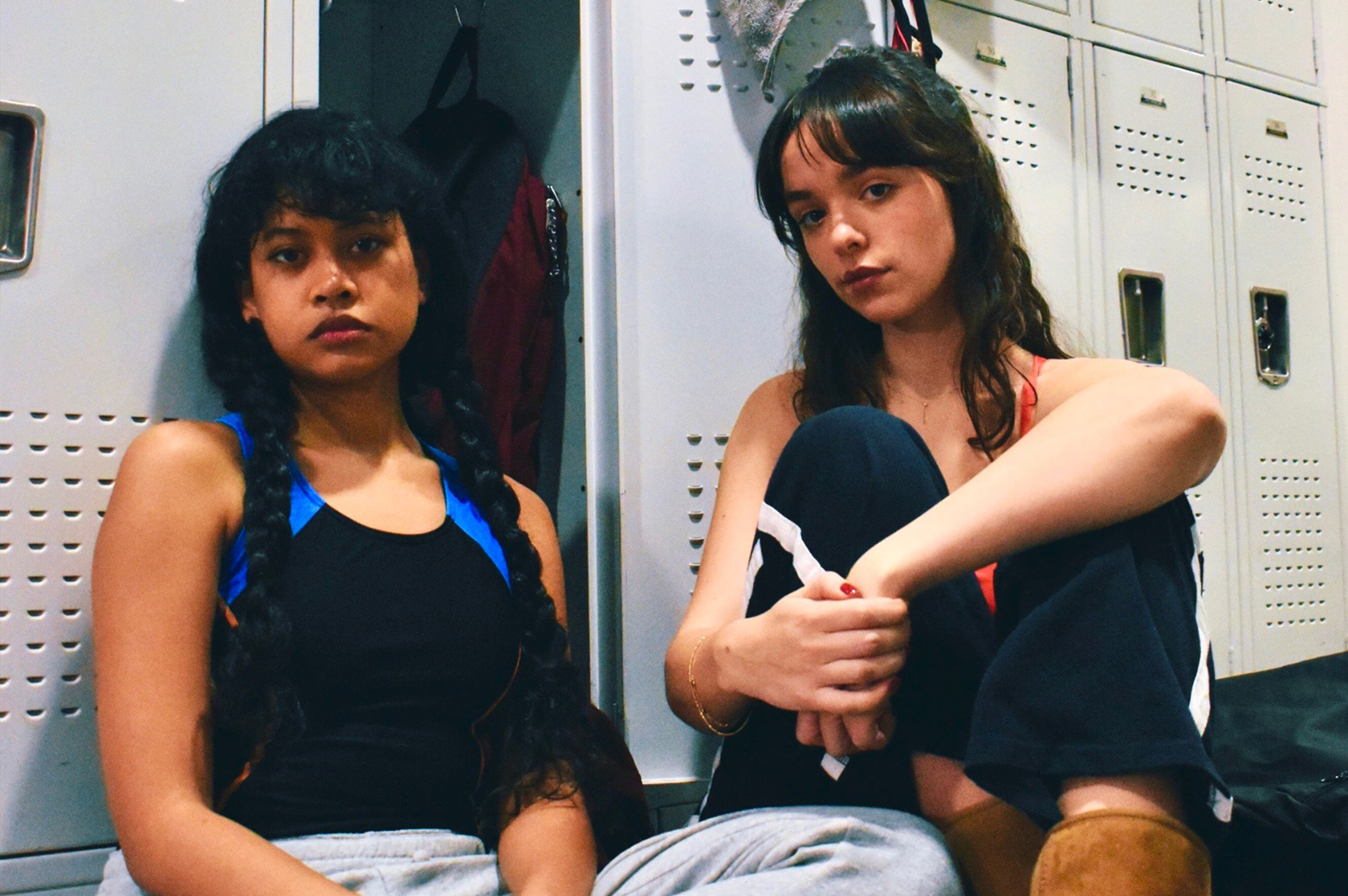
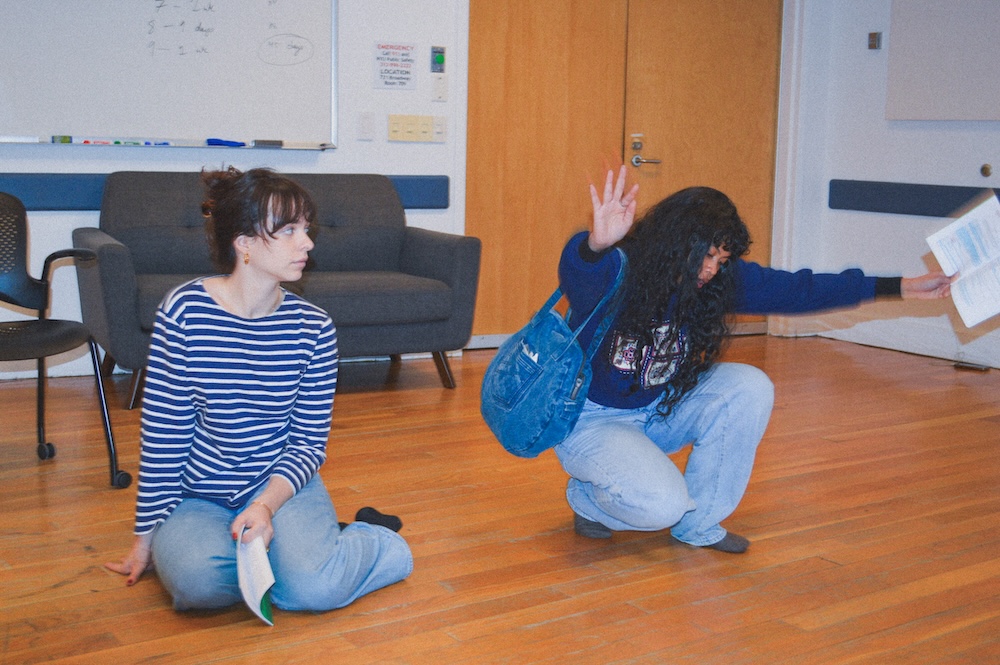
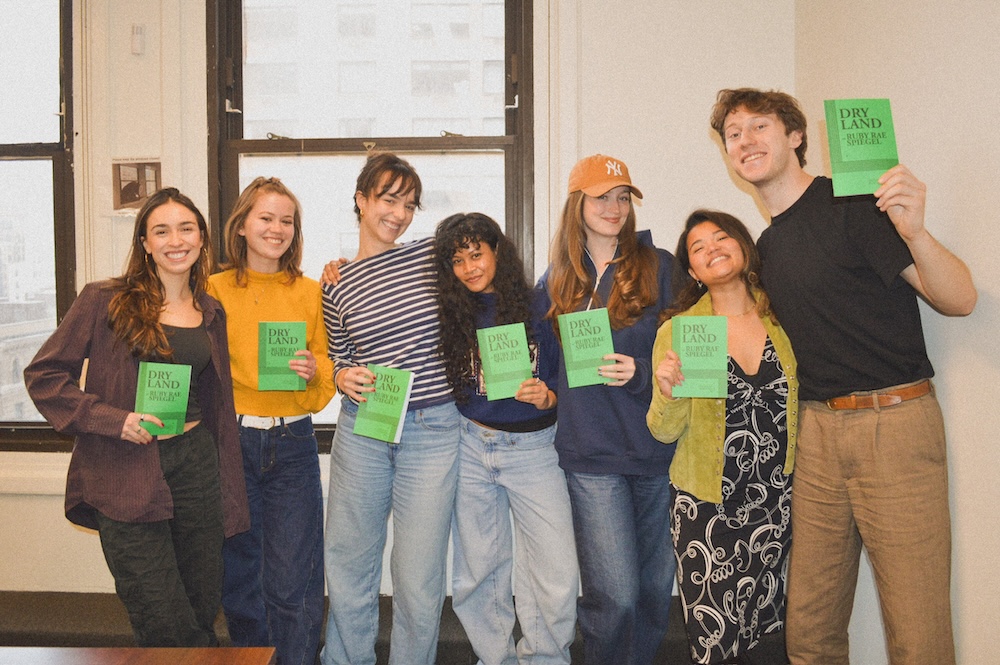
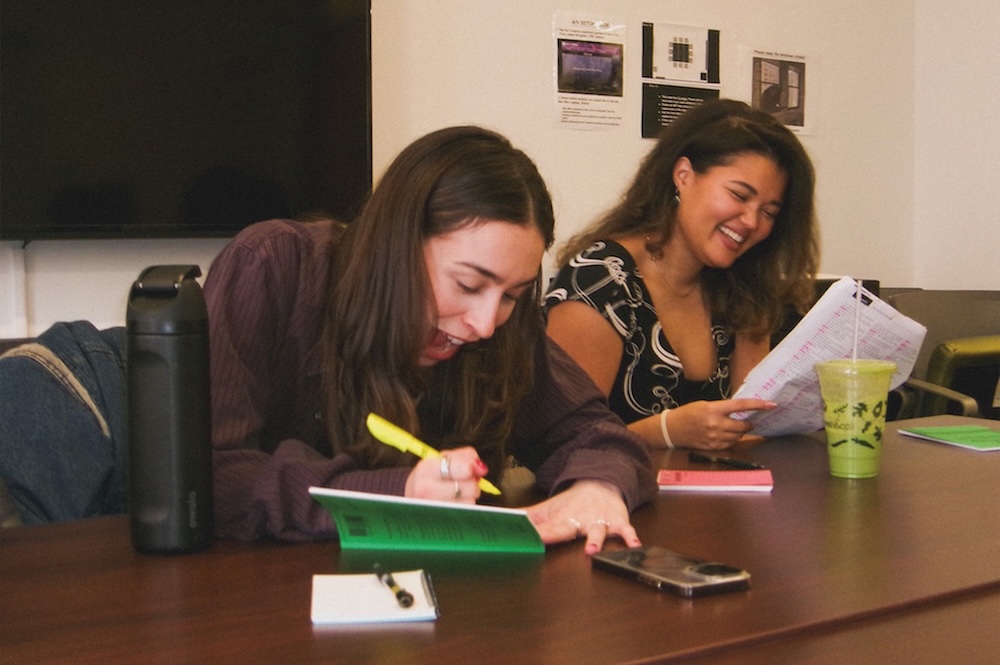
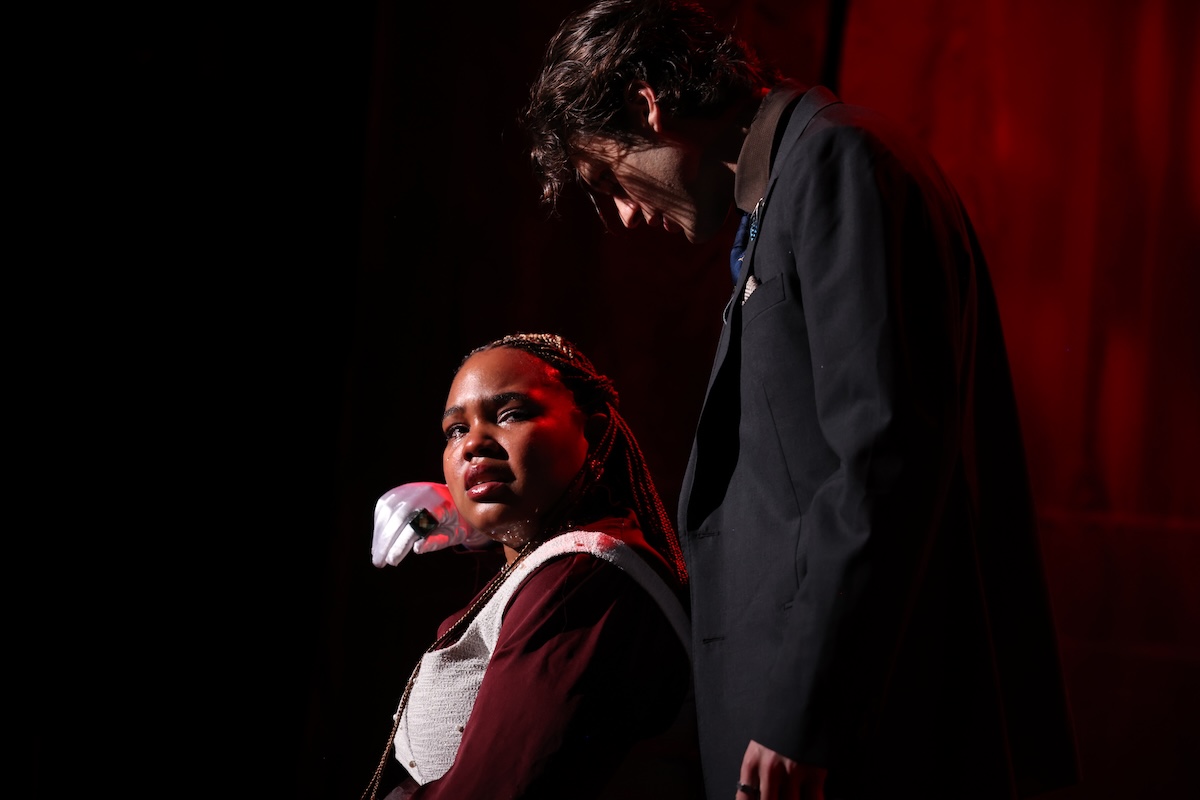
This spring, Cherubs Productions and 35k Productions will present a revival of Ruby Rae Spiegel’s Dry Land, directed by Makaio Toft. The production stars Yellowjackets’ Nuha Jes Izman as Ester and LSTFI alumna Isa Barrett as Amy, with Gabriella Anifantis and Avery Fischbach rounding out the cast.

Set in the girls’ locker room of a Florida high school swim team, Ruby Rae Spiegel’s Dry Land follows Amy and Ester, two teenage swimmers whose friendship becomes a lifeline as Amy faces an unwanted pregnancy and grapples with the impossible choice of how to stay afloat. The play premiered in 2014 Off‑Broadway at HERE Arts Center in New York City and quickly became a critics’ pick and Susan Smith Blackburn Prize finalist. Despite its critical acclaim, it hasn’t been produced in New York City in nearly a decade. 

Part of what makes Dry Land so powerful, and perhaps so complicated, is how personally and politically immediate it feels, especially for young women. Revisiting it now, I’m struck by how recent the world of this play feels to me. I was a girl in a locker room not long ago. The stakes of this story aren’t abstract; they’re intimate. That proximity is part of what makes the play urgent, and part of why it may have felt difficult to revisit. 

From Scene Study to Stage 

In acting school, it was often hard to find roles that truly captured girlhood. Dry Land is one of the rare plays that supports young actresses, offering material that balances honesty with complexity. 

Long before I thought about producing it, the play was a staple at The Lee Strasberg Theatre & Film Institute, a scene-study favorite alongside the usual go-tos: Proof, A Doll’s House, and This Is Our Youth. Watching countless actresses take on Amy and Ester, I saw how Spiegel’s silences gave them strength in their voice. No longer the ingenue or an archetype, these characters allowed young actresses to inhabit the full complexity of being a teenage girl.

As Lee Strasberg said, “The human being who acts is the human being who lives.” Watching my classmates take on Blanche in A Streetcar Named Desire or Martha in Who’s Afraid of Virginia Woolf inspired the kind of actress I hoped I might one day become, expansive and seasoned, able to hold the weight of a life fully lived. But Dry Land feels different. It does not ask me to reach decades ahead of myself. It supports the teenage girl I was and the young woman I am right now. 

Something is fleeting about that alignment. Dry Land feels obvious for me at this moment, but I know that soon it will not. That narrow window, where the role and the actress meet so closely in age and experience, makes returning to this play now feel both necessary and deeply personal.

Rage, Form, and Embodiment in Dry Land 

Dry Land feels so vital to me because of its honest portrayal of female rage. Rather than building toward a single explosive moment, Spiegel allows anger to move in cycles, simmering, receding, resurfacing, and reshaping itself over time. This structure reflects how anger actually lives in the body, especially for young women who are often expected to contain, manage, or silence their feelings. Anger is rarely considered attractive on young women. It is discouraged, dismissed, or reframed as immaturity. Dry Land refuses that impulse and instead allows its characters to be sharp, messy, and unapologetic in their fury. 

This cyclical, often silenced approach to anger appears across much of contemporary feminist drama, particularly in the work of playwrights like Annie Baker, Clare Barron, and Ruby Rae Spiegel. In these plays, anger rarely announces itself outright. Instead, it shapes relationships, silences, and power dynamics, existing as much in what is withheld as in what is spoken.

Returning to Dry Land as both producer and actress has made these ideas feel newly embodied. Amy’s anger arrives in waves, present in what she chooses to reveal and what she withholds. My Strasberg training has helped me locate this interior life physically, allowing rage to live as tension in the body, restraint in the voice, and resistance in stillness. What once existed as theory now lives in rehearsal as practice.

Method in Practice 

When training at LSTFI, it can be confusing at times to know how all the techniques you learn will come together. What I have found in Dry Land is that there are key moments in the play where using sensory work allows me to maintain consistency in each performance.

As Ruby Rae Spiegel describes, Dry Land is rooted in a “bodily crisis,” where the body is exchanged and negotiated between characters. Amy’s body is never neutral. Even in stillness, it is under strain. Method Acting allows me to inhabit that tension rather than indicate it, and my voice and physical training then help keep that work engaged.

Working with former LSTFI teachers during rehearsal has been especially meaningful. It has been beautiful to feel the tie between my training and professional work. They reminded me of a lesson that has stayed with me: there is a big difference between training and performing. In training, the work is about you and how you feel. In performance, it is about how you make the audience feel. This advice continues to guide me in my practice today, shaping how I approach my work as an actress, build teams, and produce projects, keeping audience impact at the center of everything.

Building the Team

This production has been shaped by an exceptionally strong, generous, and creative team of collaborators who make the work feel both grounded and fun.

Working with our director, Makaio Toft, has been an absolute joy. A true go-getter who has produced and directed her own work at IRT (HEAT and WAKE), Makaio brings a distinct artistic voice, deep character insight, and a rehearsal process that gives actors real freedom to play.

From our very first table read, it was clear that Nuha Jes Izman had an innate understanding of Ester. From Yellowjackets to her new film RUN AMOK, which premiered at this month at Sundance, Nuha is a rare talent and a true star.

Our ensemble has only strengthened this process: Avery Fischbach (Victor) and I trained together in Amsterdam, bringing a shared history into the room, and Gabriella Antifas (Reba) delivered the most electrifying Zoom audition Makaio and I have ever seen.

Together, this team has created a process defined by mutual care, making the journey as powerful as the final product.

Why This Story Matters Now 

Proceeds from this production benefit the New York Abortion Access Fund (NYAAF), New York State’s only abortion fund, which provides financial assistance, practical support, and case management to people seeking abortion care in or traveling to New York. Through its volunteer-run helpline, NYAAF helps callers navigate costs, travel, and logistical barriers that often make accessing care difficult or impossible.

Performing Dry Land in today’s political climate feels urgent and necessary. Spiegel’s work resists simplified narratives around abortion and instead centers complexity, risk, and choice. By focusing on intimacy, coercion, and the politics of the body, the play challenges audiences to see beyond familiar tropes and empathize with experiences that are often misunderstood or erased. In a moment when access to reproductive healthcare remains under threat, telling this story and supporting NYAAF feels not only relevant but essential.

Get Tickets 

Performances of Dry Land run March 13, 14, 20, and 21 at University Settlement in New York City. Opening night will include an after-party and raffle, and the March 14th matinee will feature a post-show panel with NYAAF.

Written by Ramona Nina

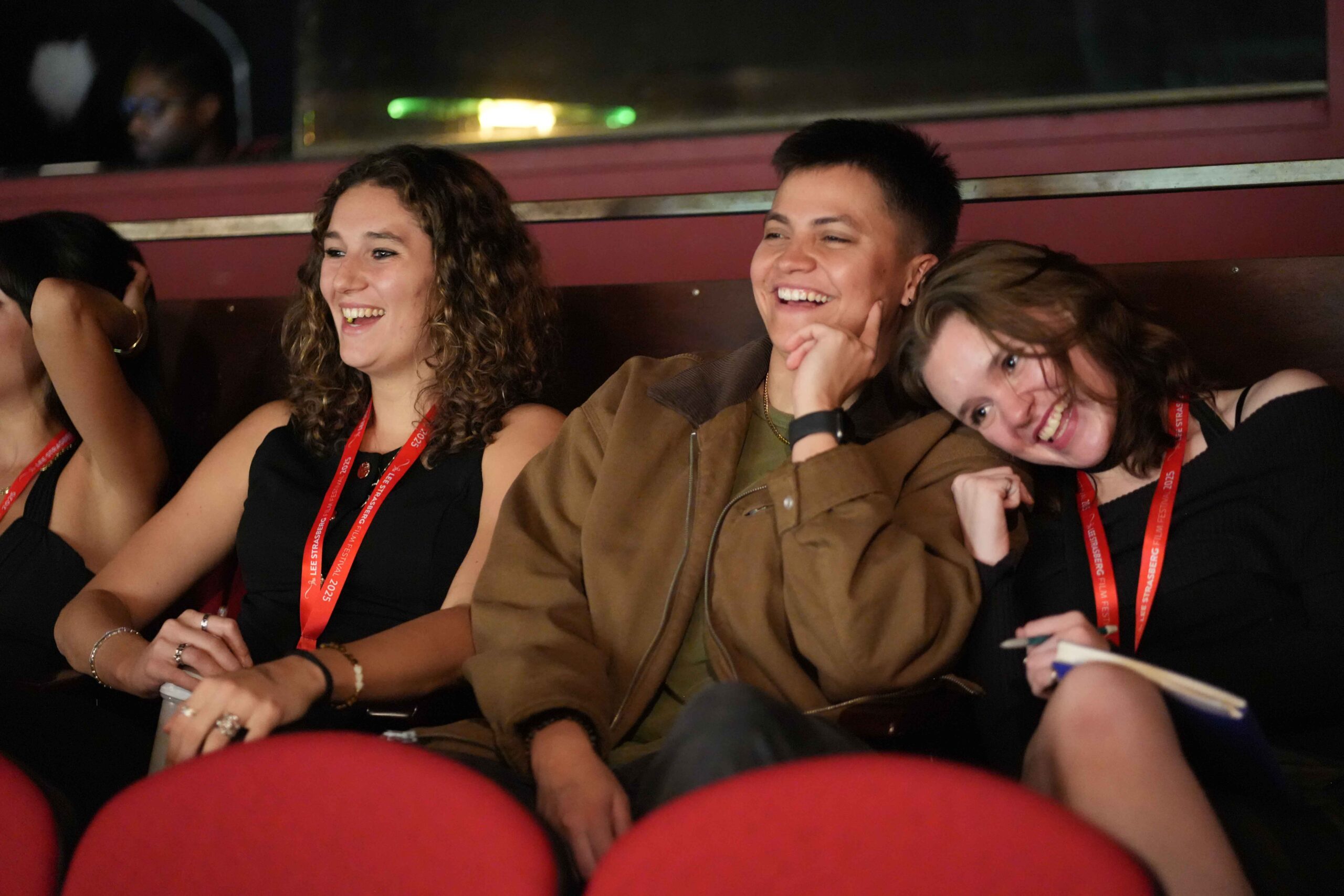
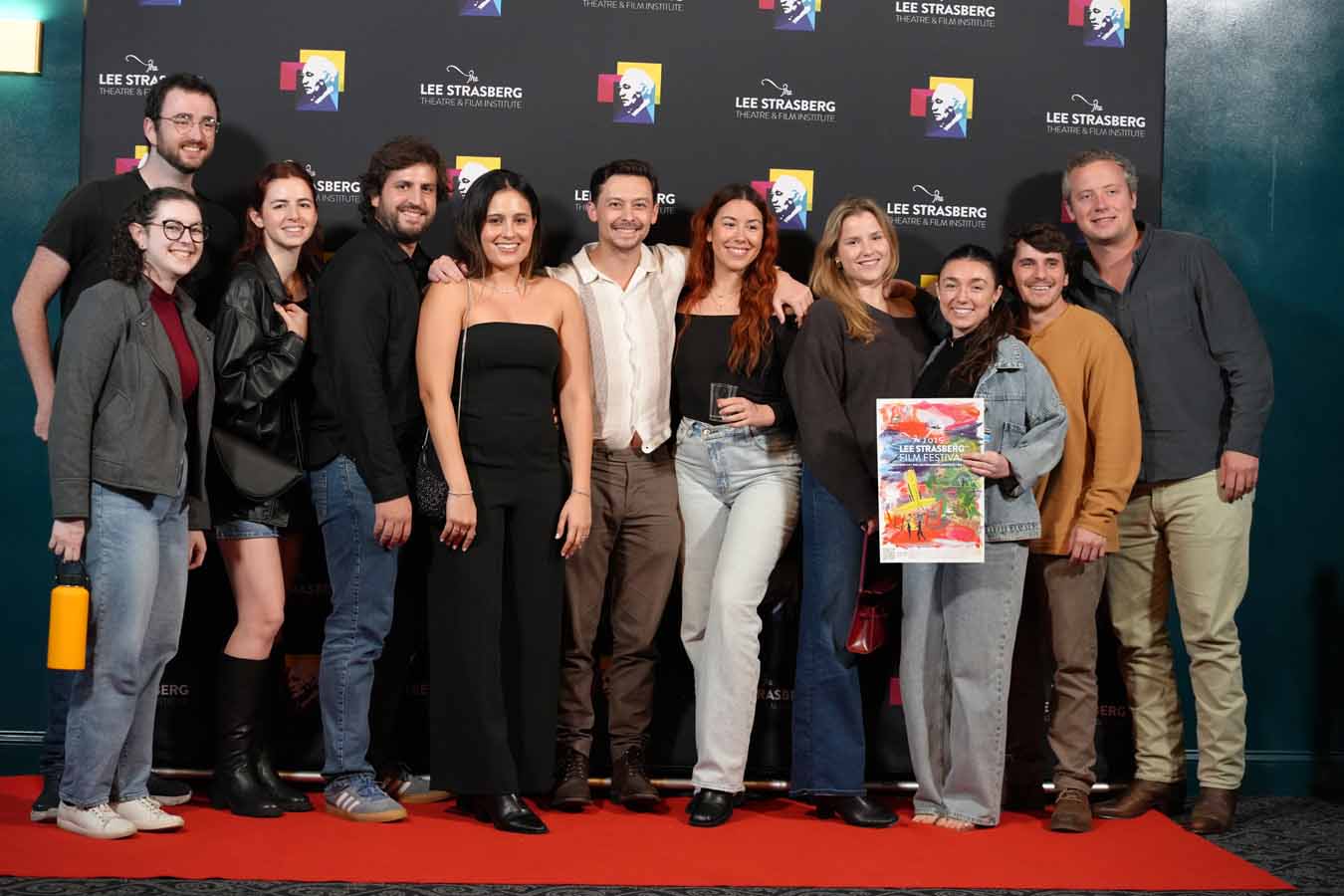
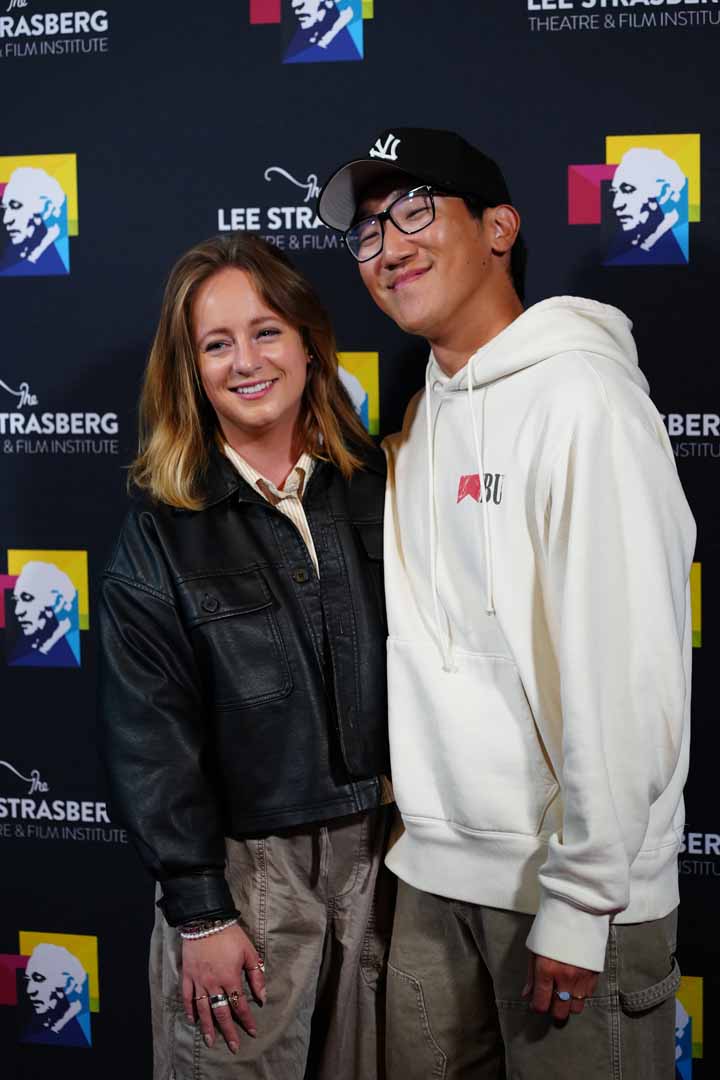
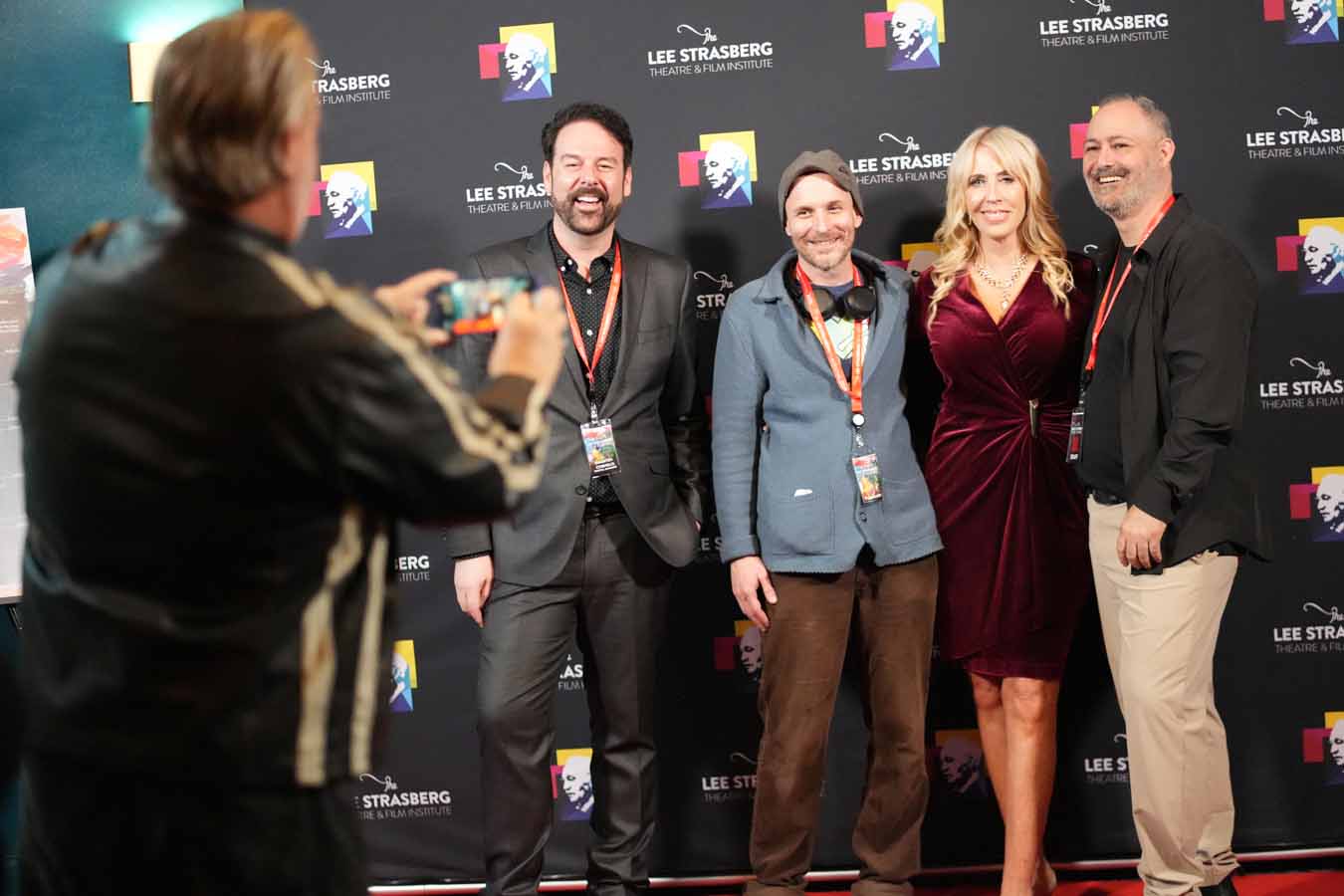
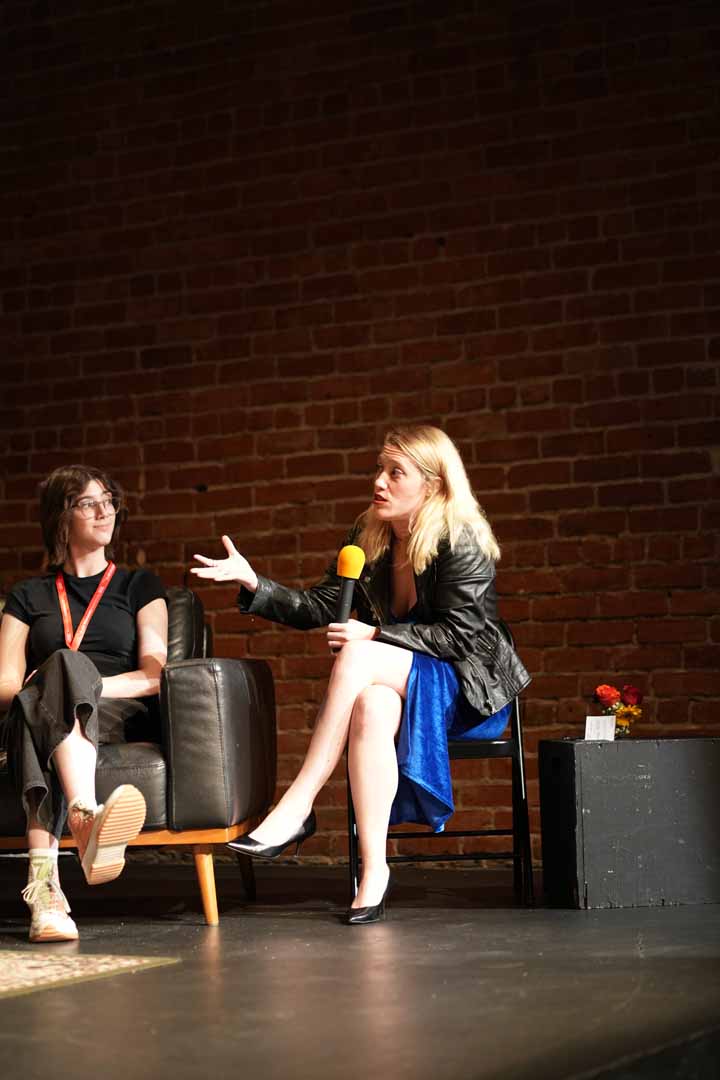
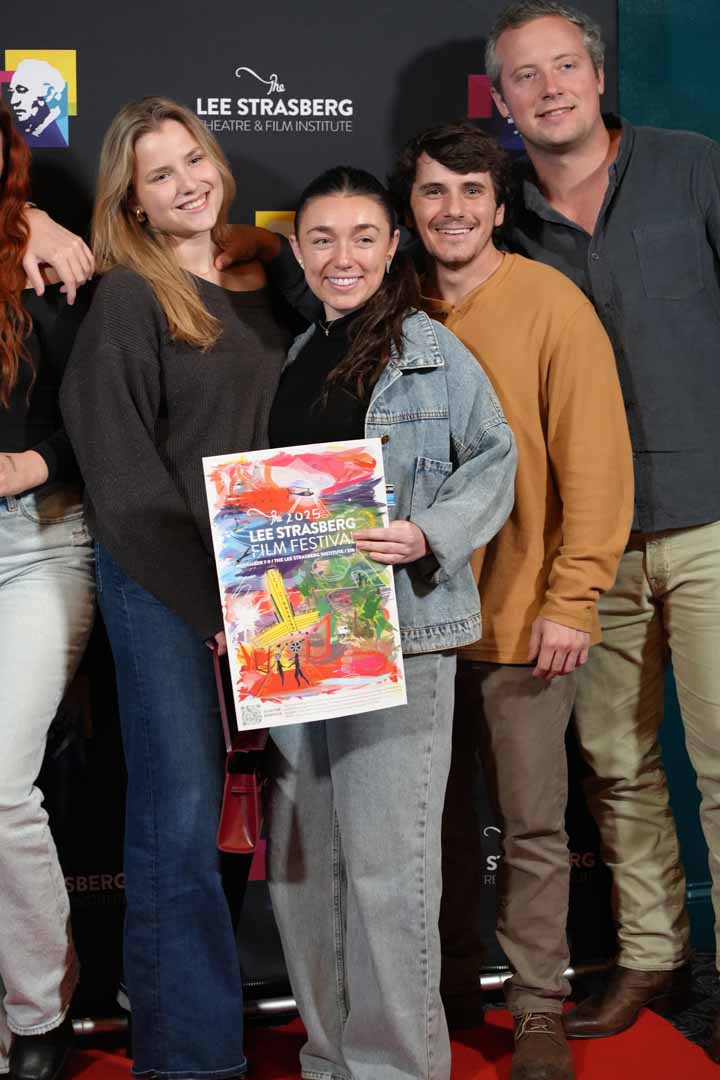
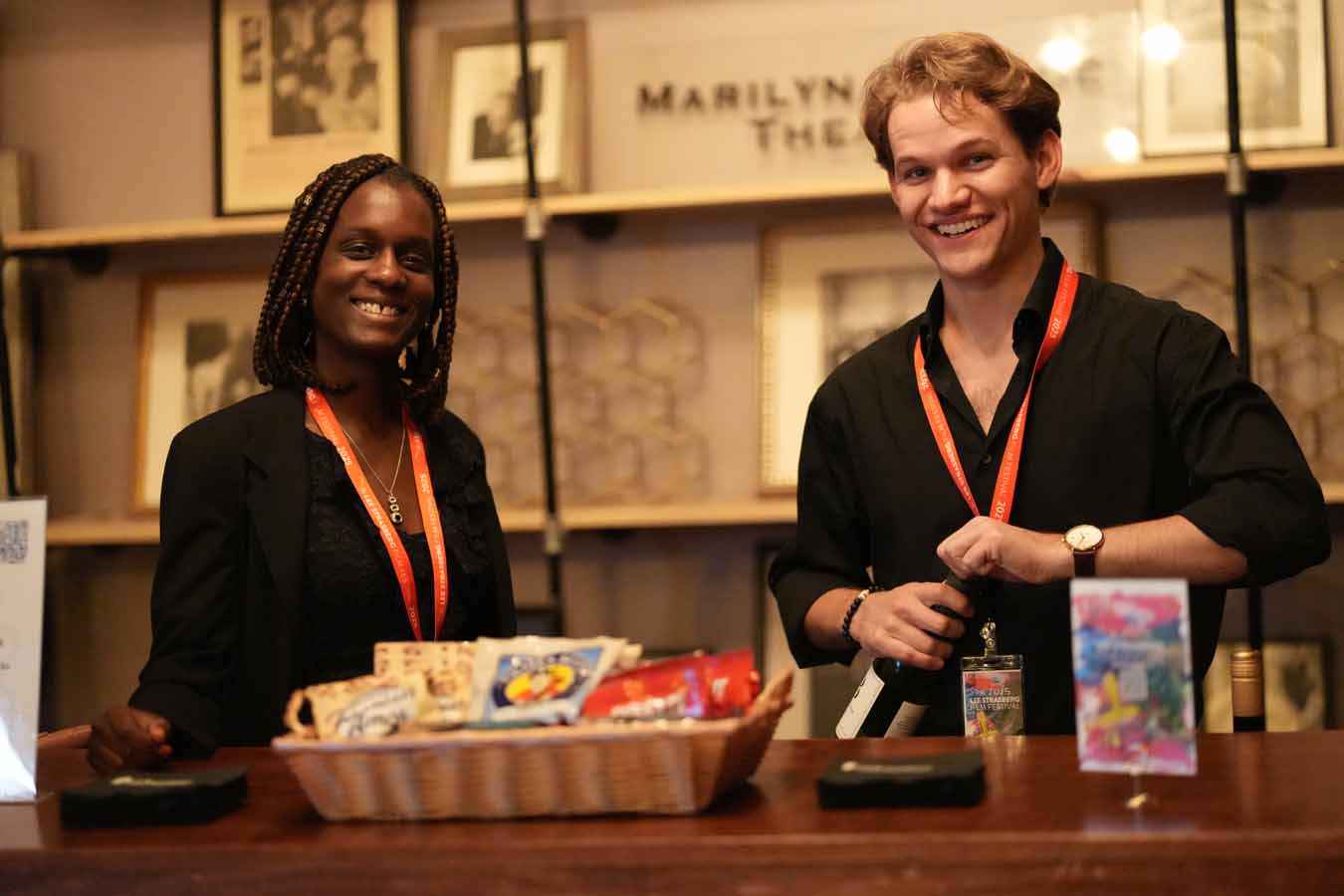
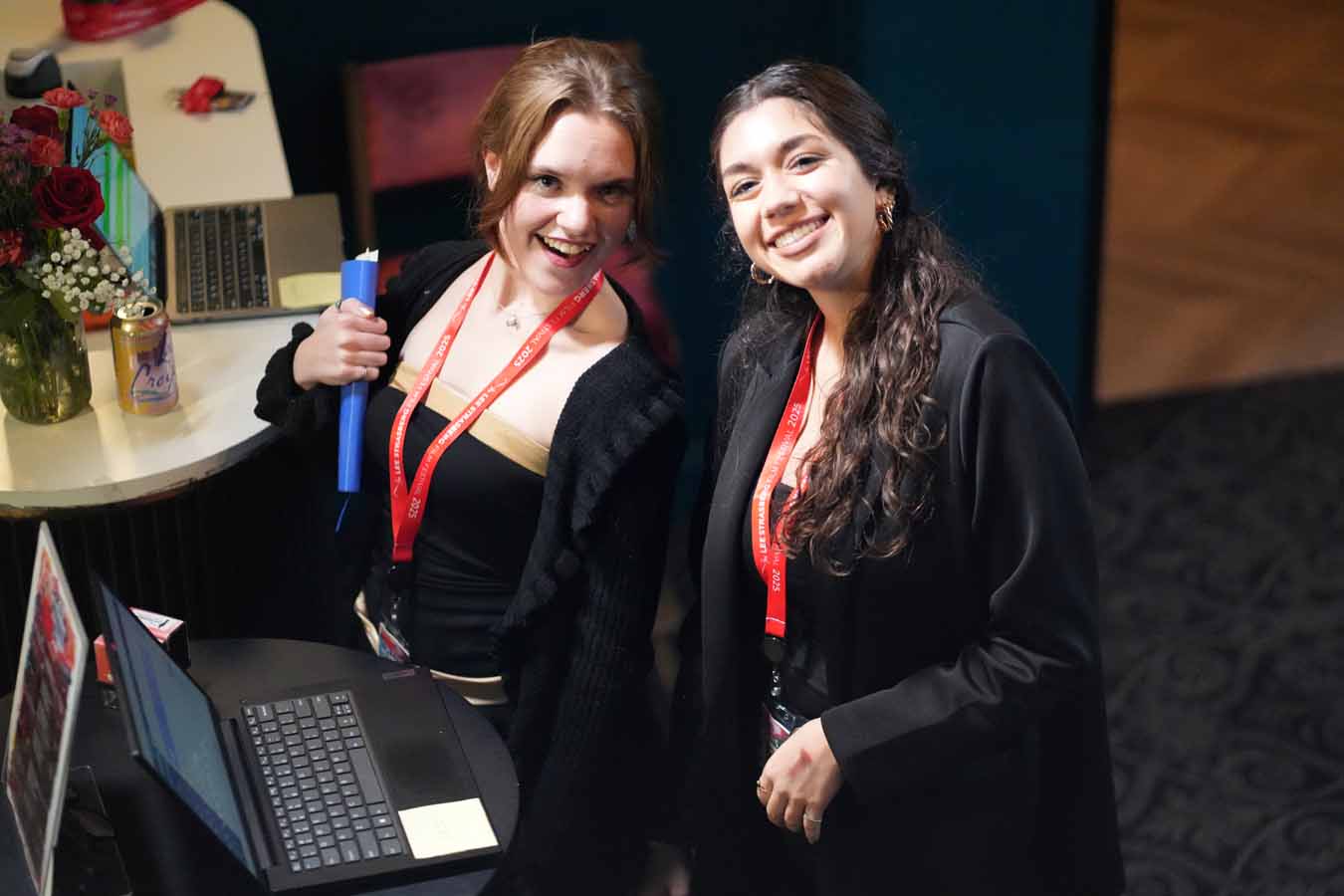
The Lee Strasberg Film Festival (LSFF) held its 9th annual celebration this November, making it the second year in a row it has been hosted at The Lee Strasberg Theatre & Film Institute (LSTFI) campus in Los Angeles. Throughout the weekend of the festival, The Institute’s historical artistic space was transformed from an acting school into an expansive hub of creatives from all areas of the industry: inspiring indie artists, filmmakers, actors, managers, students, professionals, and more.

From vivid characters to bold and explorative narratives, many of the films screened at LSFF had exceptional performances at the center of them, adding to discussions in the lobby on Lee Strasberg’s Method as a technique and way of capturing and moving audiences.

Global Expansion

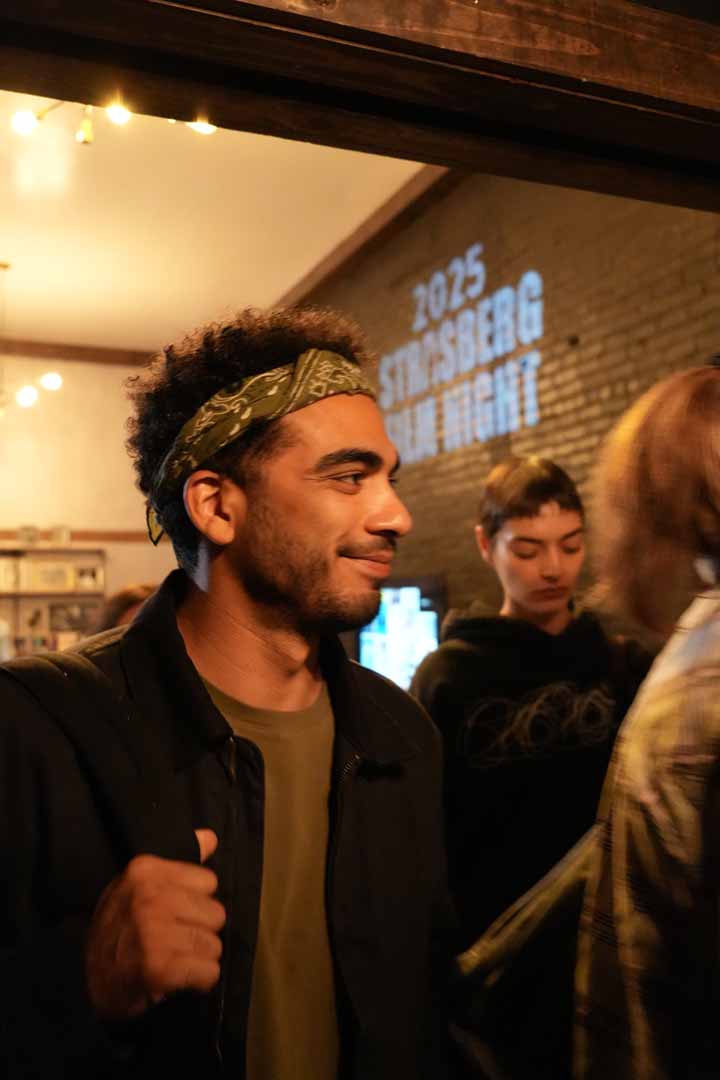
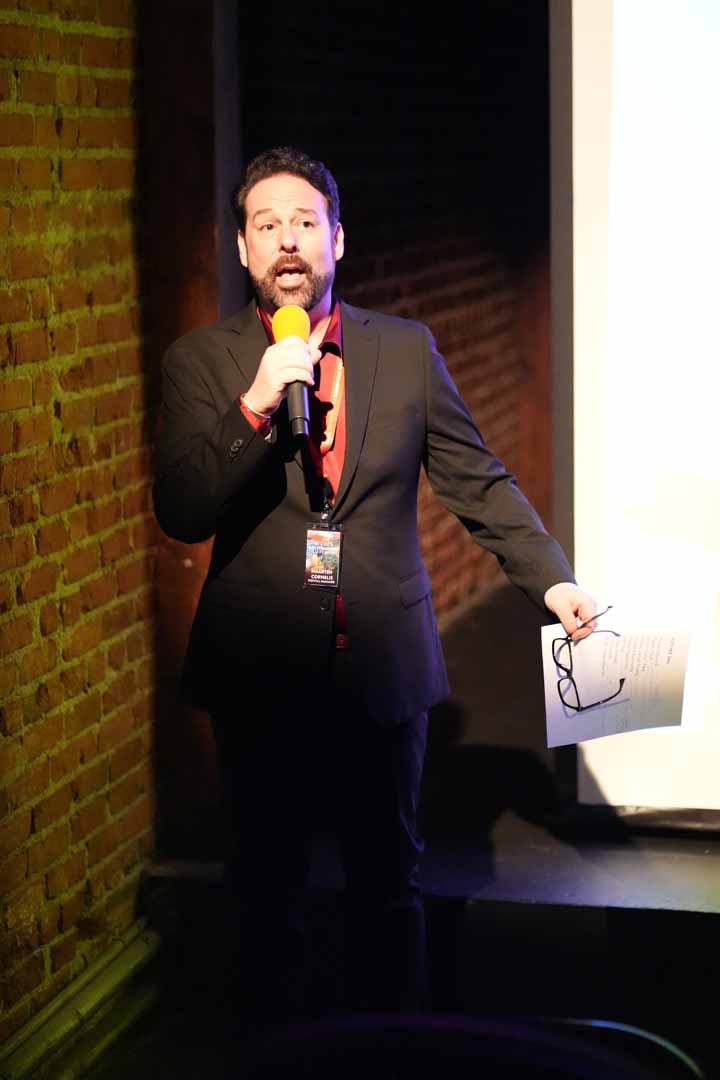
Ever since the Lee Strasberg Film Festival made its way to the LA Campus, it has had a new mission to expand the festival from just Lee Strasberg Institute students and alumni to international filmmakers from all over the world. The festival still hosts Strasberg Film Night, the night before the festival, to celebrate LSTFI filmmakers exclusively, but the expansion to an international audience for the other days of the festival now allows our LSTFI community to broaden their network of artist contacts. “I always say, we’re only as good of a festival as the films that we get, so we are very, very lucky,” says Festival Manager and alumni Maarten Cornelis, speaking to the benefits of including films from all over the globe. “I love Strasberg. Once a Strasberg student, always a Strasberg student. I love what they taught me here and I love what I did with it later in life.”

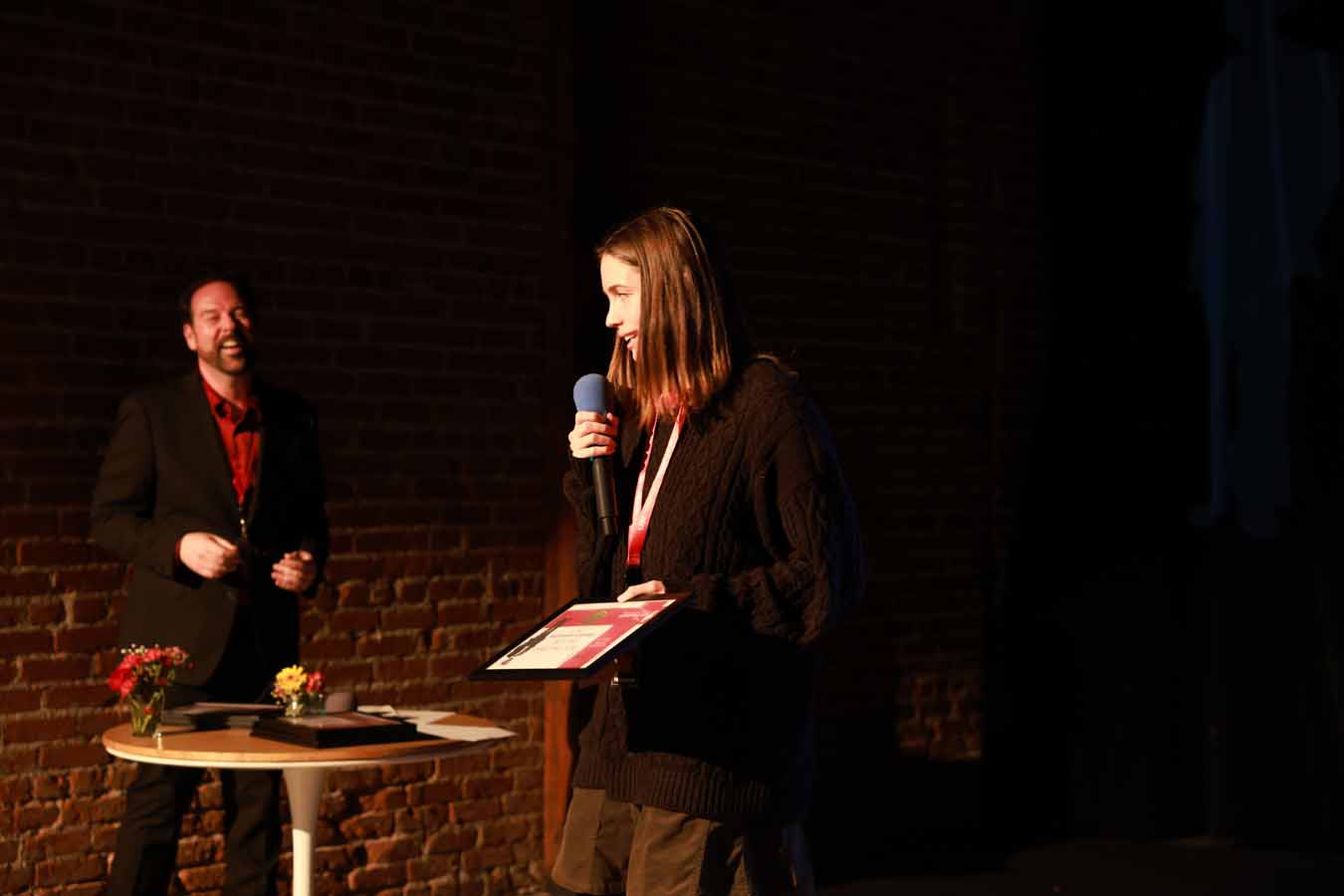
Belgian writer and director of the short film Stay, Nick Ceulemans, flew to Los Angeles from his home in Belgium to see his short film screened at The Lee Strasberg Film Festival. “Having your film be screened in Hollywood is pretty special. There was no doubt that I would come.” Accepting the award for his lead actor, Vincent Van Sande, who won Best Actor for his performance in Stay, was, in Nick’s words, “very very special.”

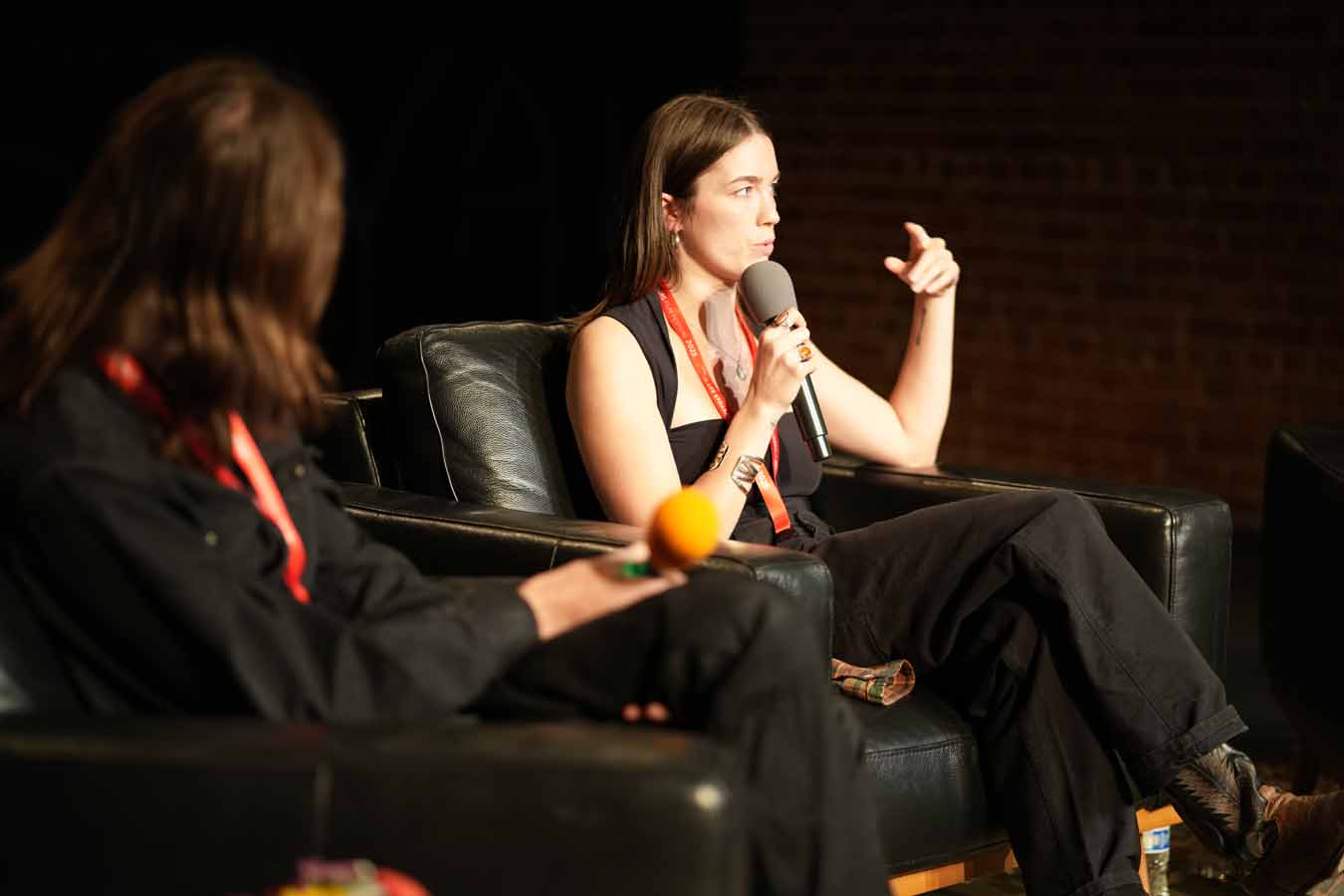
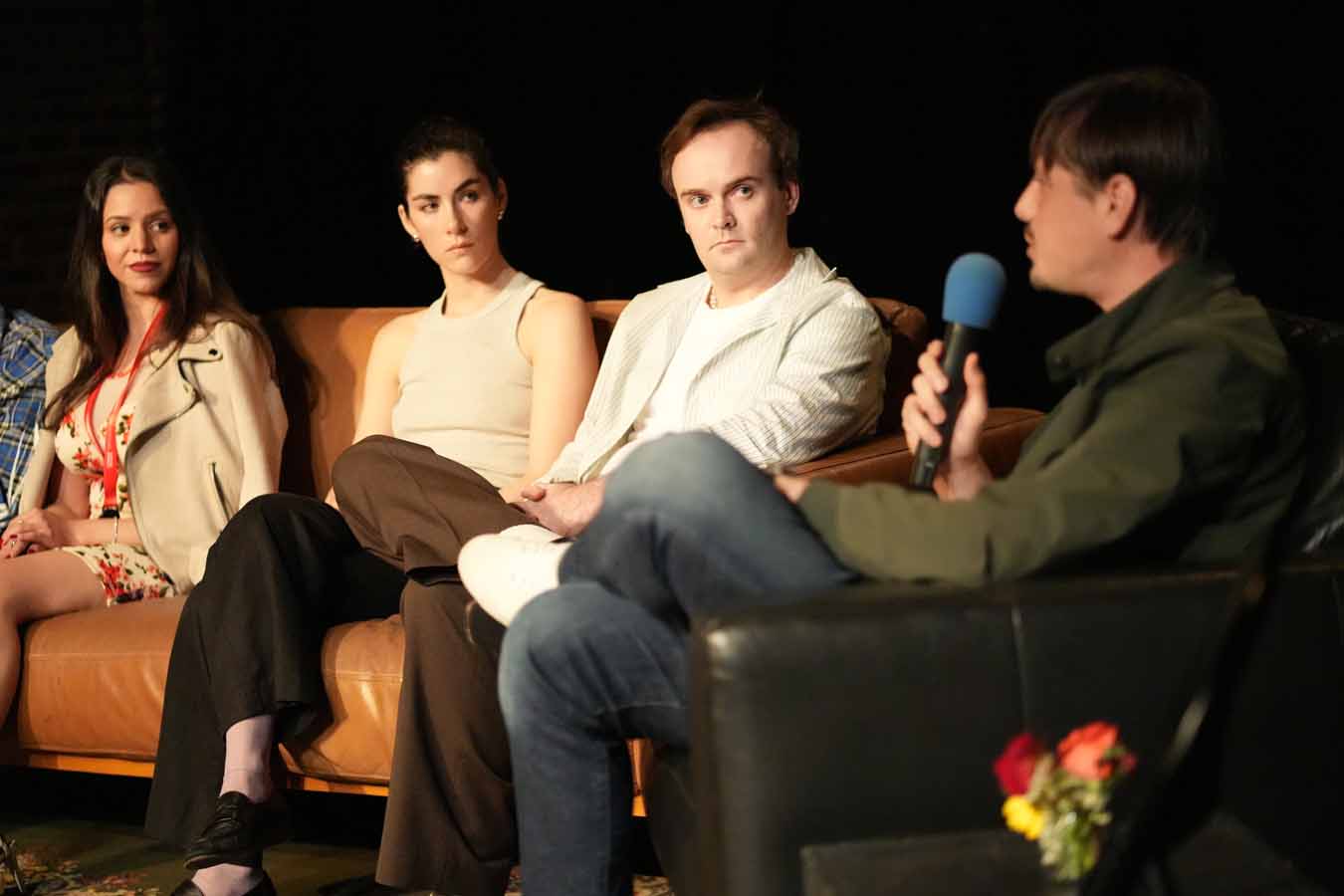
Industry Panels, Q&As, Segments, and More…

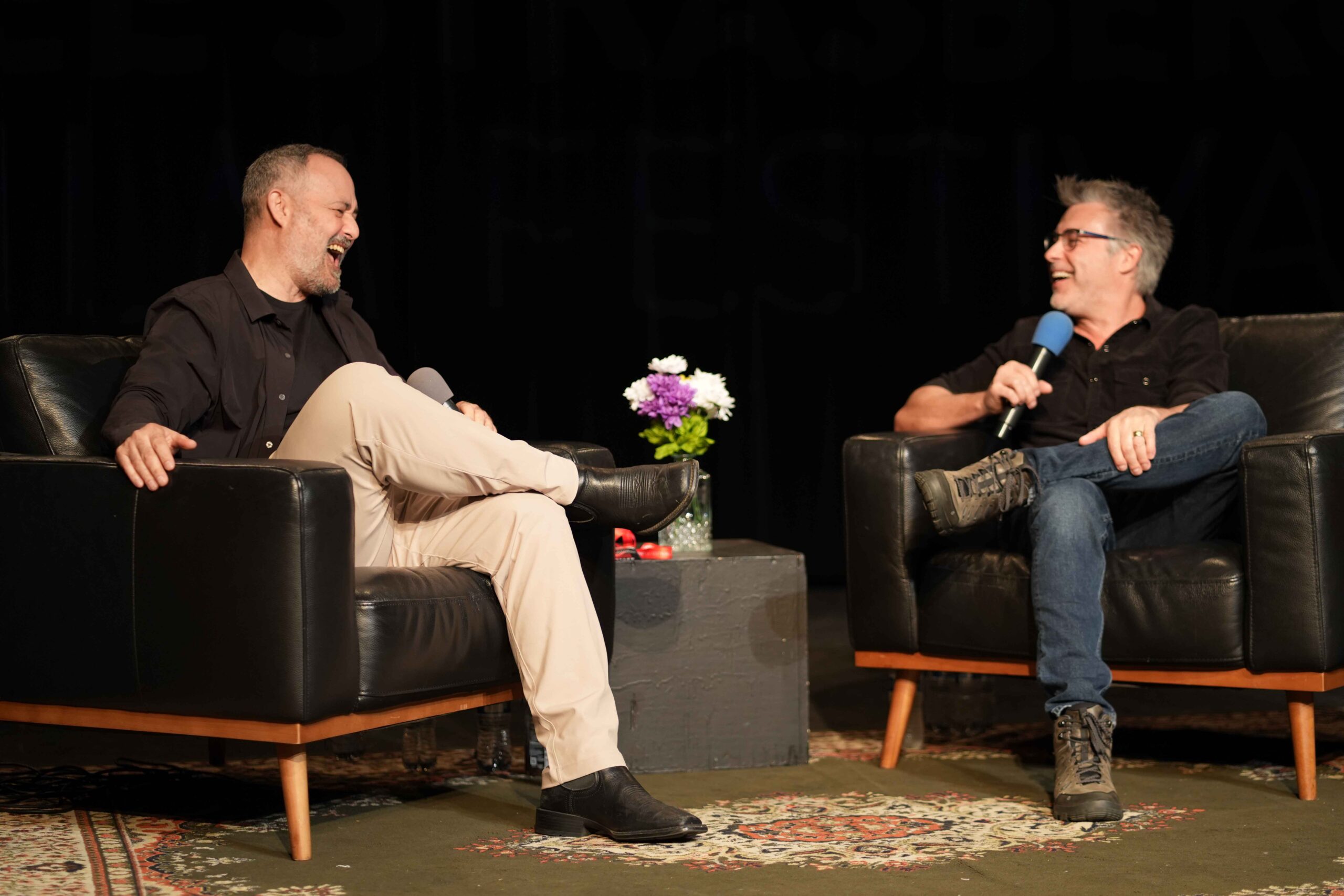
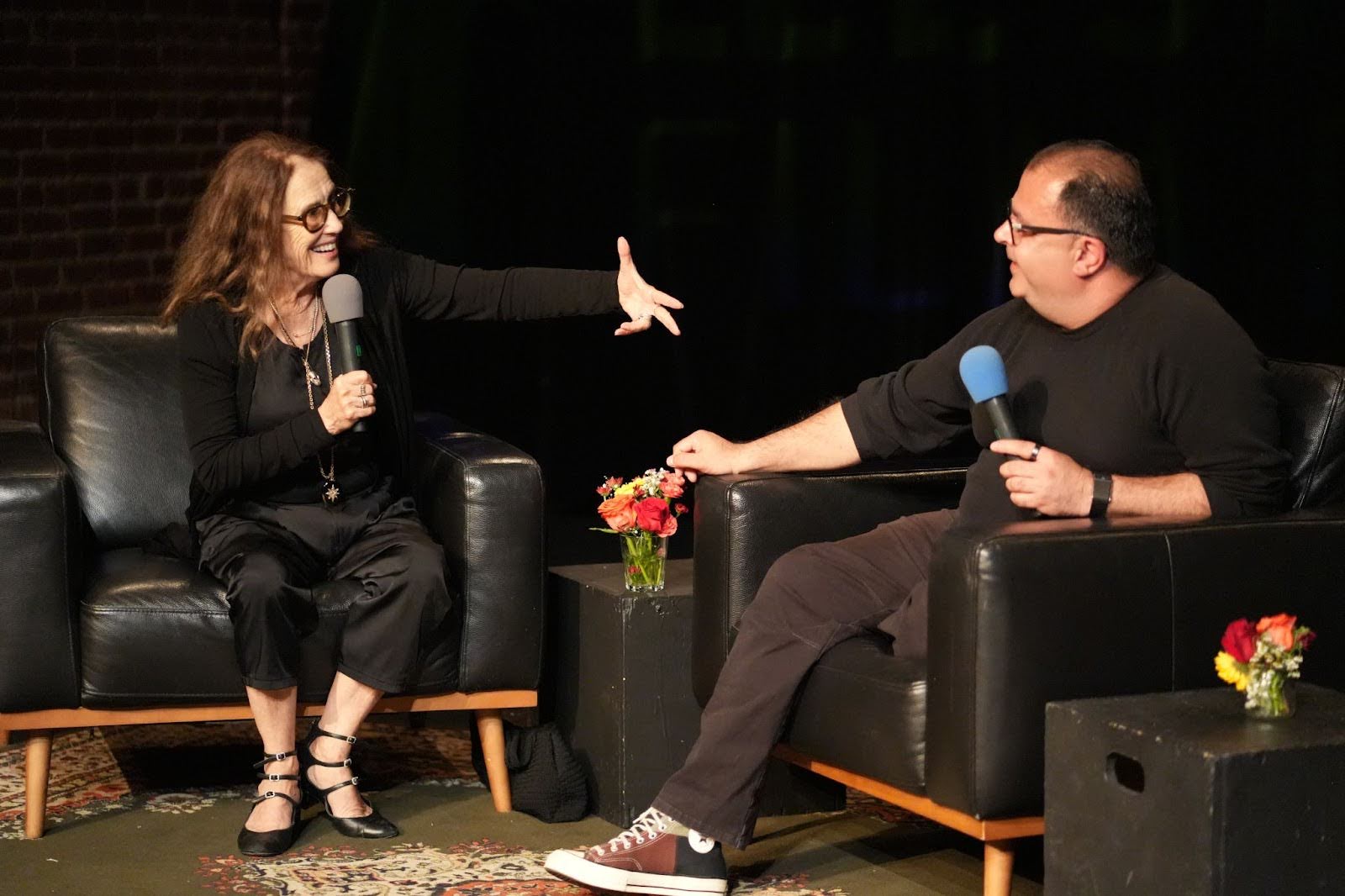
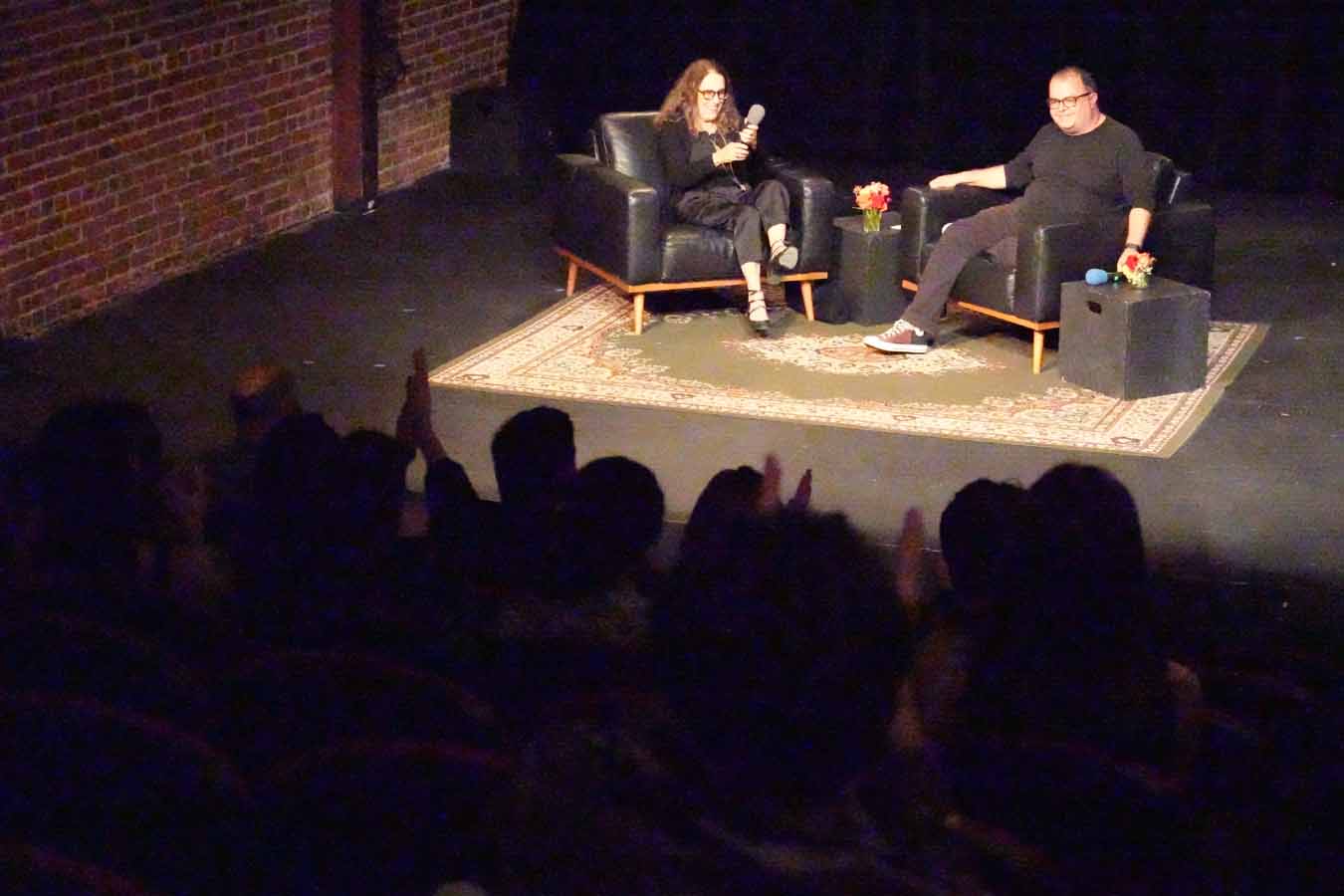
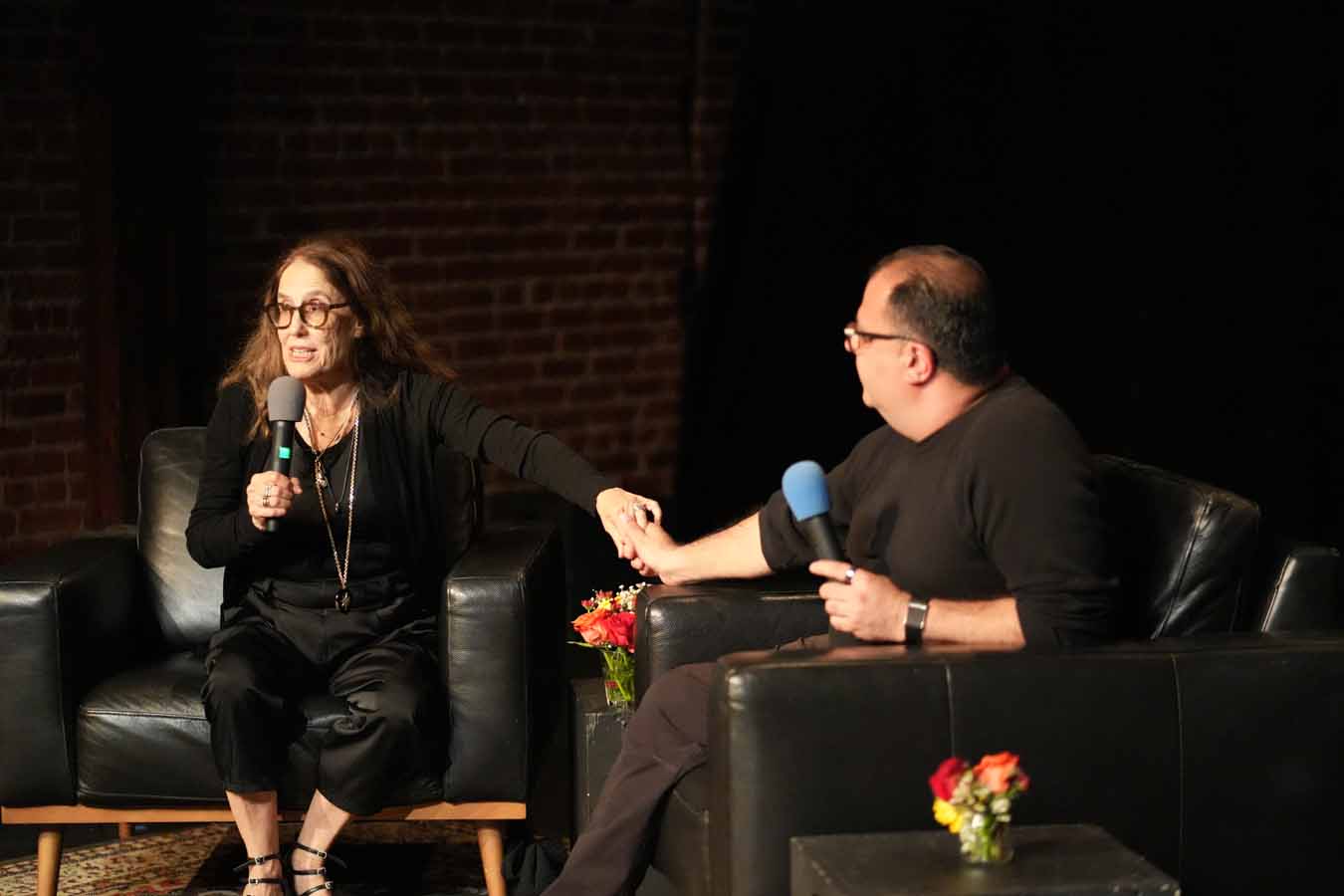
To kick off the weekend Lee Strasberg Film Festival Director, David Lee Strasberg, sat down with writer, showrunner, producer and LSTFI Alumnus André Nemec, in a Q&A entitled “The Future of Acting in AI Hollywood.” David and André discussed the impacts we can foresee on the entertainment industry as AI makes advances and begins to permeate more and more aspects of our work. Nemec says, “At the end of the day, you can’t substitute the artist. I think we’ll dabble in AI , explore it as a tool, but we will always go back to the human experience.”

When asked how young actors and students here at Lee Strasberg and in Hollywood as a whole should approach this ever-changing industry as AI makes it harder and harder to get a foot in the door, Nemec responded saying, “Tilly Norwood can’t do what you do. Tilly is a program that lies in front of keys on a keyboard. The realness of an actor is the human that you already have in you. Fight for that.” In a message of encouragement, Nemec assured the crowd of aspiring artists that “…you’ll have to fight for it, to be seen as an actor right now. But do it, go out and make your own content and show it to anyone and everyone.”

Later on in the weekend, LSTFI Head of Instruction, Carlos Colunga, moderated a StrasbergTalk with Manager Margit Polak. Having studied Method Acting with Lee Strasberg in the 1970s and then gone on to be an instructor at LSTFI Los Angeles, Margit had many stories and words of advice to share. “You can’t know what the masterplan is,” says Polak. “You just have to go pursue what you truly believe you’re put on this earth for and see what happens.” Polak, manager of actress and LSTFI alumna Alana Ubach, shares her experience working and managing Method actors. “I personally love the Method actors,” she says, “I speak their language.”

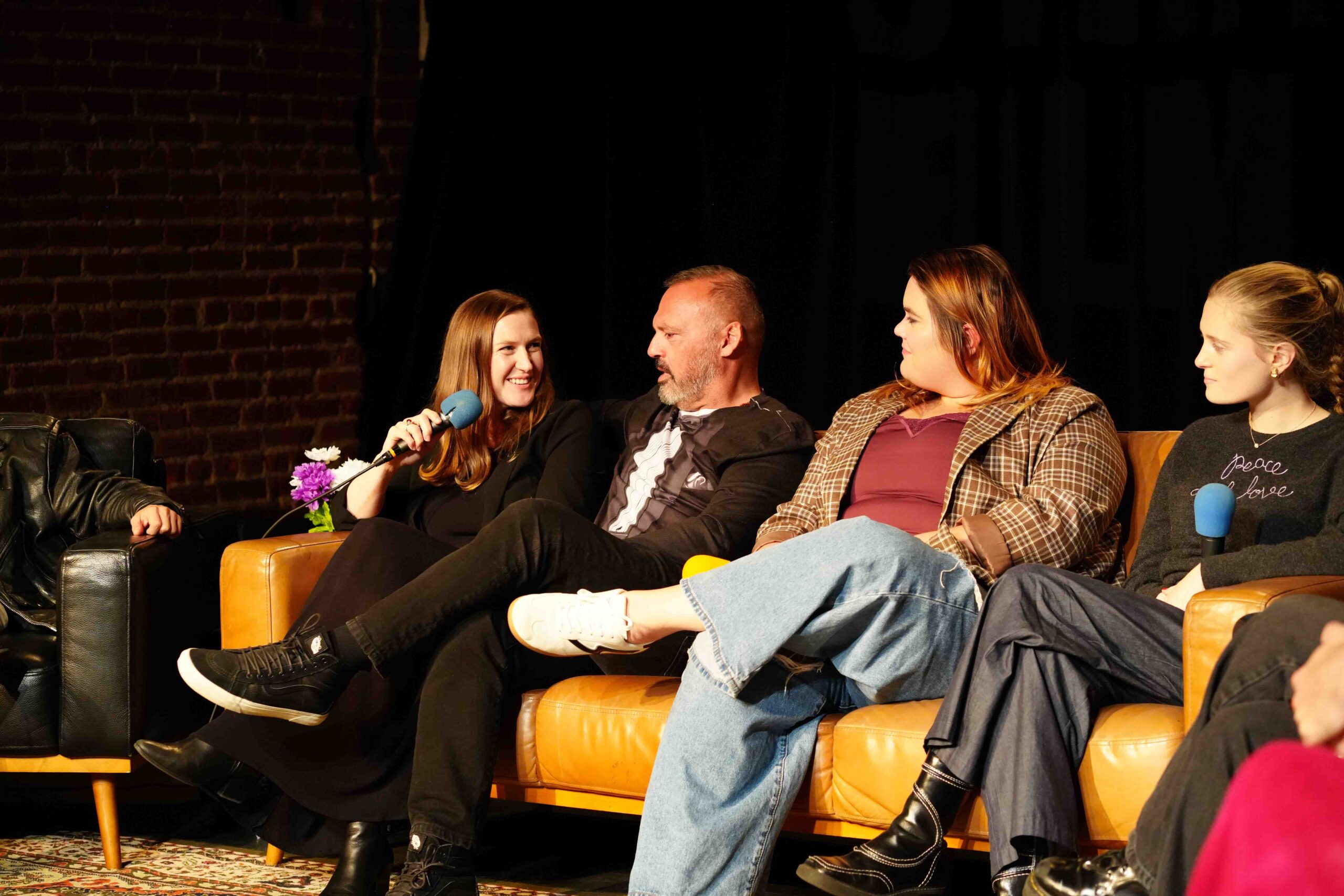
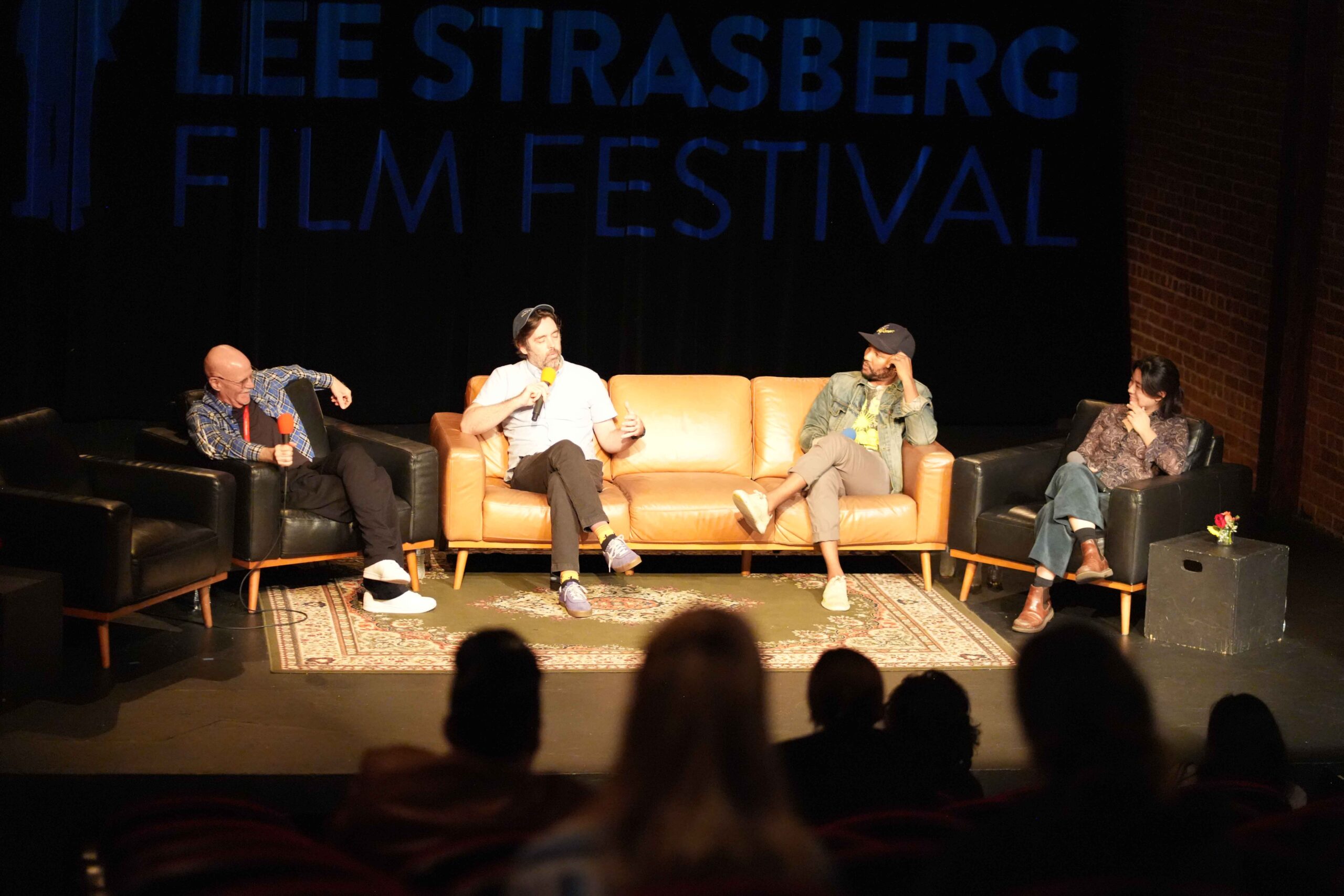
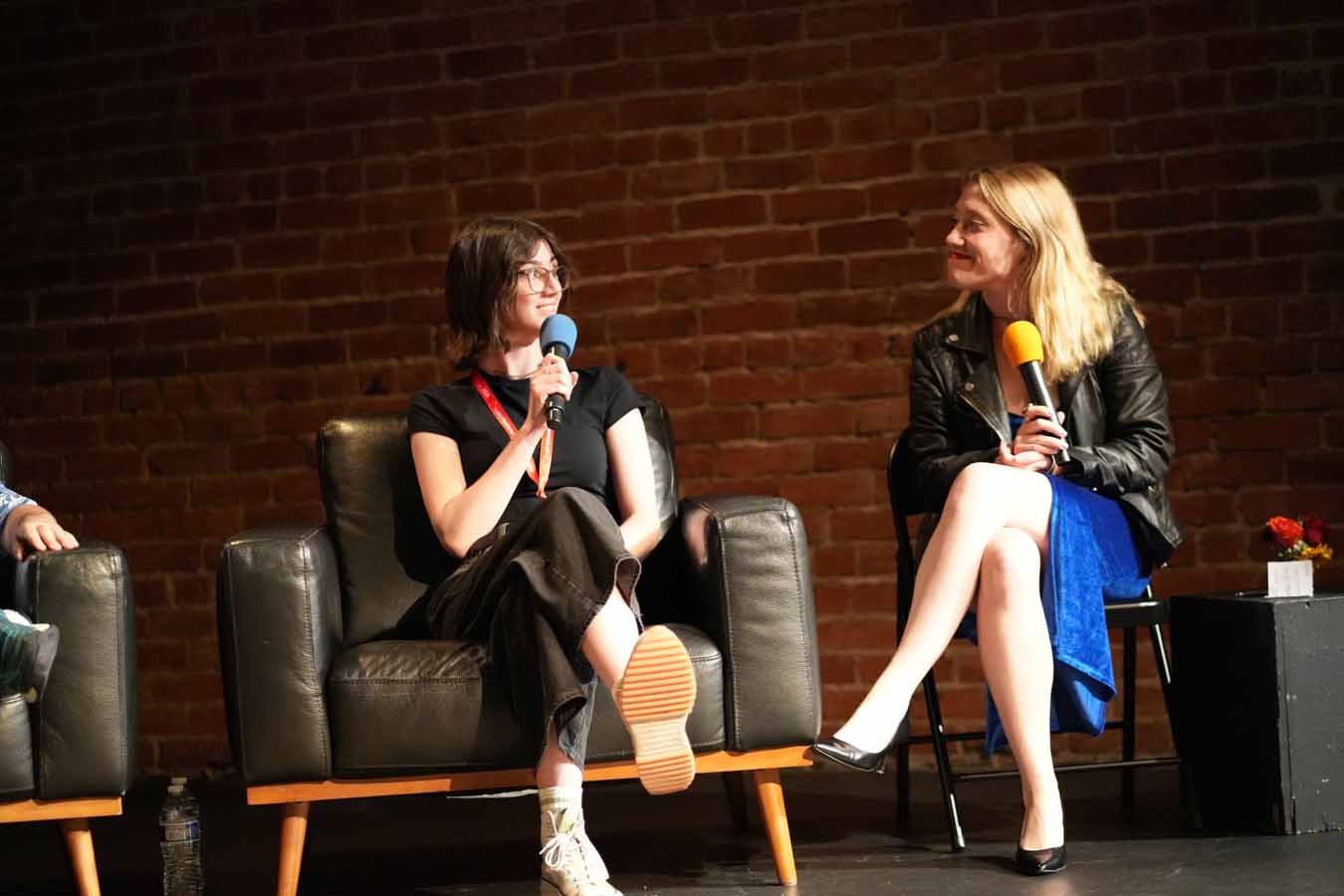
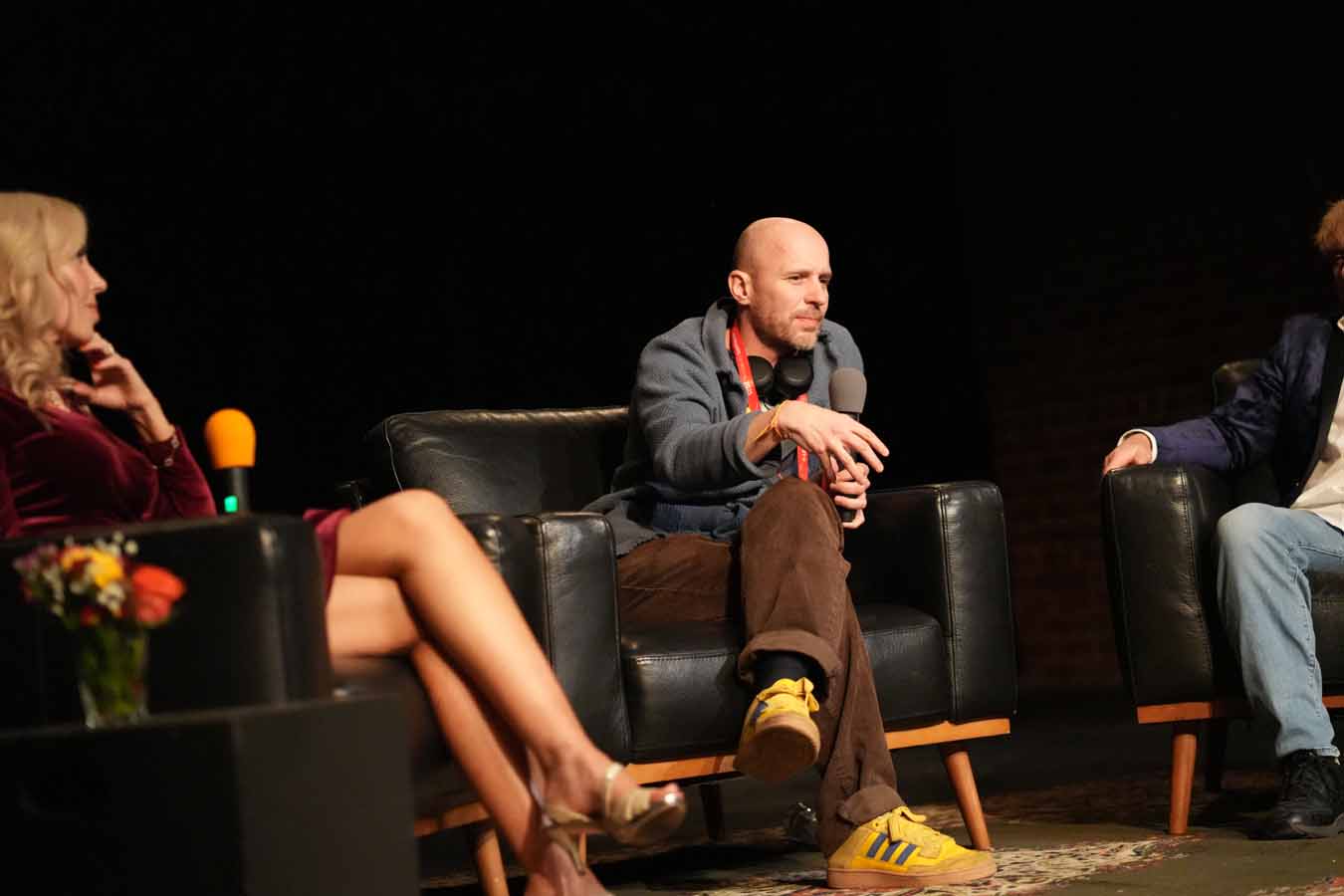
On the last day of the Festival Run, Sheldon Larry, LSTFI Head of Film, moderated the Acting Tips for the Director panel, featuring Alani iLongwe, Hyejin “Grace” Park, and Matt Enlow. “Creating a safe space for your actors should be your primary function as the director,” says Sheldon, when advising young directors. As a piece of advice for actors being directed on set, LSTFI instructor, actor and director, Alani iLongwe, suggests actors “…always look for what is ‘actable’ in a given note and once the actor feels they understand the adjustment, briefly perform the adjustment for the director to ensure the actor’s interpretation of the note is in line with the director’s vision.”

From Left: Hyejin “Grace” Park, Matt Enlow, Sheldon Larry and Alani iLongwe

Conversations with Filmmakers, Winners, and Alumni

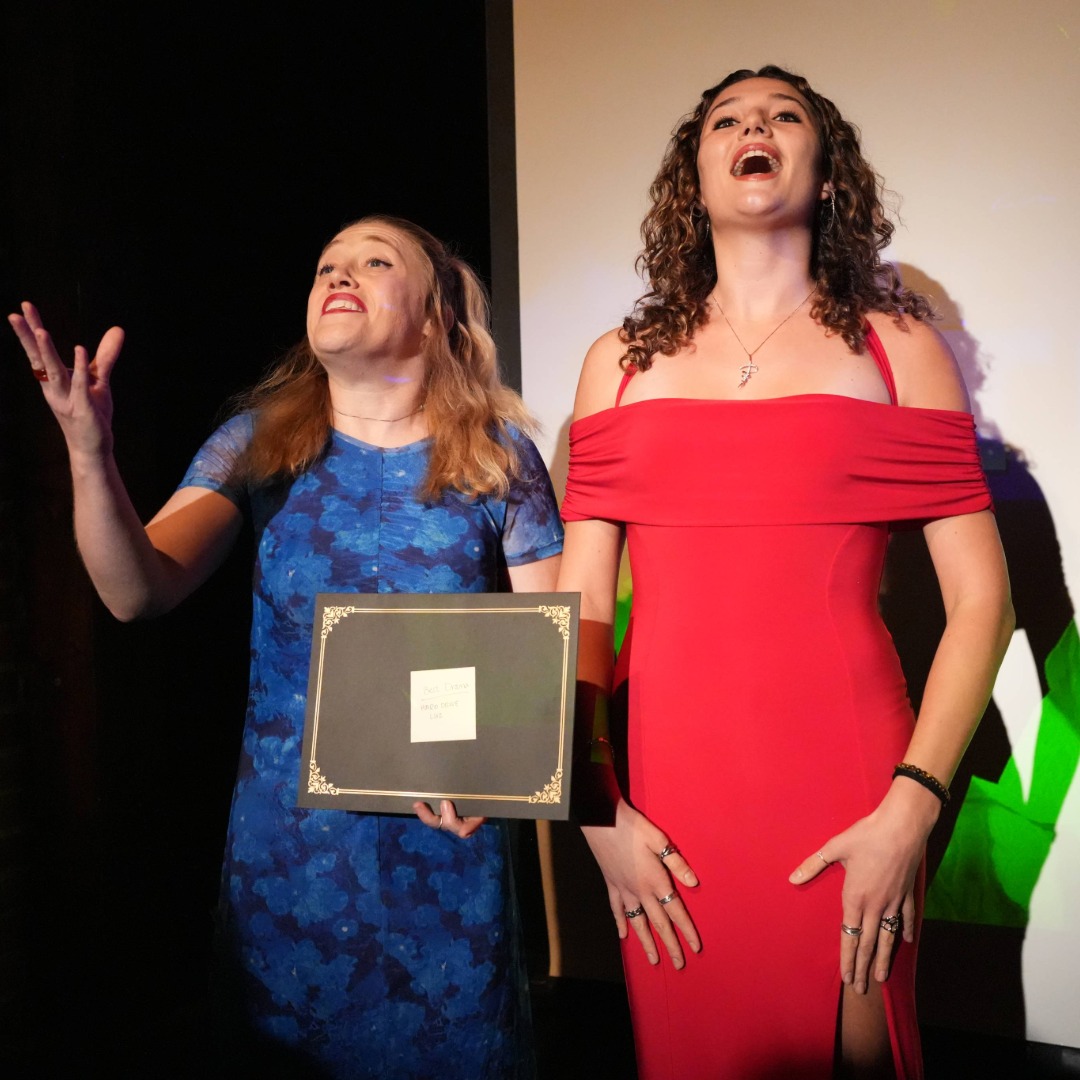
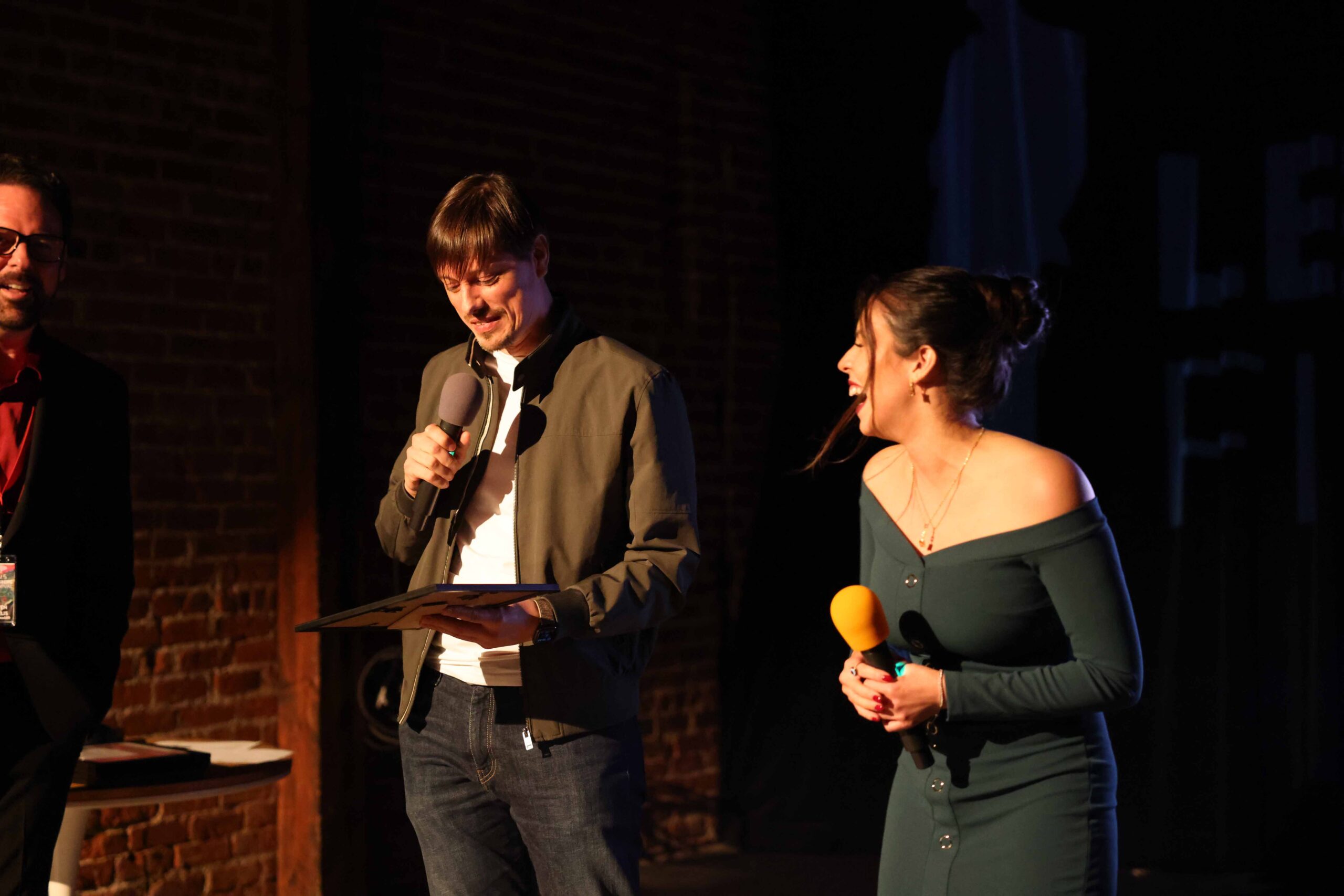
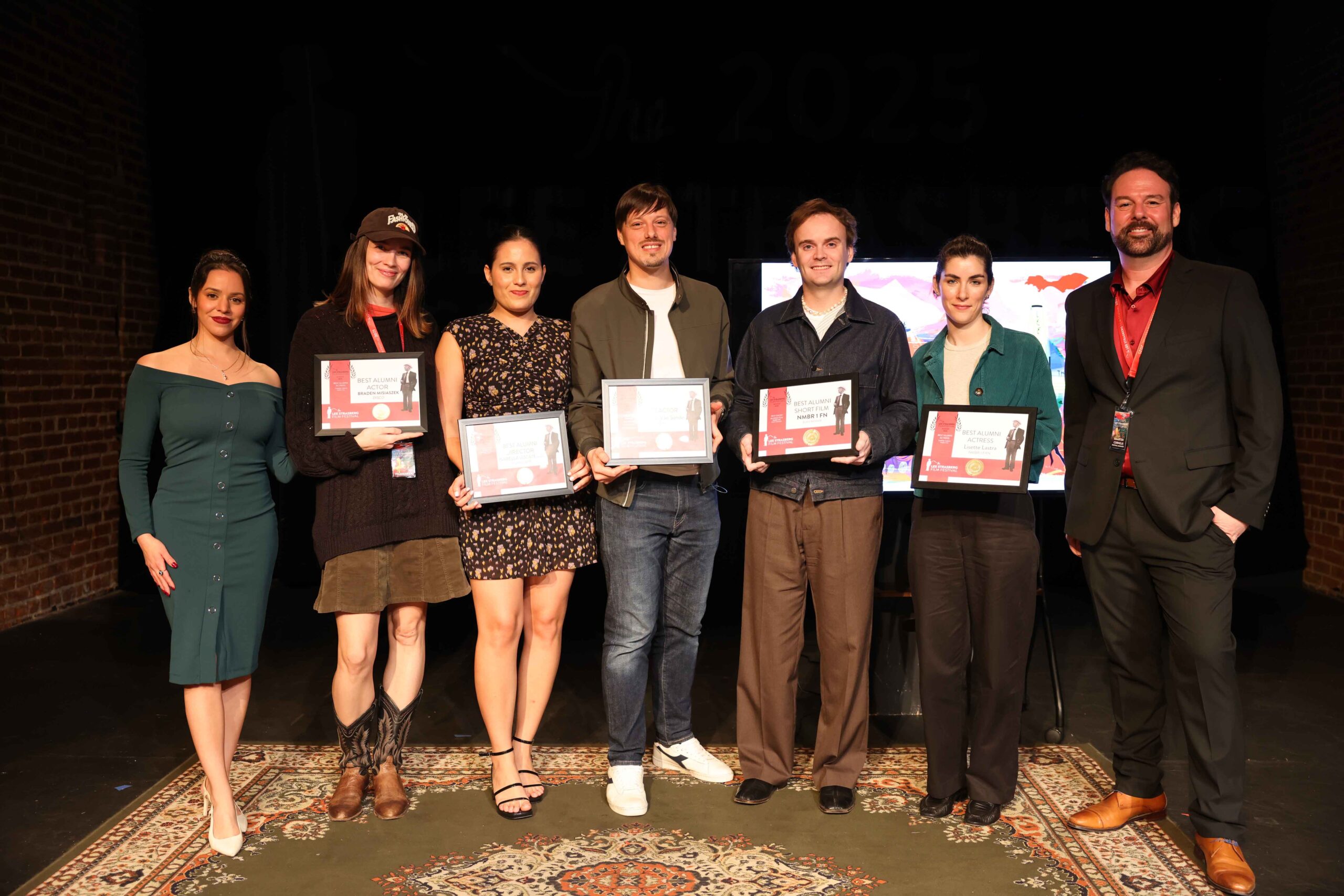
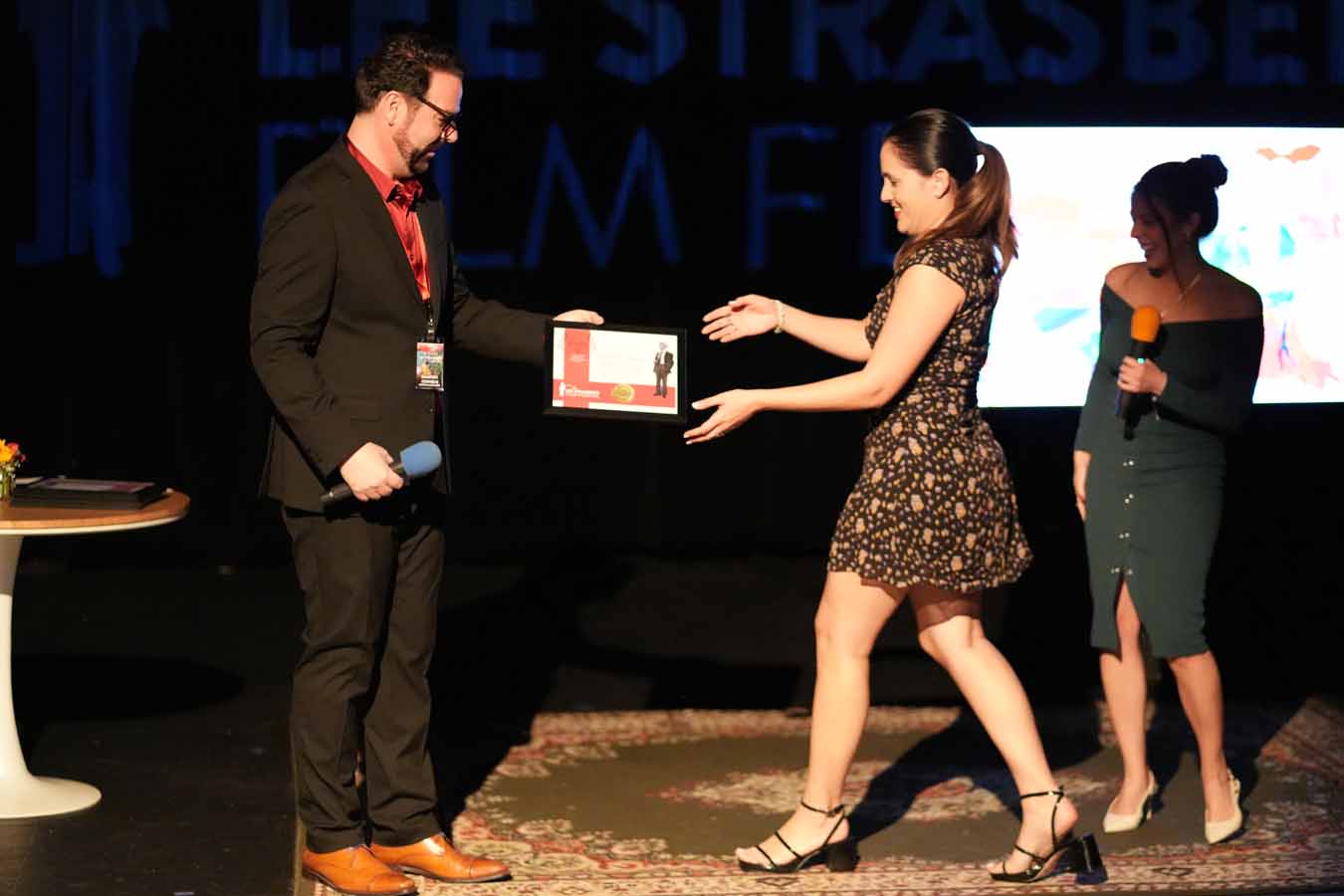
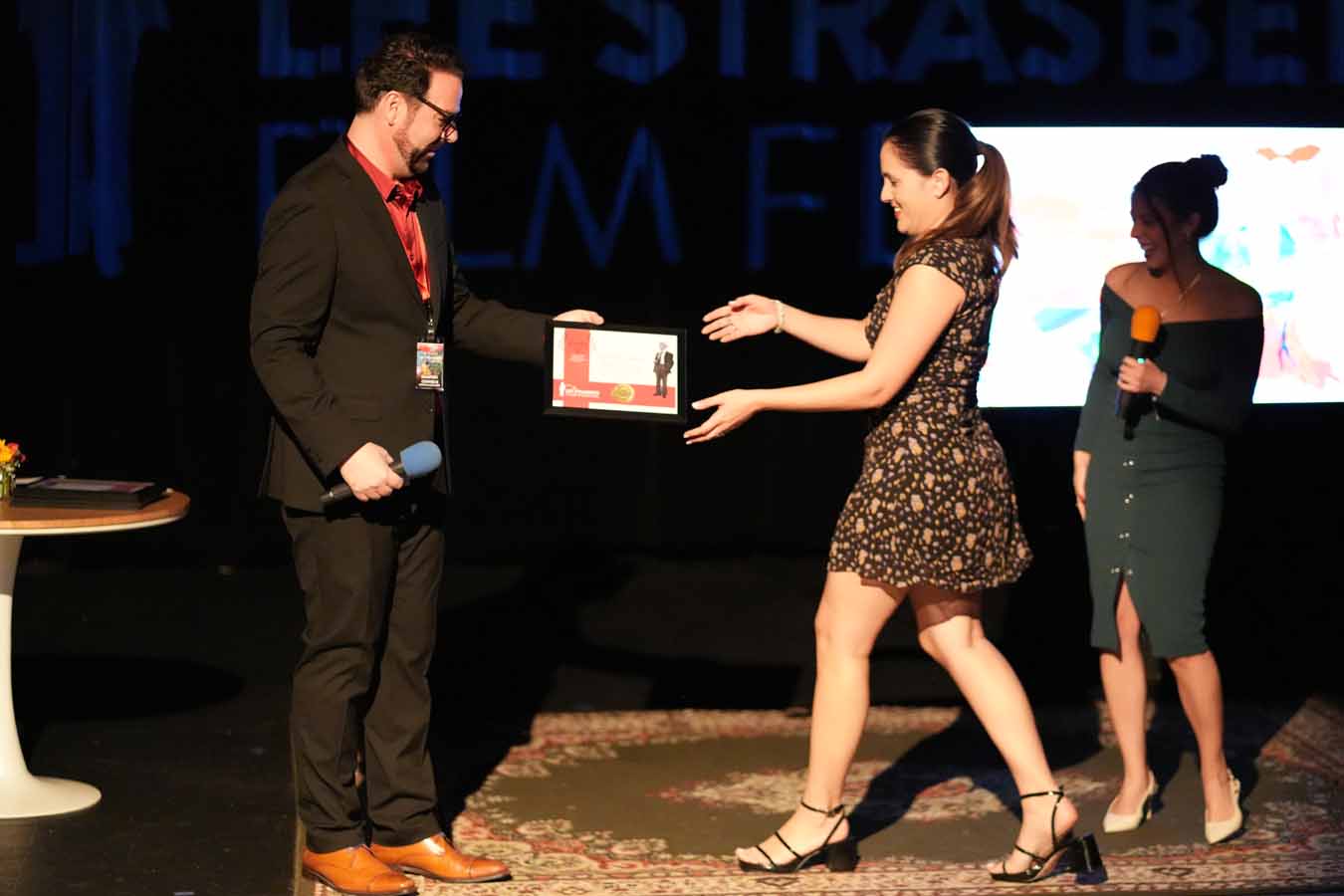
By the end of the weekend, dozens of short films and features from all over the world had been screened at the Lee Strasberg Film Festival. The Award Ceremony, hosted by alumna, Natalie Gimon Valencia, left everyone abuzz, marking the end of the LSFF 2025.

In an interview with Lisette Lastra, winner of Best Alumni Actress for her role in NMBR 1 FN, she shared her experience winning the awards as an LSTFI Alumni herself. “I graduated here in 2016, so it’s a full circle moment for me,” says Lastra. “The teachers that taught me everything I know are here at the festival tonight, I am very grateful to be here.” When asked about how she uses her method training in her career after Strasberg, she said, “It’s pretty much what I use for everything. I think everyone should take a class here.”

In an interview with  Rudy Weimer, LSTFI alumni and writer/director of  NMBR 1 FN, which was awarded Best Alumni Short Film,  he shares the experience he had at the festival, saying, “It speaks to the community here, meeting new people who care about indie film and acting in general.” Having your film be screened in a festival that honors and curates a comfortable space for filmmakers is something every artist hopes for their art. The audiences were so involved and focused, it was such good energy.” 

Weimer recalls his time studying at Strasberg 10 years ago, saying, “I like everyone who runs Strasberg, they really care about the arts, and I think that’s really important…It’s so warm and welcoming here. It’s both vulnerable and accepting. I have nothing but fond memories at this school.”

Isabella Uzcátegui, a member of the LSTFI faculty and an alumna herself discusses her festival win for Best Alumni Director for her short film Flashlight, saying, “This is my second time here at the festival. I have had a great experience, the entire programming has been so great, the filmmakers are really, really awesome and it’s so international, which surprised me.” When asked about her studies in Method Acting, she said, “I always knew that the foundation of working with actors in The Method training was going to serve my directing…Strasberg really started my creative career, so it’s amazing to have Flashlight be awarded here tonight.”

Stay Tuned For Next Year

The 2025 Lee Strasberg Film Festival concluded in community, collaboration, and gratitude, blending current students, former students, filmmakers, writers, actors and directors. Together, we had a weekend of celebration for art, passion, creativity, and the industry we all strive to make our way in.

Submissions are already open for 2026! The time to make your own work is NOW. Go out there and create the story you want to see on screen, and we look forward to seeing our independent filmmaking community again next year at The 10th Annual Lee Strasberg Film Festival in Los Angeles.

This article was researched and written by Ramona Nina, a student reporter and current Associate Degree student (class of 2026) at LSTFI’s LA Campus. She is thankful for all the staff, faculty, and students at The Institute for their continuous support.

Dead to Us
A new play by Malikah Stafford
Directed by Stephanie Rolland

The 2025 Clifford Odets Ensemble Play Commission

December 11 – 13, 2025 | The Irma Sandrey Theatre

SYNOPSIS: A fractured friend group is forced to confront the truth about their cruelty, jealousy, and complicity after the death of one of their own. Two weeks after Arya, a talented, outspoken member of their college theatre cohort, dies mysteriously in her sleep, the surviving friends reunite at a remote cabin under the guise of celebrating a birthday. As tensions resurface and old wounds reopen, the Angels of Death hover above, ensuring that the cosmic balance of chaos, truth, and consequence is maintained. What begins as a celebration soon spirals into a reckoning, forcing each friend to face the roles they played in her downfall.

STARRING
Hannah Beemer, Taylor Fuchs, Jessica Lavoie, Madeline Lowe, Clara Petry, Julia Poll, Sophia Pontet, Jose Romero, Valentina Rubio, Dylan Speirs, Evelyn Wherry, Sydni Leah Williams

This Veterans Day, The Lee Strasberg Theatre & Film Institute (LSTFI) hosted its first annual Veteran Voices performance with an evening of original work by LSTFI students and alumni who have served in the United States Military. The event brought together students, faculty, friends, and supporters to recognize the artistic contributions of our veteran actors and to highlight how storytelling can offer connection and expression.

This inaugural program presented a wide range of original scenes, monologues, and short films written, directed, and performed by the participating artists. Each piece reflected the distinct background and voice of its creator, while also touching on shared themes of identity, transition, and the evolving meaning of service. Together, the works formed a performance that felt thoughtful and deeply personal.

Developing the Work

The 2025 Veteran Voices cast began workshopping their material earlier this year. These collaborative sessions encouraged each artist to define the story they wanted to tell and to explore the form that best supported it — whether a live scene, a solo performance, or a short film. As ideas took shape, the group worked collectively to refine structure, staging, tone, and clarity. This process allowed each piece to stand on its own while contributing to a cohesive evening of storytelling.

The Performance

The Veterans Day presentation highlighted a distinct slate of original works including:

  • “22” — Joshua Kidd & Jonathan Millan — live scene
  • “Only Questions” — Christopher Gunning — short film
  • “The Light” — Filipp Degtjarjov — live scene
  • “Out Growing You” — Nicky Chartraw — live monologue
  • “The People Vs The Promise” — Asher William — live monologue
  • “Equal Lefts” — Mónique Ray & Kevin Caulfield — live scene with stage combat
  • “The Cost” — Adriel Arenas — short film

Each piece brought a unique perspective to the stage. Some artists leaned into humor, while others offered quieter, introspective reflections, experimental approaches, or biting candor. The program also included choreographed stage combat coached by Lee Strasberg Theatre & Film Institute instructor, Cody Davis, featuring high energy live stunts set to N.W.A’s “Express Yourself.”

The combination of tones and artistic approaches created a multifaceted portrait of veteran experience. The day of performances presented individual viewpoints that, together, revealed the complexity of transitioning from service to civilian life and, ultimately, into artistic practice.

A Continuing Commitment

The Veteran Voices project reflects LSTFI’s ongoing commitment to supporting the veterans within our community and creating platforms for their work. To all LSTFI Military Veterans: we are grateful for your service, your presence in our community, and the stories you continue to share through your art.

We look forward to continuing LSTFI Veteran Voices in 2026!

2025 Veteran Voices Cast: (from left) Kevin Caulfield, Asher William, Filipp Degtjarjov, Nicky Chartraw, Jonathan Millan, Joshua Kidd, Adriel Adrenas, (below) Mónique Ray, (not in photo) Christopher Gunning.

Written by Emma Duchesneau

For as long as I can remember, theatre audiences have been well… older. I can still recall going to see shows like Joseph and the Amazing Technicolor Dreamcoat, Wicked, and Annie with my grandparents when I was younger, and the audiences were full of their friends and peers. Whether the result of high ticket prices or everlasting showtunes, this has been the norm for Broadway. That is, until Gen-Z entered the chat. Recently, there has been a shift in Broadway attendants. Is it driven by the influx of Broadway content on TikTok, celebrity-driven shows making them mainstream, or is it the fact that the actors on stage reflect the teens themselves?

Shifting the Narrative 

In recent years, Broadway has been making a switch to storytelling featuring a new generation. Where before Broadway felt either catered to families with young children or avid theatre goers, this new wave of theatre is making teens feel seen. These shows are not trying to hit you over the head with morals or show off insane vocals; they are providing a glimpse into the life of teens. Shows like John Proctor is the Villain, All Nighter, Romeo+Juliet, and The Outsiders are exploring complex themes like being lost in your 20s, female friendships, consent, and found community.


John Proctor is the Villain (2025)

By Kimberly Belflower
Directed by Danya Taymor

As a high school class in Georgia gears up to study The Crucible, conversations surrounding power and consent in the play start to mirror those surrounding events unfolding in the community. A play born out of the #MeToo movement, this show offers strong female leads who work to create community and a safe space to combat the patriarchy. The play is balanced with comedic moments feeling just as natural as if we are overhearing them in the hallway at any high school in America. Belflower does an incredible job creating fierce, empathic, and empowered characters, showing young women and men alike the power they have when they use their voice and stand together.

John Proctor is the Villain does a great job blending in pop culture from the use of music like Lorde’s “Green Light” to discussions surrounding Taylor Swift. The casting of Sadie Sink also leans into the Gen-Z appeal, after her success in the show Stranger Things. While her casting seems strategic, the show operates with more of an ensemble, featuring numerous actors who are making their Broadway debut.

The show ends in a cathartic dance scene as the girls continue to fight for their voices to be heard, even as they stand up against a respected member of the community. It is emotional, electric, and powerful.


All Nighter (2025)

By Natalie Margolin
Directed by Jaki Bradley

This play follows 5 college students as they cram the night before finals, but this high-energy caffeine fueled study session leads the girls to question their friendships and their futures. The Off-Broadway cast featured 5 women, many of whom have recently had success with teen-centric TV shows and films such as Kristine Forseth’s role on The Society, Alyah Chanelle’s role on The Sex Lives of College Girls, and Havana Rose Liu’s role in Bottoms. The anxieties of impending deadlines and post-graduate plans lead the women to a jampacked night of gossip, backstabbing, and breakdowns. The overarching theme of the show is relatable to anyone with worries for the future after graduation. Will you still remain friends with your college friends? Where is everyone going to go? Are you the one who is going to be left behind?


Romeo + Juliet (2024)

By William Shakespeare 
Directed by Sam Gold

They may kiss by the book; however, this rendition of William Shakespeare’s Romeo and Juliet was anything but. Gold’s vision for this production was angsty, rambunctious, and resembled that of an underground Berlin rave. With music by Jack Antanoff and a star-studded cast, Rachel Zegler as Juliet and Kit Connor as Romeo, this play was an instant hit amongst the youth. The addition of music is not uncommon for Shakespeare productions, but this one brought a pop flare that added an additional element to the show. This production aimed to make Shakespeare relevant, modern, and commercialized. The Gen-Z flourishes were apparent down to the smallest details like the teddy bears that adorned the stage, a Borg being present in the party scene, and the oversized Care Bear T-shirt Juliet wears to sleep.

While some may question if the production was doing too much, the numbers can speak for themselves. In Jesse Hassenger’s article from The Guardian, he shares that “the play managed to hit the youngest Broadway audience in recorded history, with 14% of ticket buyers in the 18 to 25 demographic, as opposed to an industry average of 3%.” The production also took off on TikTok, with clips from the show leaked online and edits made of the two leads. While filming during a show is technically prohibited, this online frenzy contributed to the show’s popularity.


The Outsiders (2023)

By Adam Rapp
Directed by Danya Taymor

A classic book in the 7th grade literature cannon has now become a full-fledged musical, ready to reach a new generation. Taking home 4 Tonys when it debuted, the show was a rapid success. The story follows the novel written by S.E. Hinton, reflecting the lives of two opposing groups of teenagers in 1960s Tulsa, Oklahoma. The musical explores themes of not belonging, coming-of-age, and social class. The story has withstood the test of time, spreading the message that it’s okay to not always fit in.

The music in the show is less of a traditional musical theatre sound and more folk, appealing to a wider audience. Its success with younger crowds can also be attributed to schools taking students to see the book they have been studying in class, brought to life on stage. Not only did the Broadway production provide many opportunities for young actors, but the touring productions continue to allow fresh talent to get their start. It is not too late to see the show, The Outsiders is still running on Broadway.


Why is this important? 

The youth are our future. Not only is this phenomenon fostering an appreciation for Broadway from a new generation, but it is also giving a platform to young artists and their stories. In a highly competitive industry, it is important for young people to see themselves on stage and know that it is possible. The success of these shows paves the way for more productions featuring younger voices. If this trend continues, young actors will have more opportunities to audition for shows featuring their stories.

The Lee Strasberg Theatre & Film Institute champions youth-driven plays through the Clifford Odets Ensemble Play Commission. Produced by the Lee Strasberg Creative Center, the program commissions an emerging playwright each year to write an original ensemble play for college-age performers. Building on the legacy of the Group Theatre, the cast, playwright, and director function as a collaborative theatre company, bringing a bold new work to life each fall. Fun Fact: John Proctor is the Villain and The Outsiders director Dayna Taymor made her Off-Broadway directing Sarah Gancher’s The Place We Built, first written and developed at LSTFI as the 2013 Clifford Odets Ensemble Play Commission.

It is important to stay informed on what’s happening in the industry and in your community. Stay up-to-date on local theatre, what shows are coming to Broadway, and evolving industry trends.

Written by Ramona Nina

We all long for that moment when you realize your dream is coming true. That’s why when LSTFI alumna Boyana Avdjieva landed her starring role in the Lifetime Movie Network’s The Paradise Murders, she was struck with surprise and joy, saying, “I realized how far I’ve come. It was one of those cliché but true ‘This is why you don’t give up‘ moments.”

The Paradise Murders marks a big moment in her career, her first prominent role in an American feature film. The Paradise Murders is a thriller, directed by Richard Switzer, in which Boyana plays the character Isla. The moment when she first saw her name amongst the top four billing cast “felt really special,” said Boyana. Having been the only Bulgarian actor in the cast while the entire film was shot in her home country with a Bulgarian crew she said, “Seeing my name up there felt like a little nod of appreciation to all of us, and that was really sweet.”

The Role of a Lifetime…Network

Being an international actor in this industry is a challenge in itself. “It’s still rare to be cast as someone who isn’t defined by your nationality,” Boyana says. “That’s why this role was so refreshing, especially coming from a very American, traditional network like Lifetime – my character isn’t Eastern European at all.”

When asked about what she learned about herself as an actor through this project, Boyana said, “I used to wonder what it would feel like to work on a film for Lifetime – something so quintessentially American.” She tells me they don’t even have Lifetime in Bulgaria, so she always figured it would be just a dream that was simply out-of-reach. “To me, that’s the coolest part,” she says. “It was proof to myself that it’s absolutely possible and attainable; that someone like me can actually do it.”

When asked about how she sustains her drive in such a competitive, challenging industry, Boyana responds passionately, saying, “For too long, we’ve been told not to even try because there’s no room for us. But there’s plenty of room…I live for the moments where I can quote Elle Woods: What, like it’s hard?

Training with Authenticity at LSTFI

Boyana looks back on her previous training at home before she attended LSTFI, describing how “the entire system trains you to blend in, to be part of the ensemble,” she explains. “I, however, was born with a pretty prickly attitude — I always stuck out like a sore thumb.” She describes a theatre-troupe, ensemble-driven methodology that she simply couldn’t figure out. “I was literally told once that I needed to be ‘broken in’ like a wild horse. I hated that, but I couldn’t figure out why it was so hard for me.”
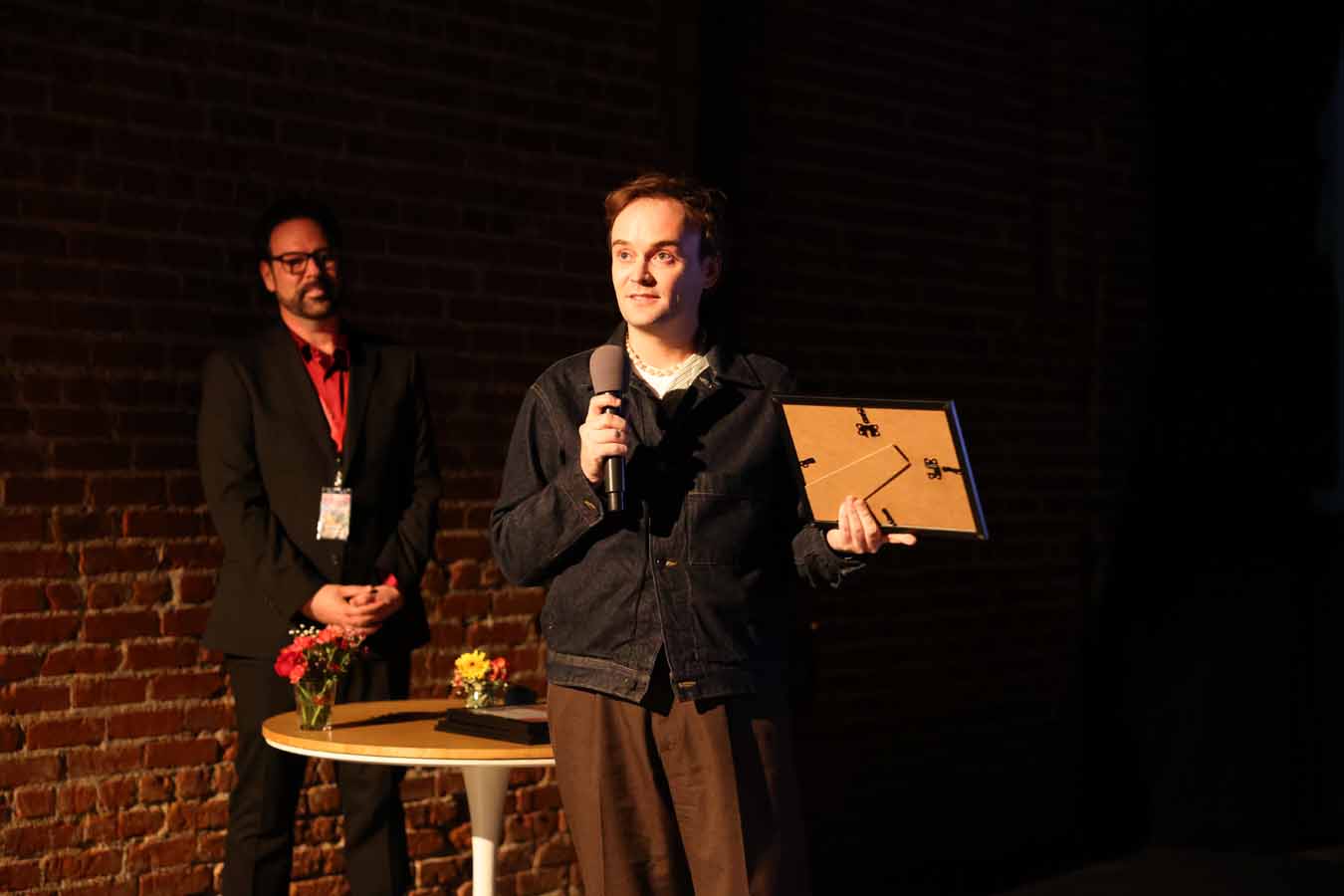
When beginning her studies at the LSTFI LA Campus, Boyana quickly found the place where she felt she could be authentically herself. “I’m not the same actress I was before stepping into The Institute. I know that sounds dramatic, but it’s true. I actually know what I’m doing now.” The use of Relaxation and Lee Strasberg’s Method has completely changed her perspective on acting, and is something she uses to this day. “I can’t even begin to explain the power of Relaxation. You’re unapologetically yourself and no one cares, because everyone’s in their own little corner of the room doing the same. It’s so freeing. It’s no wonder some people start crying while they do it.”
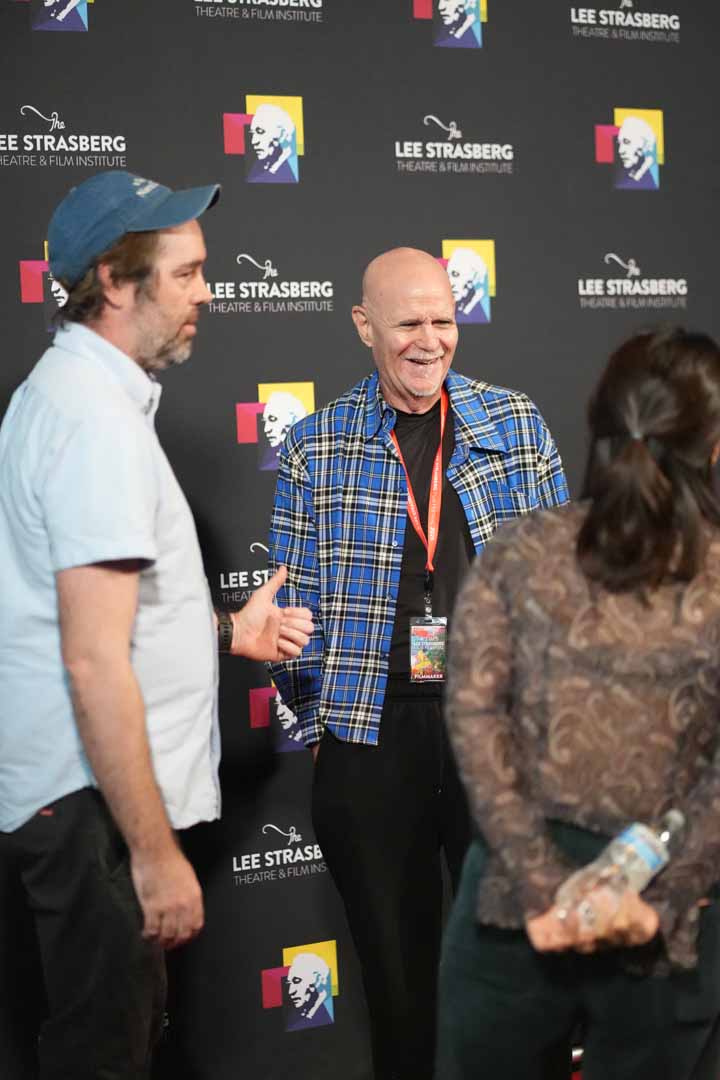
When asked if her training at the Lee Strasberg Institute had helped her during The Paradise Murders, she said it wouldn’t have been possible without it. More specifically, “we had some kick-ass Self-Tape and Acting for TV & Film courses. Obviously, every course at Strasberg is top-tier; and don’t think I’m saying that just to be polite,” she jokes. “I’m Eastern European; being nice for the sake of it isn’t really my style.” Boyana describes what she took-away from these classes, “Now I know exactly what I’m auditioning for and that specificity dictates everything about my prep….from framing the tape, to choosing colors that work on camera, to how much physical space I should leave myself, whether to use props, or how far to go with a costume, hint – it’s all intentional.”

Bring Your Own Stories

Boyana booked her role on The Paradise Murders off a single tape, which not only speaks to her talent, but also her process. “I’m a firm believer that knowing exactly what I’m auditioning for – and how I’m auditioning for it – brings out the best performance in me.” In her own flair, she advises all actors, auditioning or on-set, to “bring that famous je ne sais quoi everyone’s always talking about – the thing that screams you, and that nobody else can bring to the character.”

LSTFI Alumna Boyana Avdjieva
Photo by Adriana Yankulova

After passing such a big milestone in her career, Boyana is excited to work on her own personal project, that she will be both directing and starring in. “Strasberg gives such a great opportunity to its students to expand as actors and beyond and to learn how to take command of their own careers,” she says, having written her current project while she was studying at The institute in Los Angeles. “Our film production teachers (Sheldon Larry and Craig Leif) kept saying to us, ‘Bring your own stories. Create jobs for yourselves! The industry needs these types of voices!’ That hit particularly hard.” What Boyana learned stuck with her, and she is now doing exactly that. Bringing her own stories to life.

“I’m forever grateful I got to experience the magic of The Strasberg Institute in LA – its community, its teachers, and the chance to learn the Method directly from the source.” To end our interview on a fun note, we asked her what roles/projects she can see for herself next. In classic Boyana fashion she said, “I’d love to play a psychopath and deliver at least one glamorous mugshot. Or maybe I already did in The Paradise Murders… who knows? You’ll see.” Watch Boyana Avdjieva in The Paradise Murders, directed by Richard Switzer, out now on Lifetime and Apple TV+. 

Big Love
By Charles Mee
Directed by Lauren Zeftel

November 20 – 22, 2025 | The Irma Sandrey Theatre

Fifty runaway brides, fifty determined grooms, and a wedding day that goes spectacularly wrong. This explosive reimagining of a Greek classic by Charles Mee dives headfirst into a messy battle of the sexes, posing sharp questions about love, power, and autonomy.

FEATURING
Tanya Agarwal, Grace Ansley, Veer Bodani, Coralie Bradnam, Elias D’Onofrio, Frederick Mosch, Vincent Tanaro, Zach Taylor, and Ianella Vaoni

Written by Alex Alexander

Originally from Vizig, India, LA-based Manoj Chandra blew audiences away with his leading performance in Praveena Parachuri’s Kothapallilo Okappudu, a comedic drama (and box office hit) that tackles everything from god to race to love. He credits his transformative time at The Lee Strasberg Institute & Film Institute for equipping him to handle the delicacies and nuances of his complicated, imperfect character, Ramakrishna.

From India to the Big Apple and Back Again: Manoj’s Journey to LSTFI

LSTFI alumnus Manoj Chandra

Manoj’s early acting life began in regional theater in Vizig, India. While navigating this, he received his post-graduate degree in Data Science from the International Institute of Information Technology. During this time, he discovered The Institute, although he had no idea what it would unlock for him.

Manoj found The Institute by observing standout performances by actors — the kind of performances that move you, change you — and followed the magic back to the source. More often than not, the actors who touched him were associated with The Method and Lee Strasberg, having trained at either The Institute or the Actors Studio. He sensed there was something special, some “x factor,” that actors find in themselves through Method Acting. He had to know more.

Just pages into Lee Strasberg’s A Dream of Passion, and feeling “lucky to have even discovered [The Institute],” Manoj knew where he needed to go: Los Angeles, California.

Studying at The Institute: On a Magical Place Becoming Home

The first day of Manoj’s training at The Institute was “purely cinematic”, the first of many experiences at LSTFI that have stayed with him. Entering the beautiful building that would become his “emotional home,” he stared at the stars on the wall — Marlon Brando, Al Pacino, Marilyn Monroe, Lee Strasberg himself. From his orientation with David Lee Strasberg to the WhatsApp group for social events to the palpable sense of camaraderie, Manoj felt adopted into a community unlike any other higher education he’s heard of. Immediately, he knew he was home.

Then the work began. At first overwhelmed by the course load and the intensity of a Method Acting class, Manoj soon got his bearings. Hours of hard work, rehearsing between classes, challenging exercises, and new emotional heights all set the foundation for what would become an “emotional center” for Manoj. He would use this center on the set of Kothapallilo Okappudu as an “emotional recall,” one of the many Method techniques he relied on.

Making the Most of LSTFI: The Method Lab

Each month, LSTFI Los Angeles offers The Method Lab — an advanced one-day workshop taught by David Lee Strasberg, designed for experienced Method Actors to continue their training. Manoj describes the class as a true “laboratory,” where David and the students “tapped into the most off beat things” in a “total freestyle” manner that truly felt like “research.”

He looked forward to these sessions all month, eager to roll up his sleeves and work in such a dedicated environment. At the end of his final lab, unsure which monologue to present for the class, Manoj went back to his old-faithful: a complicated piece about murder and schizophrenia. He had used the monologue to audition for theater in India and had often performed “with no success,” but knew the piece backwards and forwards, inside and out. That day, he performed in his native tongue and just “went for it.” This time, with new Method training under his belt, it landed.

“Mr. David put the recording up on the screen to analyze,” he recalls. “He paused it, zoomed in on my face and eyes to show the class, and then said, ‘You need guts and talent to pull off something like that.’” Manoj was awe-struck. The full-circle moment, and those words coming directly from David Strasberg, are written on the walls of his heart.

Beyond International: The Universal Magic of The Method and Working Globally

With credits including Nigerian comedy Christmas in Miami and the award-winning short film Men in Blue, Manoj has been putting in the hours around the globe. He reports that a Method Actor’s signature sparkle is understood universally, even subconsciously. In general, he has found most directors to be very receptive to The Method and the legacy of Lee Strasberg, especially those familiar with film history or the powerful work of LSTFI alumni.

Kothapallilo Okappudu director Praveena Paruchuri recognized that spark in him, working with Manoj to let his technical training support him while telling the story. Manoj likened his time at The Institute to “charging up,” filling up emotionally and energetically. On set, he was an “energetic surplus” that allowed non-Method actors to play off him in a unique way that both parties enjoyed.

Kothapallilo Okappudu: Complicated Themes Delivered Truthfully

India is an incredibly diverse country, with many cultures, languages, religions, and the complex socio-political and cultural dynamics inherent to a multi-faceted society. Kothapallilo Okappudu does not shy away from heavy and hot-button themes — from the concept of “god” to the caste system, from greed and money to race and skin color, love and gender. The actors had their work cut out for them, and Manoj was no exception.

He explained how his character, Ramakrishna, is “not simple, he’s supposed to screw up, but not harm.” There were many moments where if his performance was “off by just one beat, it would change the meaning” and “could alienate the audience.” He credits his Method training, and the emotional intelligence he gained from teachers like David Strasberg, with his ability to digest such a nuanced story and deliver the truth of Ramakrishna’s humanity in a delicate way.

Much to Manoj’s relief, his performance resonated. He had the opportunity to sit with live audiences and experience their laughter, shock, tears — all at the right moments — and feel the impact of his portrayal of Ramakrishna.

Parting Thoughts from Manoj Chandra

No doubt part of the recipe to Manoj’s success is his gratitude, something he expressed many times during his interview. He specifically thanked director Dr. Praveena Paruchuri for supporting new talent and allowing him to bring Ramakrishna to life. He thanked Rana Daggaubati Gaaru for presenting their film in the international box office and for welcoming him to Southbay Talent.

Manoj was emphatic in his love and appreciation for The Lee Strasberg Theatre & Film Institute, everything it is and represents. To any prospective students wondering if they should take the leap, Manoj says that acting is an ongoing practice, a life long endeavor, and that The Institute will become home.

“It is a continuous process, you can call it the Mecca or the Temple, but it will become the center of your life if this is where you start acting,” Manoj shares. “You may explore other styles, but everything brings you back to The Method. Being a Method actor will be your biggest strength and something nobody can ever take from you.”

The Cherry Orchard
By Anton Chekhov
Adapted by David Mamet
Directed by Martin Balmaceda

October 23 – 25, 2025 | The Irma Sandrey Theatre

SYNOPSIS: Chekhov’s final work,The Cherry Orchard tells the story of an aristocratic family deep in debt, facing the impending sale of their beloved estate and orchards to pay off their mortgage. David Mamet’s adaptation offers a fresh perspective on the classic, still capturing the fallen family losing their estate, but with Mamet’s distinct focus on the characters’ internal, personal struggles and desires within their changing world.

FEATURING:
Sam Christie, Sela Colavito, Gracie Conn, Netta Dar, Vincent DeLuca, Jamie Houghton, Reason Israel, Bram Kerwin, Braden Misiaszek, Ashley Pierre, Baker Saurage, and Mikaila Son

Written by Jose Romero

When you look at the Tribeca Film Festival lineup, you expect to see seasoned filmmakers, industry veterans, and established voices. What you might not expect is a recent graduate from NYU Tisch Drama’s Lee Strasberg Studio, premiering a short film she not only wrote but also starred in and produced. That’s exactly what my friend and former classmate Emma Parks accomplished with Dirty Towel

Emma’s journey is a testament to what can happen when talent meets persistence, but also when someone decides not to wait for permission. She told me early in our conversation, “The best way to move forward is to be your biggest cheerleader,” something her parents instilled in her since childhood. “Make things you want to be in. Don’t wait for others.” That attitude, combined with years of training at LSTFI, propelled her from scribbling down an idea freshman year to walking the red carpet at Tribeca just a few years later.

Developing Dirty Towel

In this coming-of-age comedic drama, Emma stars as a teenage girl named Charlie, who grapples with feelings of shame and guilt after having sex for the first time. The film is a thoughtful exploration of generational shame, societal expectations, sexual empowerment, and self-worth.

The spark for Dirty Towel came from a very real and very formative moment. A family friend once told Emma a story about an event that happened with her mother when she was just six years old, which later became the film’s opening scene between Laura Coover (Elizabeth) and Laurel Nial (Young Charlie). It stuck with her. “It was such an impactful thing to hear at that age, and it really stayed with me. During freshman year, that’s when the idea hit me.” For a while, it remained just that—an idea. But by junior year, Emma decided it was time to take action. She shared it with her cousin and creative partner, Callie Carpinteri, a University of Florida film graduate with the fearless attitude Emma needed: If you wanna do something, you just have to do it.

That conversation was the beginning of everything. Together, Emma and Callie wrote the script over the course of four months, workshopping scenes and reading dialogue out loud as they went. They wanted to tell a female-centric story that touched on themes of sex, shame, and humanity in a way that felt both honest and thought-provoking. “We wanted to tell stories that make people think and touch people’s humanity,” Emma said. “The idea of sex and shame isn’t always talked about, but it’s still something people feel deeply.”

From Script to Screen

By the summer after junior year, the script was finished and crowdfunding was underway. Friends pitched in, collaborators gathered, and soon they were filming with a 75% female crew—100% female above the line. Emma knew she would star, and Callie would direct, but producing wasn’t originally part of the plan. “We ended up producing out of necessity. We believed in the project with every bone in our bodies. Who better to push it than the people who created it?” Callie handled much of the practical work like navigating insurance and pricing out logistics, while Emma balanced her dual role as writer and actor. “When we got to set, Callie told me, ‘Just be the actor. Don’t worry about anything else.’ That separation really helped.”

As an actor, Emma poured herself into the role, leaning heavily on the Strasberg training that had been the foundation of her time at NYU. “Relaxation is huge, especially on camera. You want your body to be in an open state, willing to absorb what the other person is giving you.” For one of the film’s most emotionally charged scenes, set in a laundromat, she used substitution and sense memory: “It was visceral. Life was flashing before my eyes, going from one memory to another. That’s what made it feel truthful.” And with that, I agree—you could see every moment in Charlie’s life flashing before her, with so many textures, emotions, and layers.

The Road to Tribeca

The response to Dirty Towel has been overwhelming. Viewers told Emma that they grew up with similar feelings of shame, that the film captured something unspoken but deeply familiar. And while she never expected it to go as far as it did, the festival run proved what happens when you trust your instincts. “It’s hard as a woman to be taken seriously by men in this industry,” she said. “But this project gave me a sense of control, like I had something that was really mine.”

When Dirty Towel was accepted into Tribeca, Emma was stunned. “We submitted with the goal of premiering at one of the big five festivals. Tribeca was the dream. A couple of months later, we got the email—has this premiered anywhere?—and then they called to say they loved it. I was dying to share the news.” In June, she found herself at a two-week festival surrounded by established filmmakers, walking a red carpet, and watching her film screen at an AMC theater alongside other shorts exploring sex, bodies, and vulnerability. “It was surreal. But also motivating—like, maybe I really do belong in these rooms.”

Emma is quick to point out that the journey wasn’t hers alone. “This film would not be where it is without Callie. It’s amazing to find someone who will bring your art to life and be there as a support system when the industry feels tough.”

What’s Next: The Short Game

Since Dirty Towel, Emma has kept the momentum going. She stars in The Short Game, which just had its limited release in AMC theaters in September, and she describes it as her first “legit SAG film.” Originally cast in a smaller role, she was asked to step into a much bigger part when another actor had to drop out. With only days to prepare, Emma leaned on her Strasberg training once again: “I trusted my instincts and my training. I had to be alive in the moment. That experience confirmed for me—this is what I want to do.” Moreover, The Short Game was shot a month before Dirty Towel, which Emma describes not only as “the best summer so far,” but also the perfect opportunity for her to learn the intricacies of running a set. In essence, The Short Game was also a preparation for Emma to step into the role of producer in Dirty Towel.

Advice for Aspiring Actors

So what advice does she have for other actors and recent grads? “Create your own work. And believe in yourself more than anyone. Find a community to create art with—that will go a long way. Humans respond to human stories. If you care, someone else will feel it too.” 

Emma’s journey from a classroom idea to a Tribeca premiere is proof of what’s possible when you follow your gut and stay persistent. And for her, it’s only the beginning, as Callie and she are currently working on developing the feature version of Dirty Towel, which promises more laughs, insightful moments, and great acting. 

If you want to keep up with Emma’s journey, follow her on her Instagram: @emmalparks_ and the short film’s account @dirtytowelmovie. Finally, click here to watch Dirty Towel!

“My training at Lee Strasberg was foundational to my work on this game,” says alumnus Jack Murillo, discussing his recent work on Battlefield 6—Electronic Arts’ latest infantry combat game developed by Battlefield Studios. “Video game acting really comes down to two things: imagination and your cast mates,” Jack explains, “Beyond that, you’re performing on a blank canvas.” The Method gave Jack the tools to make the imaginary tangible, building an inner emotional life and connecting it to the external reality of the text. “Strasberg refined my imagination so I could adapt quickly and truthfully,” Jack says. “When the director or writers came to us with changes, I was able to pivot with ease while maintaining the realism and authenticity of the scene—that’s definitely a skill I honed at Strasberg.”

Jack Murillo (right) animated in Battlefield 6

Working On A Beloved Game

“Working on Battlefield 6,” Jack explains, “was nothing short of a dream come true. I’ve been a fan of the Battlefield series since I was a kid. Every single day stepping onto set, I was overwhelmed with excitement. Thirteen-year-old me would be insanely proud of thirty-two-year-old me.”

Acting for Performance Capture

Jack Murillo (left) on the set in his PCAP gear

In the world of performance capture (PCAP), actors are not surrounded by the trappings of a traditional set. “You’re in a grey room, wearing a jumpsuit covered in sensors and a helmet packed with tech,” Jack says. “The only tools you really have are your imagination and your scene partners. In this space, your imagination is quite literally the limit. You have to dig deep and create something within, then project that onto the blank slate around you.” By the end of a long day of that imaginative work, Jack understands why actors say, “my imagination feels sore.” But, as a Method-trained actor, Jack explains that he was prepared to deliver a consistent performance even in the face of arduous repetition. “You have to be able to wake up early the next morning and do it all again.”

On-Set Military Advisor

Jack speaks to the layers of his personal connection to the project: “As a Marine Corps veteran working on a military game about Marines, I had a tremendous experience. I was able to make meaningful contributions every day, drawing on my experience as an infantryman in the rifle platoons, machine gun section, sniper platoon, and as a squad leader.” Jack goes on to explain that the military advisors on set were crucial members of the creative team and even brought him in to share his expertise. “I kind of became a member of that advisory team! The whole team was committed to maximizing realism and authenticity. The cast did a few days of dedicated military training before shooting—everyone was motivated to develop their skills and portray service members with the utmost detail and accuracy.”

The Incredible Cast

Working with an ensemble of actors all committed to bringing the characters in Battlefield 6 to life gave Jack another layer of joy on this project. “The cast of squad (DAGGER 13) are some of the most beautiful people I’ve ever met—generous, creative, committed, and talented! Truly outstanding artists I’m grateful to have worked with. We keep in close touch, so we’re not just a squad in the game—we’ve become true comrades in real life too! Jay Walker, Ashley Reyes, Damon Dayoub, and Adam Lindo—all incredible actors and wonderful people. DAGGER 13 forever!”

LSTFI alumnus Jack Murillo

Jack’s Work & Mission

Jack Murillo is a Latinx-Indigenous artist and activist of Nahua, Otomí, and Cree-Métis descent, he is an alumnus of the 2-year Conservatory Program at The Lee Strasberg Theatre and Film Institute in Los Angeles.

His work has encompassed independent film, television, theatre, and commercials, as well as video games and streaming. His production company, Kynetic Films LLC, has produced documentaries, commercial content, and award-nominated short films.

Jack’s mission is to create authentic and truthful narratives that engage audiences in introspective reflections on their humanity. He remains steadfast in his commitment to advocating for the rights of the Indigenous people of the Americas and their representation in media. He resides in Los Angeles with his wife.

Keep up with Jack:

Great storytelling and powerful performances are inseparable. For the second year, students from LSTFI Los Angeles brought life to the winning scripts of the Save the Cat! Screenplay Challenge. The event highlighted the natural partnership between screenwriters and actors, showing how words on a page transform when embodied by The Method.

Actors gather in The Marilyn Monroe Theatre in Los Angeles for a table read with Save The Cat! Screenplay Winners

The Symbiotic Relationship Between Writers and Actors

Screenwriters provide the blueprint for story, character, and theme. Actors, in turn, interpret and elevate those words, adding nuance, emotional depth, and lived experience. This dynamic is at the heart of Lee Strasberg’s Method Acting — an approach that asks actors to tap into truth and authenticity, bringing a writer’s vision to vivid life.

For writers, hearing their work read aloud by skilled actors offers invaluable insight. Characters suddenly breathe, pacing shifts, and emotional beats land differently than expected. For actors, the collaboration is equally enriching, allowing them to connect directly with the creators of the roles they inhabit and step into an original character.

LSTFI’s Marketing Director Hillary Sterling speaks to The Institute’s relationship with Save the Cat!, saying, “Our friends at Save the Cat! are giving LSTFI actors a chance to, not just work, but develop a character from scratch. Our students are not stepping into pre-existing roles with a long history of analysis and interpretations behind them, they are developing new characters with award-winning screenwriters.”

Spotlight on the Winning Writers

This year’s winning scripts showcased both originality and range. In the TV Pilot category, writing duo Caroline Reilly and Rebecca Starr impressed with The Immaculate Contraception, a sharp and emotionally resonant story that reflects their long-standing collaboration and knack for blending humor with heart. Meanwhile, the Feature category winner, Teddy Cecil, brought forward Sandy Gray, a genre-bending piece that builds on his reputation for bold, imaginative storytelling and cinematic world-building. Together, these projects offered Strasberg actors rich material to explore, proving once again that great scripts and great performances are inseparable in the art of storytelling.

Why Save the Cat! Matters to Storytellers

Save the Cat! has long been a touchstone for screenwriters, offering tools that break down the art of storytelling into accessible, actionable beats. For actors, understanding these storytelling principles is equally valuable. Knowing the architecture of a script helps them better navigate their roles, identify turning points, and deliver performances that serve the story at large.

A Beautiful Friendship

The collaboration between The Lee Strasberg Theatre & Film Institute and Save the Cat! underscored the power of creative exchange. By bringing together emerging screenwriters and Method-trained actors, the event not only celebrated fresh voices but also reinforced the deep connection between the page and the stage. It was a reminder that when writers and actors come together, audiences are the ultimate winners.

Written by Jose Romero

When Maximilian Schulze graduated from the Associate Degree Program at Lee Strasberg Theatre & Film Institute in Los Angeles, he knew the transition into the professional world would be difficult—but he didn’t expect it to feel so isolating. “There were days I was just sitting at home thinking, what am I doing?” he admitted. Because of visa restrictions, Max couldn’t take on other work outside of acting. His days often became a cycle of gym visits, self-taping, and trying to figure out his next move. “Training at home isn’t the same as being surrounded by creatives. You feed off each other in that space—and I missed that.”

Facing Challenges as an International Actor

Early on, the main goal was simple: get representation. His first agency wasn’t the right fit, but a few months later, another came along. Soon after, his new manager landed him an HBO gig. Still, half of his OPT year—or Optional Practical Training, which allows international students on F-1 visas to work in the U.S. for a limited time after graduating—had vanished during the SAG-AFTRA strike, leaving him feeling like the clock had run out before things could fully take off. “If you’re an actor, it’s already tough,” he said, “but if you’re an international actor in the U.S., it’s twenty times harder. You might book the job, but you still need the paperwork.”

That reality eventually led Max back to Germany, where he’s now signed with an agency that works internationally. The European market offers plenty of productions, though he notes that Germany’s tax incentives don’t make it as attractive for filmmakers. “There’s so much shooting in Europe—except Germany. It’s going to take time.” Even so, he’s not in a rush to compare his path to others: “If you compare yourself to that American actress who doesn’t have to go through half the things you do, it’ll steal your joy. Comparison really is the thief of joy.”

From HBO to Historical Drama

Max’s latest credits span from Nathan Fielder’s The Rehearsal to the historical action feature 24 Hours to D-Day. On The Rehearsal, he originally auditioned for a different role but was told he was too young. Ultimately, he was reassigned to play a German commanding officer. “It was such a secretive, surreal experience,” he laughed. In 24 Hours to D-Day, he played a German soldier who, in his words, was “a good-hearted guy who fell for propaganda and ended up on the wrong side.” He dug into the country’s deep-rooted military tradition and the societal pressures that led people to enlist after WWI. “That research lets you find the part of yourself that connects to the character,” he explained.

Villains, in particular, fascinate Max. “They’re not too far from heroes—somewhere along the path, they just took a wrong turn. You have to find where that happened, make them human.” His time at Strasberg, especially Sasha Krane’s script analysis class, sharpened that instinct. “Sometimes it’s a physical thing that clicks—a heavy leather jacket, push-ups before a scene, walking a certain way. You learn what sensory triggers bring you into the role.”

Looking Ahead

Smaller, more intimate sets remain Max’s favorite environment. “You get more artistic freedom. If I could do this for the rest of my life, I’d die a happy man.” For now, he’s back in Germany, patiently rebuilding momentum, training his instrument, and waiting for the industry to pick back up. “At the end of my OPT year, I was on a high. Then I had to start from scratch. But I’m not giving up. If you don’t quit, if you stay persistent, you’ll get back at it.”

One piece of advice Max leaves to his fellow artists—particularly international students—is not to compare yourself. Everyone has their own journey and path, so don’t let comparison distract you from the joy of the present.

Keep up with Max: